

SUBSCRIBE
Tech Journal Now
  • Home
  • News
  • AI
  • Reviews
  • Guides
  • Best Buy
  • Software
  • Games
  • More Articles
Reading: Apple’s response to RAM-ageddon? Lease, downgrade, refurbish, repair
Share
Tech Journal NowTech Journal Now
Font ResizerAa
  • News
  • Reviews
  • Guides
  • AI
  • Best Buy
  • Games
  • Software
Search
  • Home
  • News
  • AI
  • Reviews
  • Guides
  • Best Buy
  • Software
  • Games
  • More Articles
Have an existing account? Sign In
Follow US
© Foxiz News Network. Ruby Design Company. All Rights Reserved.
Tech Journal Now > AI > Apple’s response to RAM-ageddon? Lease, downgrade, refurbish, repair
AI

Apple’s response to RAM-ageddon? Lease, downgrade, refurbish, repair

News Room
Last updated: August 12, 2026 12:35 pm
News Room
Share
9 Min Read
SHARE

Apple is in the process of tweaking its business models to cope with the unyielding memory price and availability crisis. Its response is now emerging across multiple fronts.

Finance or lease

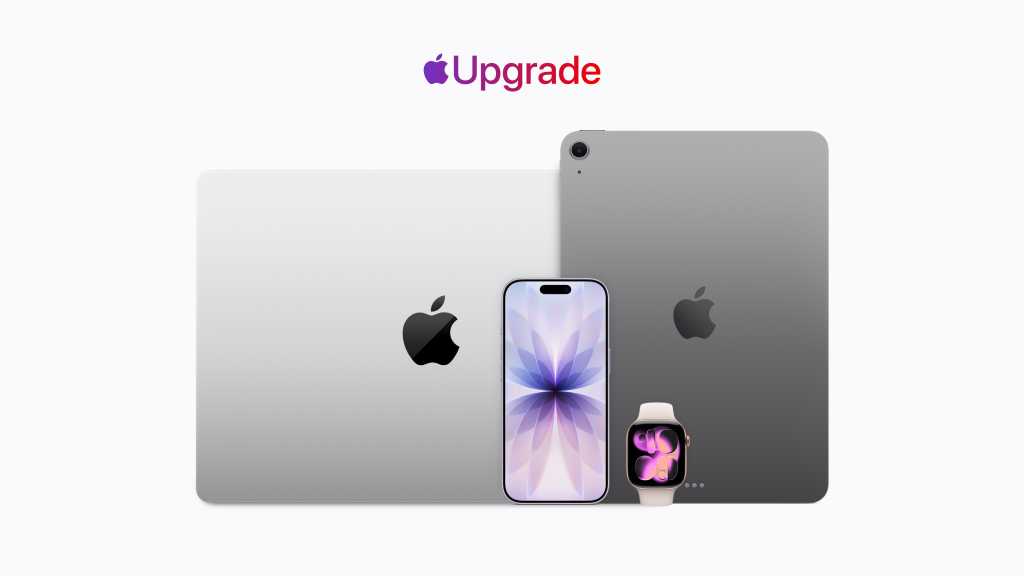
The company’s recently-introduced Apple Upgrade scheme in partnership with Klarna is a smart response to the reality that as devices inevitably become more expensive, consumers will shift from outright ownership to flexible lease and financing arrangements. With its partnership, Apple continues to generate revenue while also maximizing the likelihood customers will return the product at EOL, more about which later.

Samsung and Google have introduced similar schemes. “Financing models already dominant in India and Africa are now poised to reshape the US and European markets,” said CCS Insight in a presentation exploring the consequences of the memory shortage.

Downgrade

Apple has seen a lot of success with the iPhone 17 this year. That success wasn’t entirely because it’s such a good smartphone; it also reflects consumers making the decision to purchase lower-specced devices to stay within budget. Apple continues to see strong sales of its Pro range, which represents the power of its reach into more affluent consumer groups. It’s also important to note that at the moment, the iPhone 16e is the biggest-selling device on the US pre-paid market.

People still want the best, but are being more cautious in how they acquire it.

Refurbished

The trade in refurbished devices is fundamentally built on two things: A large installed base of originally-sold devices resilient enough to be refurbished in the first place and buy-back deals attractive enough to encourage consumers to trade those devices in at all. That’s why it matters that Apple recently increased the value of its trade-in scheme: you’ll get up to $480 for an iPhone 16 or up to $720 for an iPhone 16 Pro Max under Apple’s new deal. It’s also important because Apple has its own growing refurbished business in Apple Refurb, and also because devices that really have reached end-of-life can be broken up for parts, taking a little pain out of Apple’s ongoing component crisis.

In 2024, Apple shifted 15.9 million refurbished devices and accessories.

Delay and Repair

As prices rise, consumers will keep their devices longer and are far more willing to repair existing hardware than upgrade. It’s well-known that iPhones are the most durable smartphones and ship with extensive future system support, so these devices can be successfully used for five years — sometimes more. Apple offers its own service and support package to keep your devices in good shape, and its recent decision to extend AppleCare One support to new nations reflects consumer sentiment. Those who want Apple’s trusted support for up to three devices can now get it for just a few dollars each month.

Not just about iPhones

All these initiatives are important in their own right, of course, and while I’ve focused on iPhone here, Apple is implementing these changes and services across all its product lines. It knows that in the face of AI-flation, consumer habits will change. Demand for new devices — assuming Apple can even get enough components to make them — will fall. “Demand for refurbished models and financing will grow — fast,” said CCS.

The other transformation concerns price. The hyperinflation driven by decisions made by the effective cartel of the big three memory vendors (who could have continued to support the consumer memory industry while providing less support for data centers) is driving low-tier smartphone manufacturers to exit markets or raise prices. CCS expects smartphone prices to increase by 25%. Counterpoint says DRAM prices have risen 70% since 2025, while Gartner and others expect price inflation to remain into next year.

As Intel’s CEO said, “There’s no relief until 2028.”

Price increases leave a huge gap in the sub-$500 device market; that’s a vacuum the second-user market in refurbished smartphones will fill. As the value of that tier increases, it becomes a more strategically important market for both Apple and Samsung, who make the vast majority of smartphones. For both vendors, ongoing market changes mean the second-user market is becoming a primary channel for both companies; you can expect continued business pivots from both as they seek to capture business revenue.

Incoming structural challenges

Even there, there’s a structural challenge to overcome. That is that as memory prices surge, sales of new devices decline. Down the road, there will be fewer devices to trade in, meaning the supply of used devices will fall, creating a future supply-and-demand imbalance in the second-user market. I predict this could get quite bitter, with manufacturers grabbing larger chunks of available devices to the detriment of the small renew-and-refurbish retailers. CCS Insight expects the market for second-user smartphones to grow by 9% in 2026 as cost-and-supply challenges bite.

Making the circle

There is opportunity within the chaos. Apple has committed to building a circular manufacturing ecosystem by 2030, which is only four years away. 

We don’t know how far along the company is on that road, or the extent to which changing market conditions have undermined its attempt to reach that goal. But the company will have spent time developing new manufacturing and production processes to enable more extensive use of recycled and renewable raw materials in that attempt.

The signs are positive — the recently introduced MacBook Neo has a 90% recycled aluminium enclosure and 100% recycled cobalt battery. 

Distorted loop

There is a reality in which any slowdown in new device manufacturing — or, indeed, the cadence of new device introductions — gives Apple and its partners a little breathing space in which to develop and deploy new manufacturing process technologies. 

In that narrative, it does perhaps matter that under its new iPhone release schedule, there will be an 18-month gap between the launch of the best-selling iPhone 17 and the spring 2027 release of the iPhone 18. With a 20th anniversary iPhone and new iPhone Ultra range, along with some talk of a future flip phone, Apple may soon be in position to maintain the marketing buzz with new iPhones every six months while actually crafting an 18-month wait between major device improvements.

Doing so will likely reduce initial unit shipments while also flattening sales revenue for more predictable income. It also builds in extra time to retool the production lines for each device family.

Leading with the new

When it comes to the deployment of new circular manufacturing tech, that potential 18-month gap buys that most precious of resources, time. Which means that while memory price inflation has caused huge problems, raised prices and forced Apple to change business practices, it could also give the company an opportunity to introduce one of the most profound changes in manufacturing of the 21st Century: circular manufacturing. To some extent, this transition in the nature of Apple’s business is reflected at board level, as the company is itself transitioning to new leadership under incoming CEO John Ternus.

You can follow me on social media! Join me on BlueSky, LinkedIn, Mastodon and subscribe to The Core to keep pace with daily Apple news in one email.

Read the full article here

You Might Also Like

With its latest layoffs, Microsoft goes all in on AI

Meta launches low-cost Muse Spark 1.1 as enterprise AI spending comes under scrutiny – Computerworld

‘Agentic AI’ PCs? Not much new here, say analysts

Google must open Android to rival AI agents, EU orders

Apple’s OpenAI lawsuit: The lunacy of trying to limit what ex-employees can tell future employers

Share This Article
Facebook Twitter Email Print
Leave a comment Leave a comment

Leave a Reply Cancel reply

Your email address will not be published. Required fields are marked *

- Advertisement -
Ad image

Trending Stories

Games

Dawn of War 4 has been delayed: ‘We saw an opportunity to further enhance Dawn of War 4 and deliver the quality of experience we’ve always envisioned’

August 12, 2026
AI

IT infrastructure shortages are real and lasting. Here’s how to cope

August 12, 2026
Games

Amazon drops Lost Ark and Throne and Liberty

August 12, 2026
News

This former Amazon exec is moving his startup’s HQ to Texas, and he has a few notes for Seattle – GeekWire

August 12, 2026
Games

Crimson Desert has done so well it’ll be getting a DLC this year, with more details coming sooner than I expected given Pearl Abyss’ breakneck pace

August 12, 2026
News

Viome acquires plasma exchange pioneer Circulate Health – GeekWire

August 12, 2026

Always Stay Up to Date

Subscribe to our newsletter to get our newest articles instantly!

Follow US on Social Media

Facebook Youtube Steam Twitch Unity

2024 © Prices.com LLC. All Rights Reserved.

Tech Journal Now

Quick Links

  • Privacy Policy
  • Terms of use
  • For Advertisers
  • Contact
Welcome Back!

Sign in to your account

Username or Email Address
Password

Lost your password?