
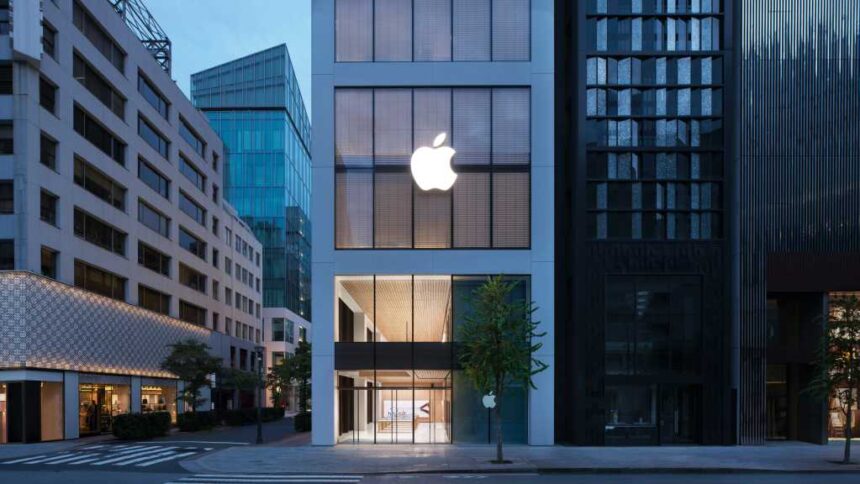
How much would you pay each month for a Mac, iPhone, iPad, Apple home accessories and a handful of Apple services, including health and home security services? More to the point, how many of Apple’s 2.5 billion users would be willing to pay for the Apple Plus Services suite, and how much would this generate each month in high-yield, high-margin predictable income for the former hardware company?
Apple-as-a-Service? It’s possible
The Apple-as-a-Service idea has hovered at the edge of Apple speculation for years, and while Apple has skirted with the concept (iPhone Upgrade Program), it’s never quite found a way to combine hardware and software in a services-led bundle. But things can change. Bloomberg’s Mark Gurman last year suggested Apple had considered offering a hardware subscription service, but shelved the idea fearing the impact on “normal” hardware sales.
What’s certain at this stage is that it feels as if it would be easier than ever for Apple to pivot its entire business into services, particularly as it has more than 1 billion people using at least one of its services already. Breaking those use patterns down, Apple recently shared some glimpses into the performance of the services segment:
- 900 million active iCloud+ subscribers.
- 850 million active App Store users.
- 58 million Apple TV+ subscribers.
- 15 million merchants who accept Apple Pay.
Apple News is the number one news app in the US, Canada, and Australia.
The company followed this news up with the introduction of the phenomenal value Creator Studio suite, which unleashes industry leading tools for audio and video production, Final Cut Pro and Logic — along with apps for imagery and productivity — for $12.99 a month. Apps that create opportunity for creative expression are arguably fundamental to the Mac, a purpose that runs deep into Apple’s DNA.
When it decided to introduce its leading creative apps as a service, Apple moved the needle on both software and services sales, taking a bite out of one segment to benefit a second. The way Apple sees it is that maybe it doesn’t really matter how Apple sells something, so long as the market takes it, and keeps that high margin (c.70%) services segment revenue rolling in. (The segment was worth $30 billion in the just gone quarter.)
The myth of ownership
One argument against hardware-as-a-service is that people like to own their stuff. That’s true. But when you stop to think about it, the truth is that we already use hardware we don’t really own — that iPhone in your pocket you acquired with a carrier deal; the credit card debt you’re paying for your current Mac; the iPads for your field services team you acquired with help from your bridging loan; the Mac you’re about to purchase for a monthly cost direct from the Apple Store.
Even four years ago, “Almost half iPhone owners already finance their iPhone purchase, paying monthly for a new phone,” said CIRP Partner and Co-Founder Josh Lowitz. “And about one-third trade-in their old phone when they buy a new one. So, a significant portion of the user base is accustomed to never owning a phone, instead basically leasing it.”
We use kit we don’t quite own all the time. An Apple hardware-as-a-service offering could accommodate that, offering hardware ownership as one result, after an agreed upon number of payments are made. The second result would be what tempts users though.
Think about how attractive a new Mac upgrade every two or three years and an iPhone upgrade every other year as a basic subscription might be, with AppleCare rolled in. Reflecting that kind of thinking, many already use Apple Trade in, sending their old hardware back to Apple for parts in exchange for money off the next bit of equipment. It’s an ownership model that shows many are already accustomed to treating hardware as if it were a subscription item.
Improving the experience
But why would Apple abandon hardware sales in favor of services? To build margins, of course, and to develop a predictable income stream, but also to better control the user experience. Not only can Apple then continue to focus on improving its hardware, but because it knows what hardware its customers are running, it can focus improvements in software and services on the hardware.
Think of it as an extension of Apple’s “whole widget” approach, one encompassing hardware, software, services, and silicon with management of the ecosystem itself.
There are solid environmental reasons for this ecosystem, as it becomes much easier to call in old kit and arrange for it to be recycled, feeding those cannibalized components straight into the circular manufacturing system we know Apple wants to build. It gets a lot easier to build a system like that once you know almost exactly how many recycled components you’ll have to work with in any week; that’s the kind of granular insight a subscription hardware offering might provide.
The numbers game
Would consumers be willing to accept an ownership model like this? To some extent that doesn’t matter. It doesn’t need to be adopted by every consumer to succeed. With 2.5 billion people already one email away from Cupertino, Apple only needs to switch a small fraction of that group over to a hardware/software/services subscription model to generate predictable revenue.
As a thought experiment, imagine if just 1% of those Apple users (25 million) stepped into a services/Mac/iPhone deal at $129/month, that’s $3.2 billion in revenue every month. While I think the cost would be higher (because it’s Apple), that gives you some sense of the revenue the company can raise with the addition of a subscription option when ordering products at the Apple Store.
As a numbers game, Apple starts with the kind of advantage that should make Wall Street nod, in the sense that investors already value tech firms with high recurring revenue more highly than those dependent on cyclical hardware sales.
Who knows, if you could get hold of a Mac and iPhone in such a way for a monthly fee, Apple might find it even easier to upsell consumers to higher specified options through its recently updated Apple Online Store, generating a few more dimes each month with every consensual memory upgrade.
Plus, of course, with user satisfaction numbers in the high 90s, Apple would likely find it even easier to lock its customers into the total Apple experience. That potentially includes a highly secure Apple HomeKit AI-augmented and private home security service with which to protect all this kit, which some believe the company might announce during the year.
You can follow me on social media! Join me on BlueSky, LinkedIn, and Mastodon.
Read the full article here