
I’m a known and documented Morrowind liker, to a degree that even I get a little bored of myself going on about it, but you know what? I think we reach for the Morrowind comparisons a little too quickly these days. A game has big fungi? That’s a Morrowind. Unique environments? Morrowind. Armour made of strange stuff? So Morrowind. Barely explains itself? Oh, you know that’s Morrowind. It’s become a shorthand we—or I, maybe just I—sometimes use as a crutch, and that ends up chucking a lot of disparate and interesting games into the same easy box.
Anyway, Banquet For Fools is a Morrowind.
Wait, wait. Give me a second. I do think the comparison is actually apt here, not just because the game has a striking, off-kilter artstyle (though it does have that) or because I don’t fully understand what’s going on (though I don’t), but because it feels interested in similar things to what Morrowind was interested in all those years ago.
Article continues below
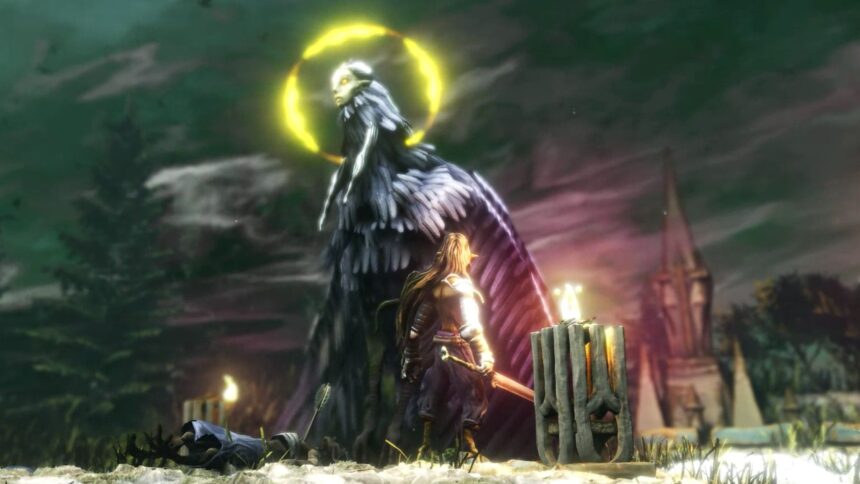
It’s a conflicted and demon-haunted fantasy world, determinedly not built on the humdrum, Tolkienian, Christian concepts that so much other fantasy is inflected by. It’s a game where your party is composed of odd and unfamiliar species who grew up as pagan yetis in a swamp. Its world feels at once alien and grounded: entirely dissimilar to our own but rooted in a palpable sense of history and culture (for another game that pulls this off, see Caves of Qud). It’s goddamn cool, in short, even in the limited time I’ve spent with it.
Table for Four
In gameplay, Banquet For Fools is a CRPG with ARPG characteristics. You have your settlements, with their conversations, shops, and quest-givers, and the wide wide world, where you roam about getting into endless fights with all sorts of goblins and kelpies and what-have-you.
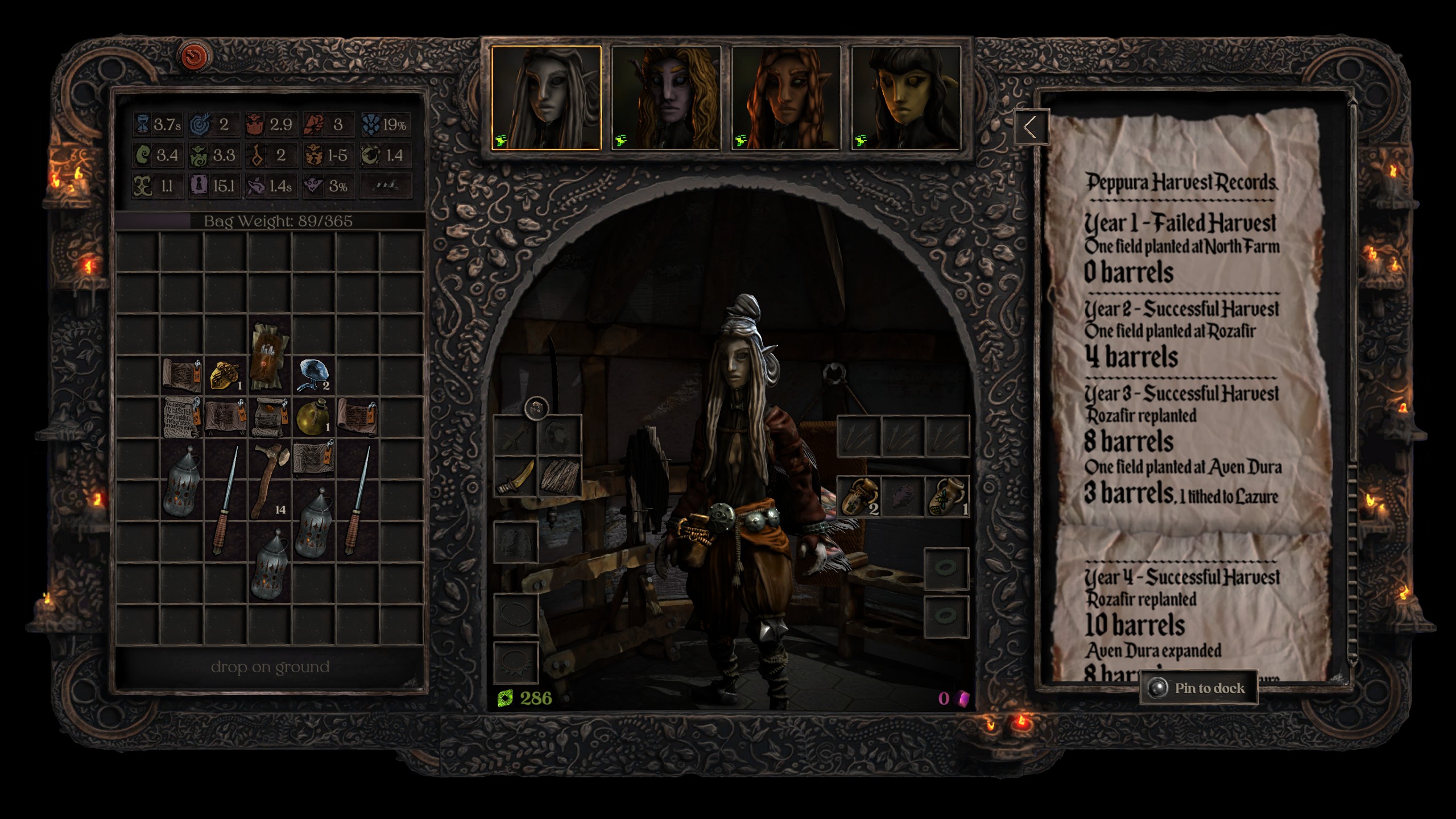
Well, you and your party of four, all of whom you generate from scratch at the game’s start. This is an Icewind Dale-style RPG, not a Baldur’s Gate. You’re not on the hunt for prewritten companions to buff out your roster—you’ll draw them all up before you even start WASD’ing.
This is daunting! BFF is redolent with nouns and stats and numbers you will not understand, which is why it’s very fortunate the game provides you a few predefined party templates and earmarks one of them, specifically, for new players. Figuring out combat is hard enough without accidentally kneecapping yourself at character creation.
Because combat is not what you expect (I don’t have to ask what you expect; I can guarantee BFF is not it). Fights are vast, physics-heavy, and almost-realtime. Everyone—your party and your foes—has a stamina bar that functions pretty much as an FF7-style active-time-battle gauge. Once it fills you can pause the action to queue an attack, the result of which is likely to be your chosen enemy getting absolutely catapulted halfway across the map by your greatsword, ideally into another enemy.
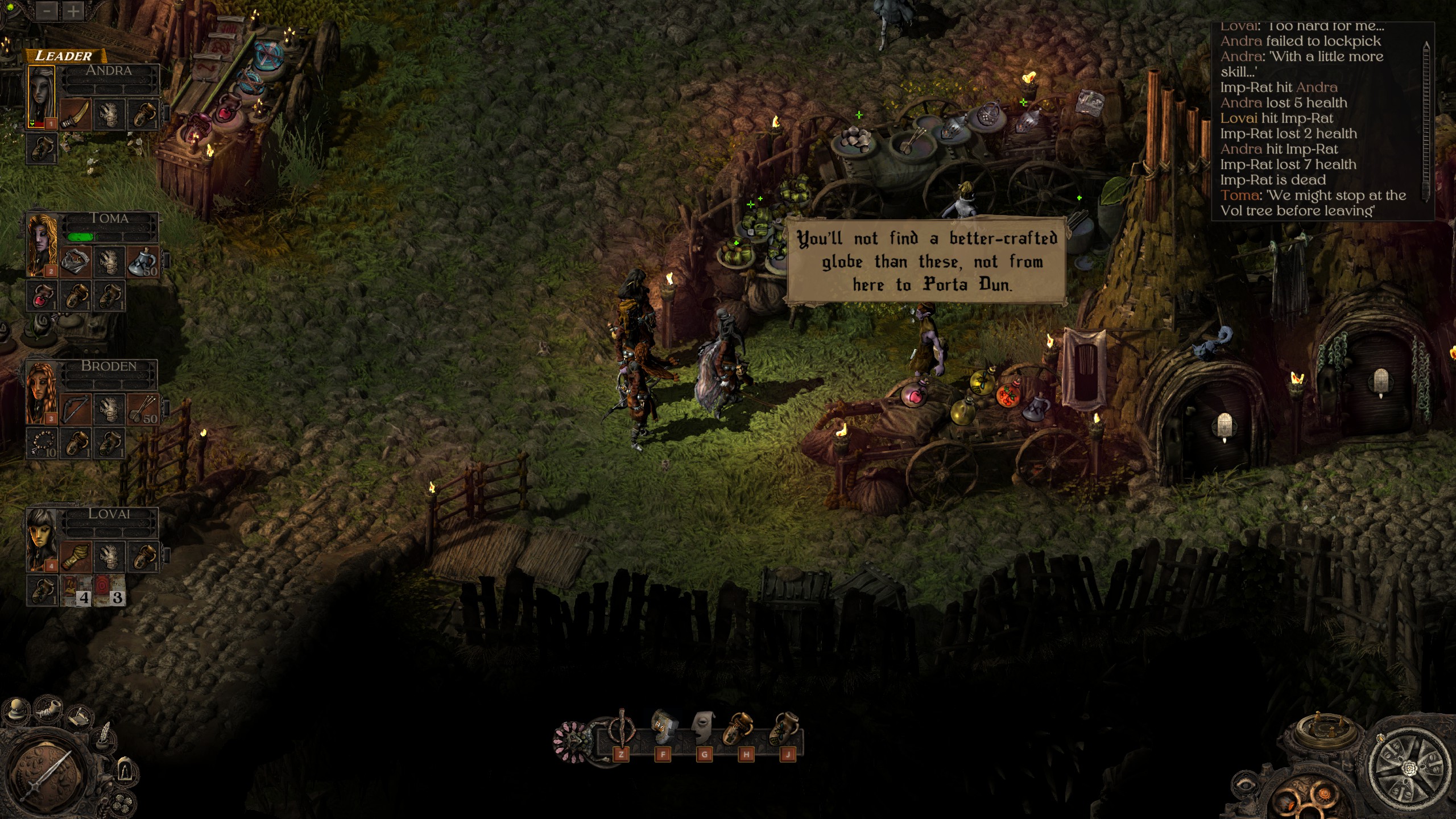
Enough nitty-gritty detail. How does it feel? In the early game, at least, it’s both technical and chaotic all at once. In my time with it, BFF is an exercise in learn-by-doing. Experiment with this attack, that weapon, these classes until you grope your way to enlightenment. All of this, mind you, takes place in combat encounters that have a tendency to sprawl: as you focus on figuring out what your controlled character is doing, your party members will be ducking and weaving, pinning down enemies and evading attacks at the same time.
All of which looks gorgeous, by the way. The game’s strange and alien world is rendered in a graphical style I suspect a lot of people, for lack of a better term, will call claymation. That’s almost right, but it’s also not quite there. Rather, it feels like a mishmash of styles that takes inspiration from sources as wide-ranging as PS1 RPGs to the prerendered backgrounds in something like a Pillars of Eternity, then adding its own otherworldly, swamp-flavoured spice on top of that.
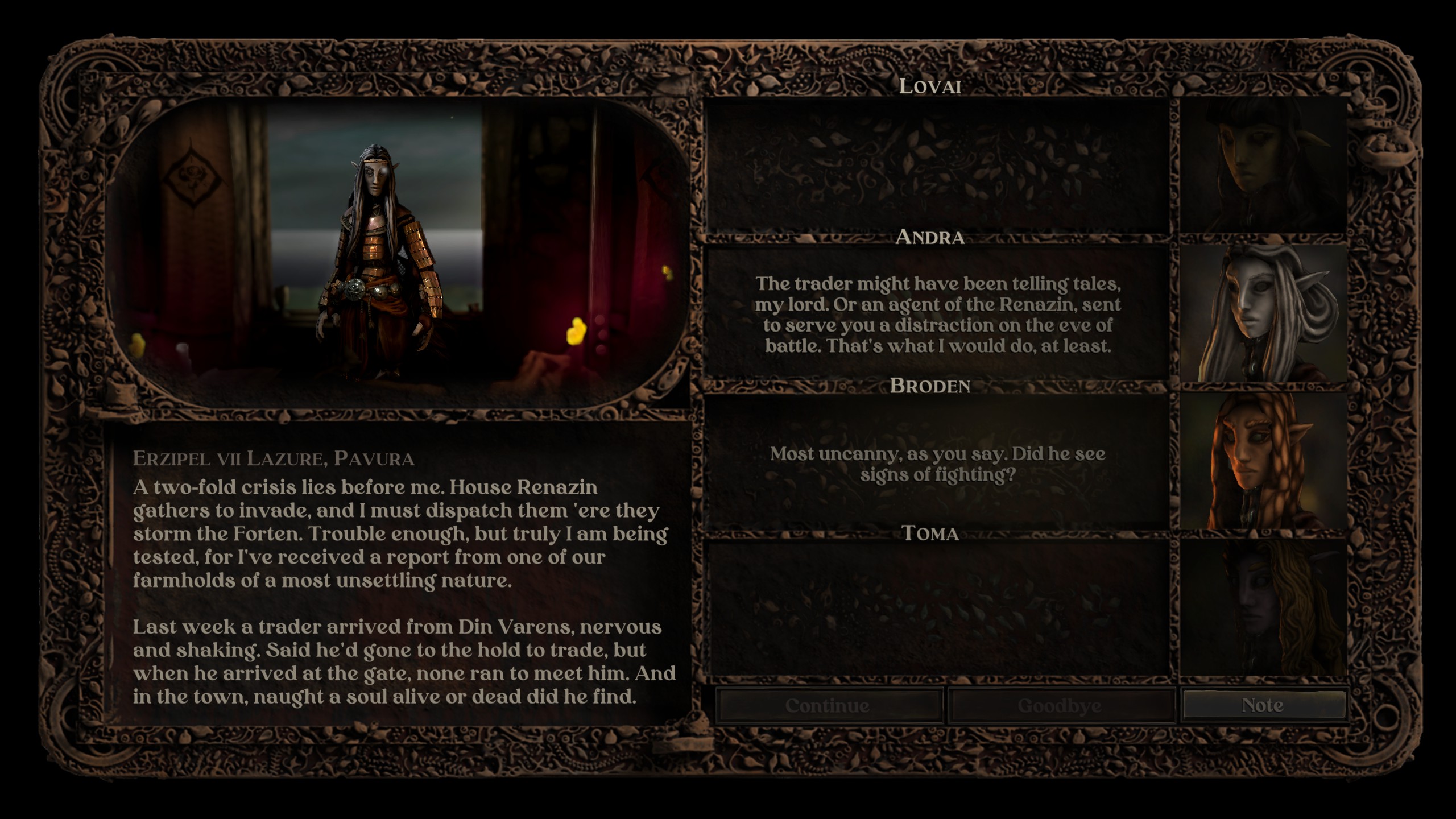
It’s a difficult thing to describe and also easily the most interesting game I’ve played this year. Even better: it has a demo, so if you fancy a Banquet, check the game out on Steam. It’s just like Morrowind, you see.
Read the full article here