
The debate over whether AI will transform industries is over.
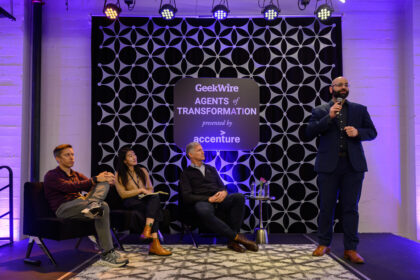
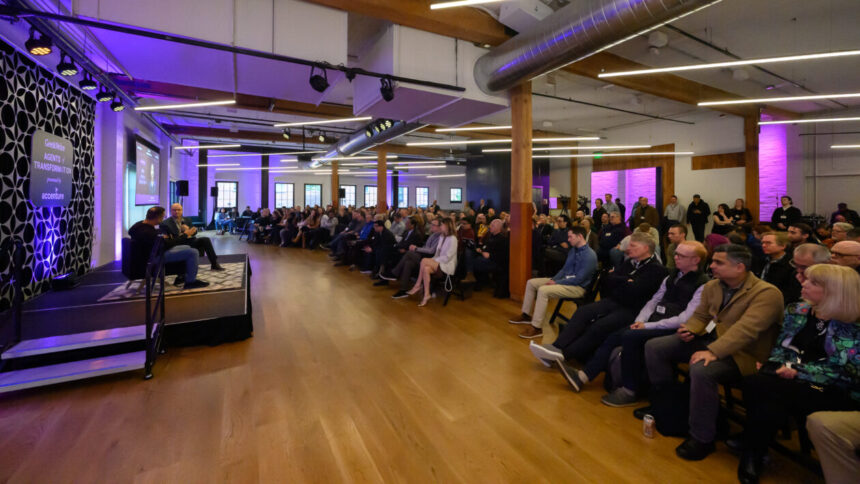
At GeekWire’s Agents of Transformation summit in Seattle on Tuesday, the founders, executives and engineers in attendance had moved on to harder questions — what’s working, what isn’t, and how fast everything is moving. The through-line across nearly every conversation was a shift from AI as a chat tool to AI as an autonomous actor — software that doesn’t just answer questions but acts on its own, improving as it goes.
Speakers from Microsoft, Amazon Web Services, OpenAI and elsewhere described a world where the constraints that defined their work for decades are dissolving, and where the biggest obstacle to capturing that value isn’t the technology — it’s figuring out how to redesign work processes and organizations that weren’t built with any of this in mind.
Agents of Transformation was presented by Accenture, and builds on an ongoing GeekWire editorial series, also underwritten by Accenture, spotlighting how startups, developers and tech giants are using intelligent agents to innovate.
Keep reading for quick recaps and key takeaways — with the help of AI, of course — from each fireside chat and panel discussion.
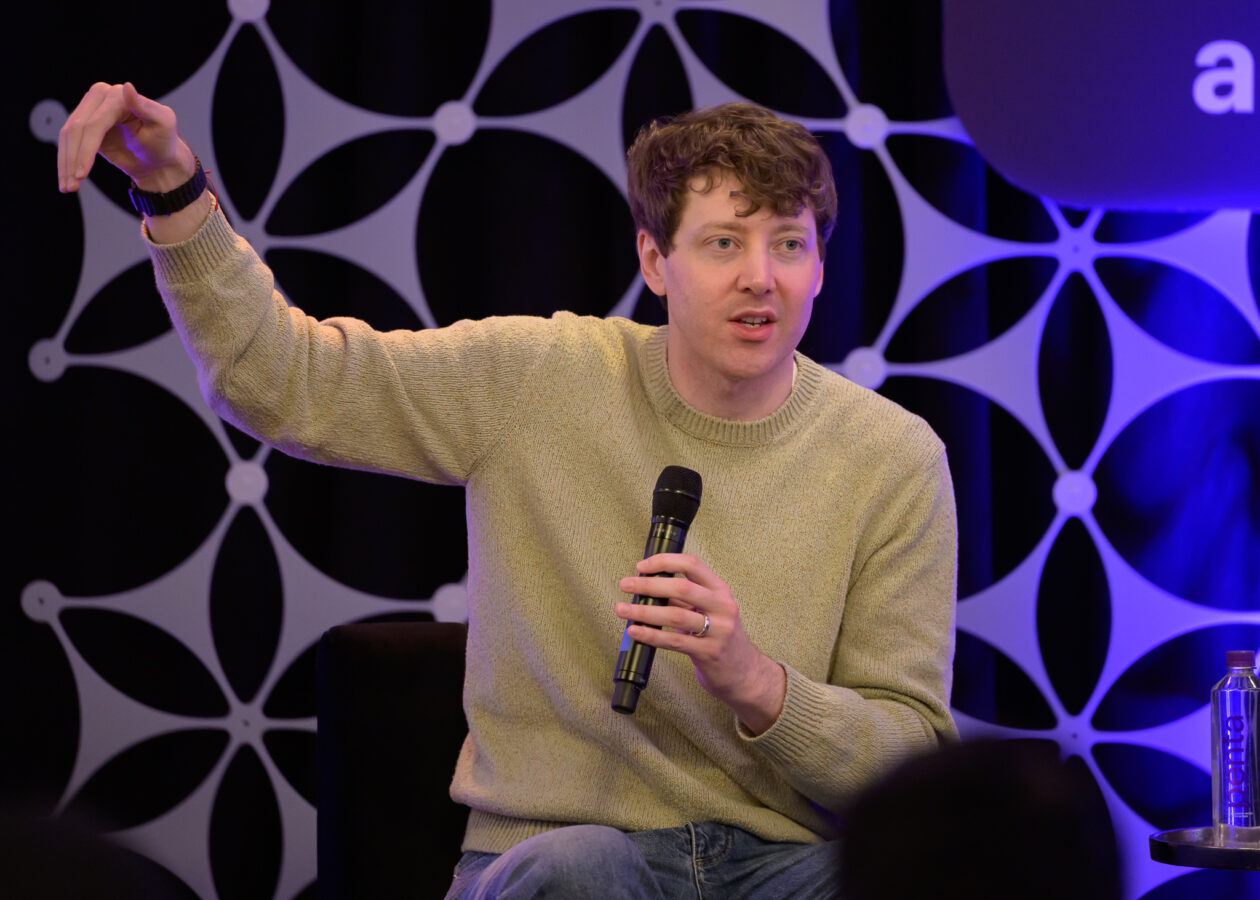
Charles Lamanna, Microsoft’s executive vice president of Business Applications & Agents, opened with a moment that caught everyone’s attention: an AI agent declined 17 meetings on his behalf. Not summarized them, not flagged them — declined them. For Lamanna, that was the moment AI crossed from information retrieval into genuine action. The era of AI as chat assistant, he argued bluntly, is behind us. “The sun has set.”
Three key highlights:
- Don’t invent new metrics for AI. The biggest trap Lamanna sees companies fall into is building elaborate AI systems disconnected from business outcomes. His rule: use the metrics you already have — revenue, retention, customer satisfaction, cost to serve. “No one’s business metric should be 15 agents deployed,” he said. If the AI isn’t moving a number the CEO already cares about, it’s a hobby.
- Give everyone great AI, focus on a few big bets. Successful AI transformations share two traits: broad access to tools across the entire workforce, and a small handful of high-priority projects tracked from the top down. Companies with 250 “Gen AI projects” are a red flag, not a success story.
- Token budget is the new headcount. Lamanna’s teams are already measuring AI spend per engineer as a hiring factor — and candidates are negotiating for it. One engineer told him he’d only take the job if his team had sufficient daily token allocation. “If you hire an engineer that has lived this way of agentic code and you told them your token budget per day is $1,” he said, “they’ll be like, ‘see ya.’” (Read more about that point here.)
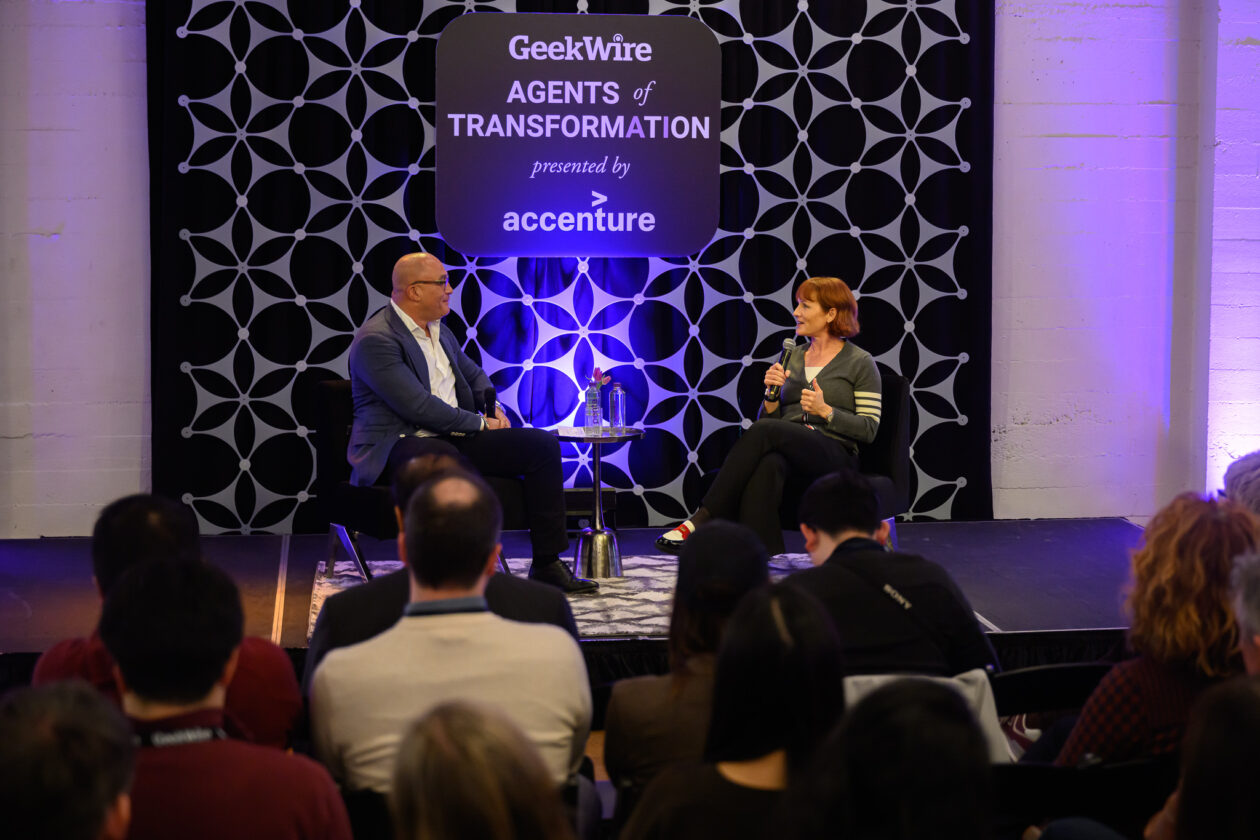
Julia White, CMO of AWS, has spent nearly three decades in marketing — and says her biggest challenge right now is unlearning much of it. Goals she gave up on years ago, like truly personalized one-to-one marketing at scale, are suddenly back on the table. “I’m daily having to stop and unlearn things that I thought were just true,” she told moderator Andy Tay, global lead of Accenture Cloud. The constraints that made those dreams impractical simply don’t exist anymore.
Three key highlights:
- Let it rip — selectively. White’s team sends thousands of emails a month, and for years every one required a human sign-off before it went out. They’ve since built a monitored process that gradually earned enough trust to remove that step entirely. Meanwhile, an experiment using AI for high-production TV ads taught them just as much by failing — they took what worked and applied it to digital display ads, going from roughly 100 variations to vastly more, almost effortlessly.
- Start with what people hate doing. The fastest path to team buy-in isn’t a big transformation project — it’s eliminating the annoying small stuff. White demoed a new content workflow at an all-hands that cut a three-hour publishing process to 30 minutes. The room broke into spontaneous applause. “That is a new high bar” for rolling out technology, Tay added.
- Hire people who don’t know the rules. White said she’s deliberately hiring more new graduates than ever — people with no assumptions about how marketing has always worked. Her logic: fresh eyes don’t have to unlearn anything.
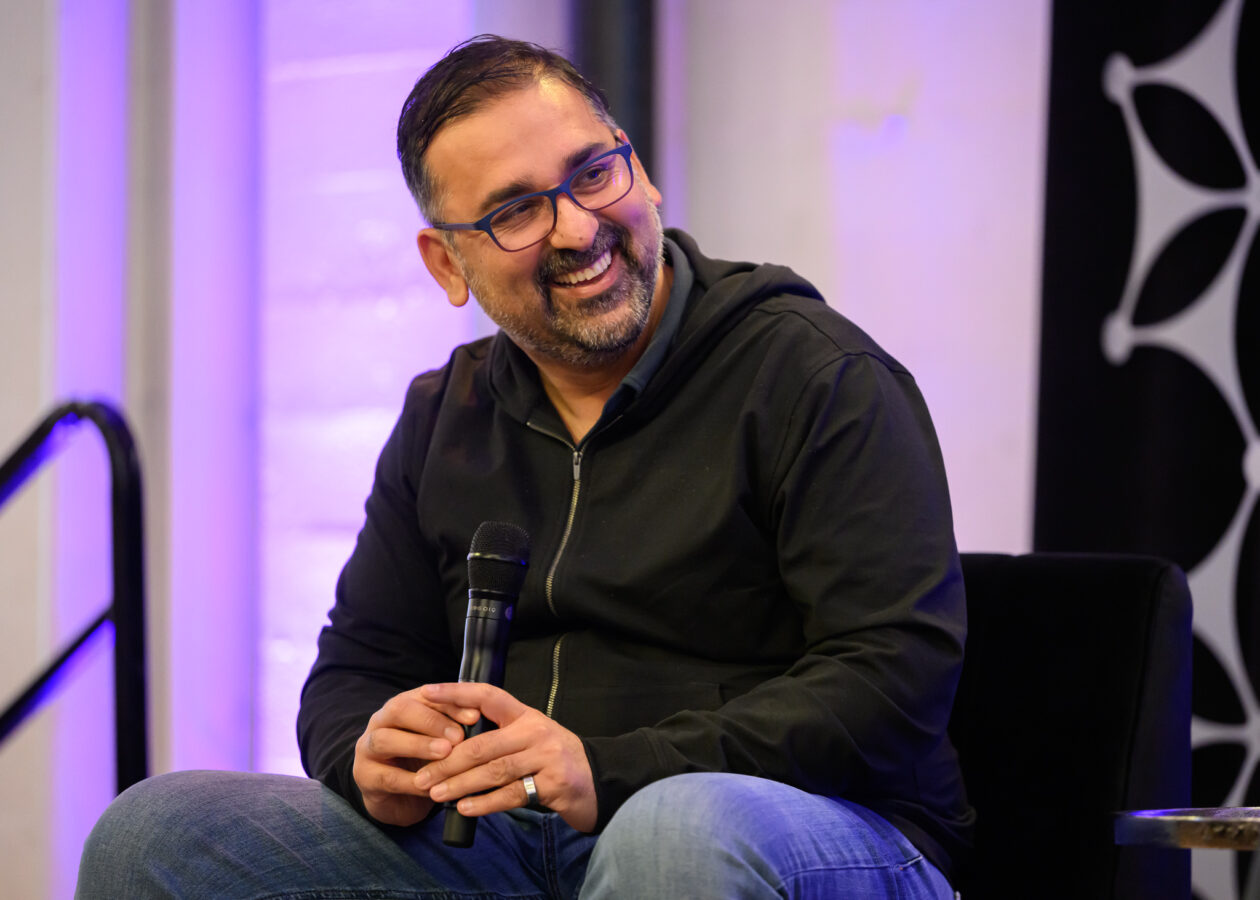
Deepak Singh has spent nearly 20 years at Amazon Web Services building tools for software developers, and his four-word summary of his daily routine says everything about where things stand: “I live with agents.” The VP behind Kiro, Amazon’s AI-powered developer environment, runs four custom agents every day — one for research, one that writes in his personal style, one that processes email, and one that drafts internal documents. Not a demo. How he actually works.
Three key highlights:
- How you adopt matters more than whether you adopt. An Amazon internal study of 40-50 engineering teams found a stark divide: teams that bolted AI agents onto existing workflows got 20-40% faster. Teams that restructured their entire environment around agents — cleaner repositories of coding changes, better documentation, clear instructions — got 3 to 10 times faster. The difference wasn’t the tools. It was the setup.
- Your guardrails were built for humans. Singh’s sharpest point on agent safety: every policy and permission in your organization was designed for human speed. Agents don’t get tired, don’t give up, and don’t stop to ask for help — they just keep going, which means they can repeat the same mistake a hundred times before anyone notices. Permissions designed for people need to be rethought entirely for systems that never sleep.
- Use them at home, not just at work. Singh’s closing advice went a step further than most: don’t just deploy agents professionally, live with them personally. The more fluent you become, the more you’ll get out of them when it matters.
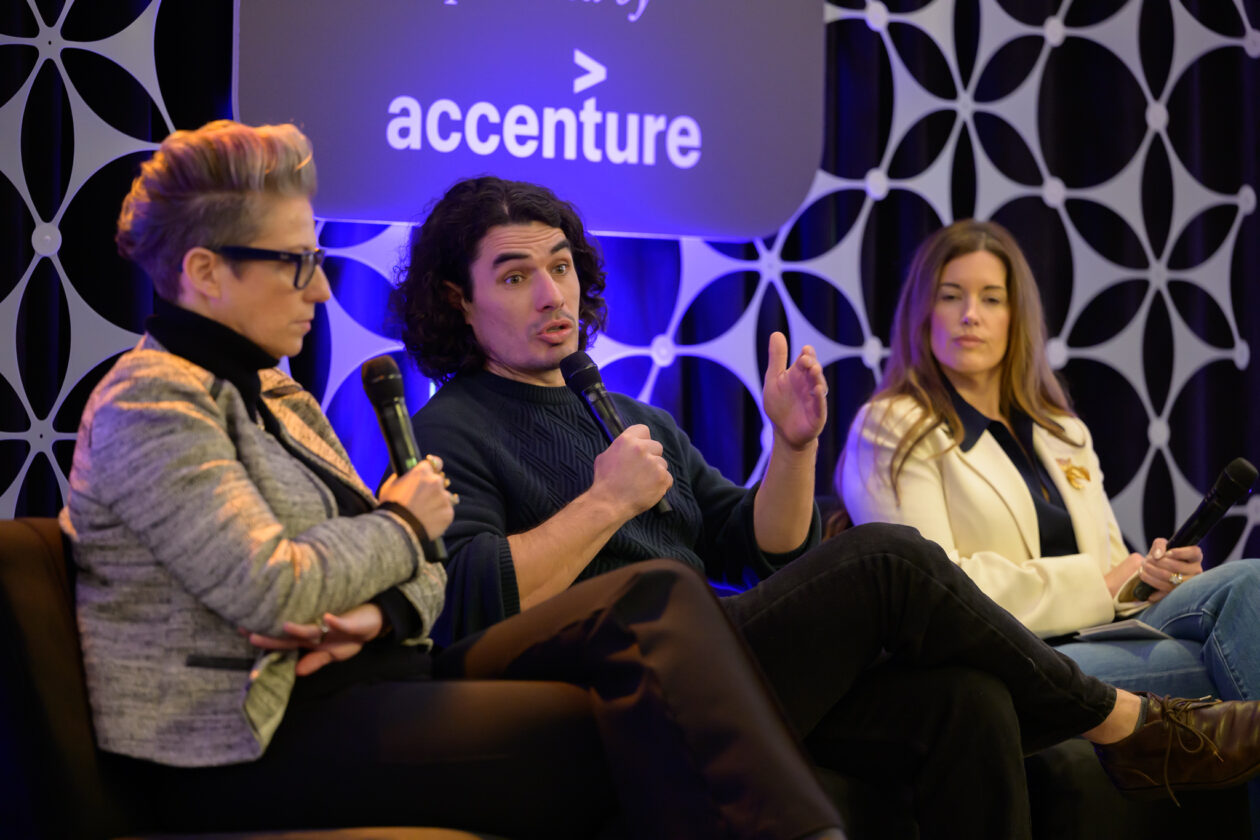
Three practitioners who spend their days in the messy middle of AI deployment — not selling it, actually doing it — kept returning to the same uncomfortable theme: the technology is the easy part. Angela Garinger of Outreach, Jeremy Tryba of AI research nonprofit Ai2, and Liat Ben-Zur of LBZ Advisory have each watched promising AI rollouts stall not because the tools failed, but because the humans around them did.
Key highlights:
- Narrow beats broad, every time. The panel agreed that companies announcing sweeping AI transformation across entire organizations are the ones most likely to fail. The winners are being surgical — picking one particularly tedious task, inserting an agent, measuring the outcome, then scaling. “The ones that are really successful are being very discerning about which high-friction workflow they want to take on first,” Garinger said.
- Fear is the real adoption blocker. Ben-Zur described a pattern she sees constantly: a pilot works beautifully, early adopters love it, and then rollout just … stops. When teams dig in, the reason is almost always fear — fear of replacement, fear of being judged when the tool makes a mistake.
- Clarity unlocks everything. Tryba described watching even technically sophisticated researchers hesitate to use AI tools because they weren’t sure what they were allowed to do with them. The fix was simple: a clear matrix of approved uses, posted in Slack. The next day, everyone had signed up. Permission, it turns out, is a forcing function.
- Track meaningful metrics. Leaders like to tout the hours saved and what percent of employees are using AI, but Ben-Zur said they need to look at the metrics they’ve always valued — has revenue improved, is retention higher, is a feature better performing. “I wouldn’t measure how many hours people save — like, ‘Joey saved five hours.’ I don’t care. What does that translate to for the business?”
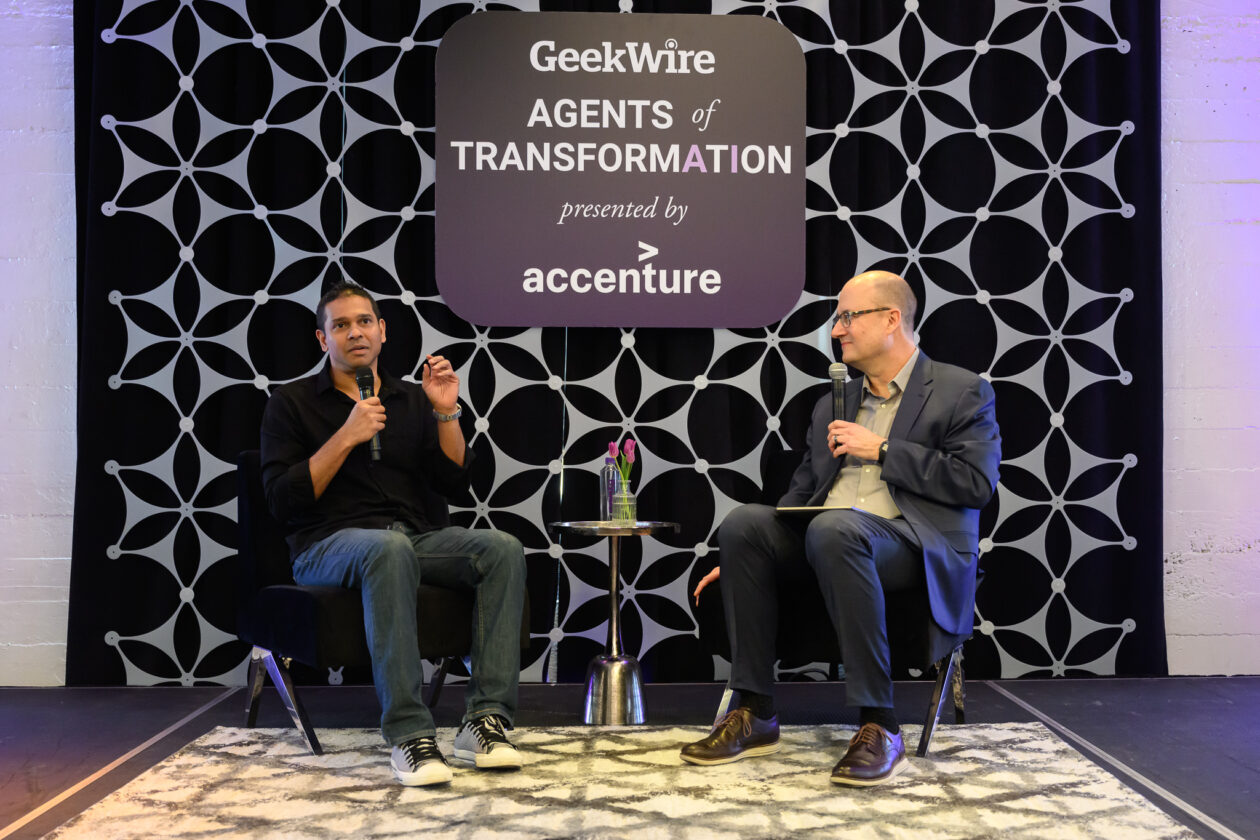
Vijaye Raji, CTO of apps and head of engineering at OpenAI’s new Bellevue office, has a signature move: propping his laptop open in meetings so Codex — the company’s AI coding tool — can keep building while he’s away from his desk. It’s a fitting metaphor for how he thinks about AI right now — always running, always compounding. The Meta veteran and founder of A/B testing company Statsig spoke about what it actually looks like to live at the frontier.
Three key highlights:
- Everyone’s a builder now. Raji built himself a personal Slack and email summarizer — running locally, no cloud, no security overhead — in an afternoon using Codex. His point: the barrier to making custom software for yourself has essentially collapsed. “Everyone is going to be a builder,” he said.
- Capability overhang is the real problem. Models have sprinted ahead of how most people use them. Raji calls this the “capability overhang” — and the people closing that gap, he said, are already many times more productive than those who haven’t noticed it’s there.
- Engineers are becoming agent managers. The next wave isn’t just AI-assisted coding — it’s a bottleneck shift. Productivity gains from AI are now so fast that the new constraint is humans reviewing all the code coming in. The job title of the future, he suggested, is essentially “manager of agents.”
Thanks against to presenting sponsor Accenture; gold sponsors Nebius and AWS Marketplace; and silver sponsors Prime Team Partners, Astound Business Solutions, OneByZero, Autessa, Pay-i, GemaTEG, Cascade, and WTIA for helping to make the event possible.
Read the full article here