
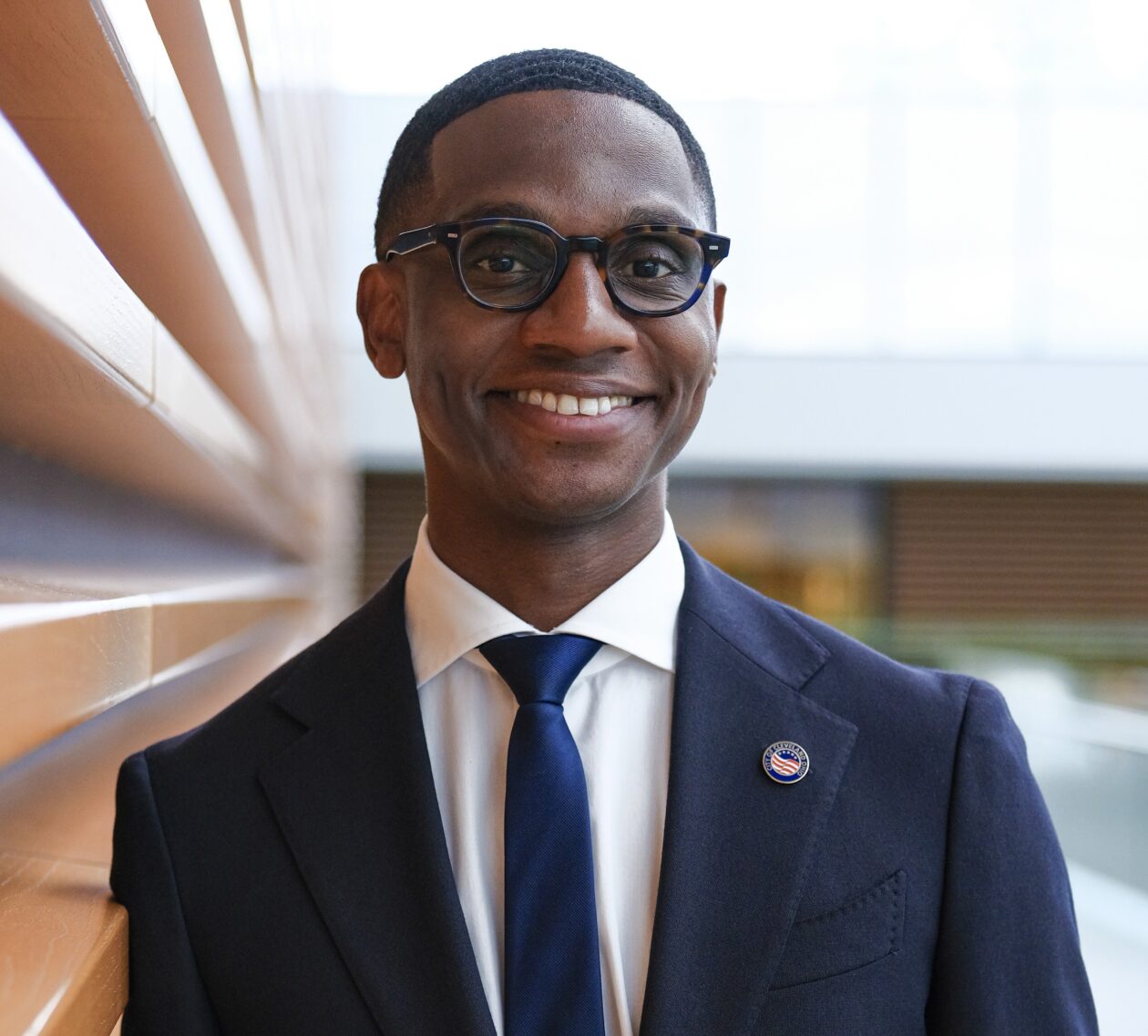
Cleveland Mayor Justin M. Bibb responded Wednesday to a GeekWire guest column in which Seattle tech veteran and angel investor Charles Fitzgerald warned the Pacific Northwest tech hub not to repeat the mistakes that led to the Ohio city’s decades-long decline.
The real lesson, Mayor Bibb asserted, isn’t in the city’s past but in its ongoing comeback.
“For decades, national narratives have framed Cleveland as a cautionary tale,” he wrote on LinkedIn. “But that framing misses the bigger story. Cleveland didn’t quit. Cleveland rebuilt.”
In his response, he pointed to Cleveland’s institutional anchors, including the Cleveland Clinic and Case Western Reserve University, as engines of a growing health-tech and research economy. “This is the Cleveland ERA,” he wrote, citing billions in infrastructure and development investments.
Bibb, 38, is a Cleveland native with degrees from American University and Case Western and a background in civic technology and racial equity advocacy. He took office in January 2022 and was reelected last November with nearly 74% of the vote. He recently ended a term as president of the Democratic Mayors Association.
Seattle, he wrote, “should study Cleveland as a case study of what’s possible when you confront age-old problems with bold, urgent leadership.”
In many ways, Fitzgerald and Bibb seem to be on the same page.
Fitzgerald welcomed Bibb’s response and, in a comment on LinkedIn, sought to clarify: “This is not about Cleveland today.”
He explained, “My point is how cities should respond when their world changes. Deindustrialization came for Cleveland 75 years ago. Seattle has punched well above its weight in software, but that era is ending. We must confront that reality plus, like every city, adapt to the broader AI wave.”
Fitzgerald also agreed that Seattle has a lot to learn from Cleveland.
“People in Seattle complain about the problems of being a prosperous city,” he wrote. “They should hear firsthand about what it means to manage a city that was once also very prosperous, but lost that prosperity. You’re playing the game in difficult mode. We can learn from that.”
In his original column, Fitzgerald drew a parallel between Seattle now and Cleveland in the 1950s, when it was the seventh-largest U.S. city, home to industrial giants like Standard Oil and Republic Steel, with median household incomes rivaling New York’s.
Within two decades, the city’s fortunes had reversed dramatically. Cleveland has since dropped to 56th in population, with median incomes less than half the national average.
Fitzgerald’s concern is that Seattle, riding decades of prosperity fueled by Microsoft, Amazon, and the broader software industry, may be approaching a similar inflection point as the AI era reshapes the tech landscape. He worries that local leaders aren’t paying attention.
What’s more, he asserted, legislators in Olympia are treating the tech industry as a bottomless source of revenue rather than working to nurture the region’s economic future — a dynamic he says mirrors Cleveland’s missteps during the Rust Belt era, when a confrontational posture from local government made it easier for companies to leave.
Bibb’s response cited specifics including a $100 million investment to transform 1,000 acres of industrial land, a $1.6 billion airport modernization, and nearly $5 billion reshaping the city’s lakefront and the Cuyahoga River.
The mayor’s post drew a wave of support from Clevelanders, many of whom took issue with Fitzgerald’s framing. “My lord, what a lazy, outdated trope,” wrote one commenter. Others pointed to Cleveland’s strengths in healthcare and the arts, and its cultural diversity.
The original column also generated spirited responses in GeekWire’s inbox, with no shortage of profanity from Cleveland partisans.
One LinkedIn commenter noted the juxtaposition of the “foreboding, black and white skyline photo” combined with the “Don’t become the next Cleveland” headline and the author’s closing disclaimer: “I want to be very clear that I mean no offense to Cleveland.”
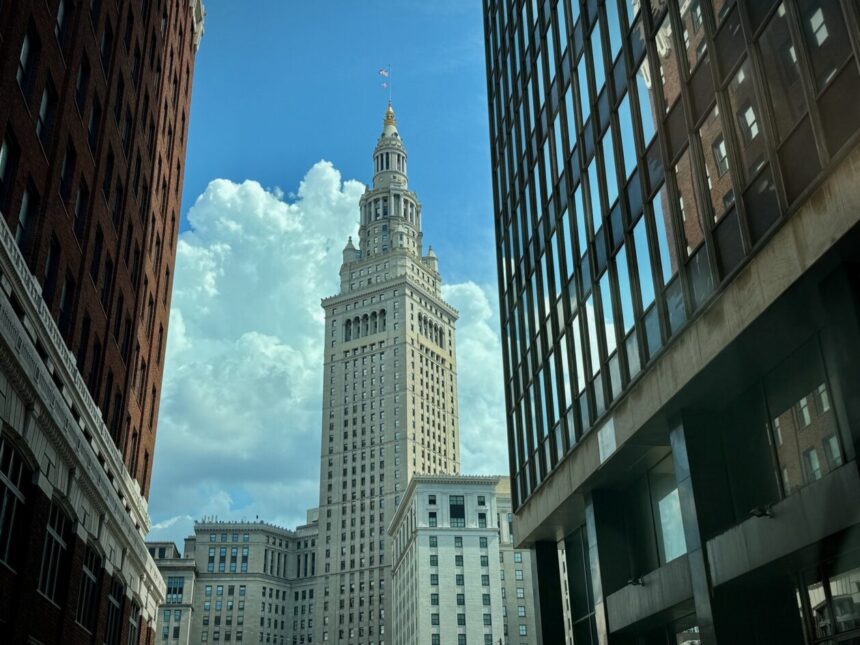
(By the way, the photo on the column was chosen by GeekWire’s editors, not by Fitzgerald, so we’ll own that one. Note the blue skies in the lead photo on this follow-up piece!)
Others offered a more nuanced view. One commenter who moved to Cleveland from the Pacific Northwest wrote that the city “should be nervous about repeating mistakes that have failed repeatedly across the nation,” adding that Cleveland’s real opportunity lies in expanding economic prospects for working people rather than the wealthy.
In the end, the mayor invited Fitzgerald to visit and see the progress firsthand.
Fitzgerald seemed to be open to the idea, in his inimitable way. He has already emailed the mayor, and noted in his LinkedIn comment, “I’m waiting for the tickets for my junket to arrive.”
In the meantime, GeekWire has contacted Bibb’s office to see if we can arrange a follow-up interview, and raised the possibility of Fitzgerald joining the call. Stay tuned.
Read the full article here