

In the first minutes of Control Resonant, Dylan Faden—prototypical sadboy, perpetually kicked puppy, and regretful mass murderer (he got better)—is thrust into a metaphysical war when Jesse, his psychokinetic former protagonist sister, wakes him from a seven year coma by stabbing a magical shape into his chest. She promptly disappears, leaving the Federal Bureau of Control directorless, outgunned, and forced to rely on the man who once killed hundreds of its staff to confront the cataclysm of interdimensional forces violently reshaping Manhattan into a labyrinth of otherworldly logics.
Need to Know
What is it? Melee action in an open world being ripped apart by interdimensional forces.
Release date September 24, 2026
Expect to pay $60/£50
Developer Remedy Entertainment
Publisher Remedy Entertainment
Reviewed on Geforce RTX 4070 Super, Intel i7-14700K, 32GB DDR5
Steam Deck Unverified
Link Steam
Dylan and the FBC might be going through it, but Remedy is flexing all its finest talents: sculpting uncanny hellscapes, placing tactical redactions in bureaucratic lore collectibles, and capturing endearingly human performances in circumstances beyond human comprehension. Unfortunately, melee combat isn’t on that list of strong suits—and Resonant’s open world expects you to do a lot of it.
New weird
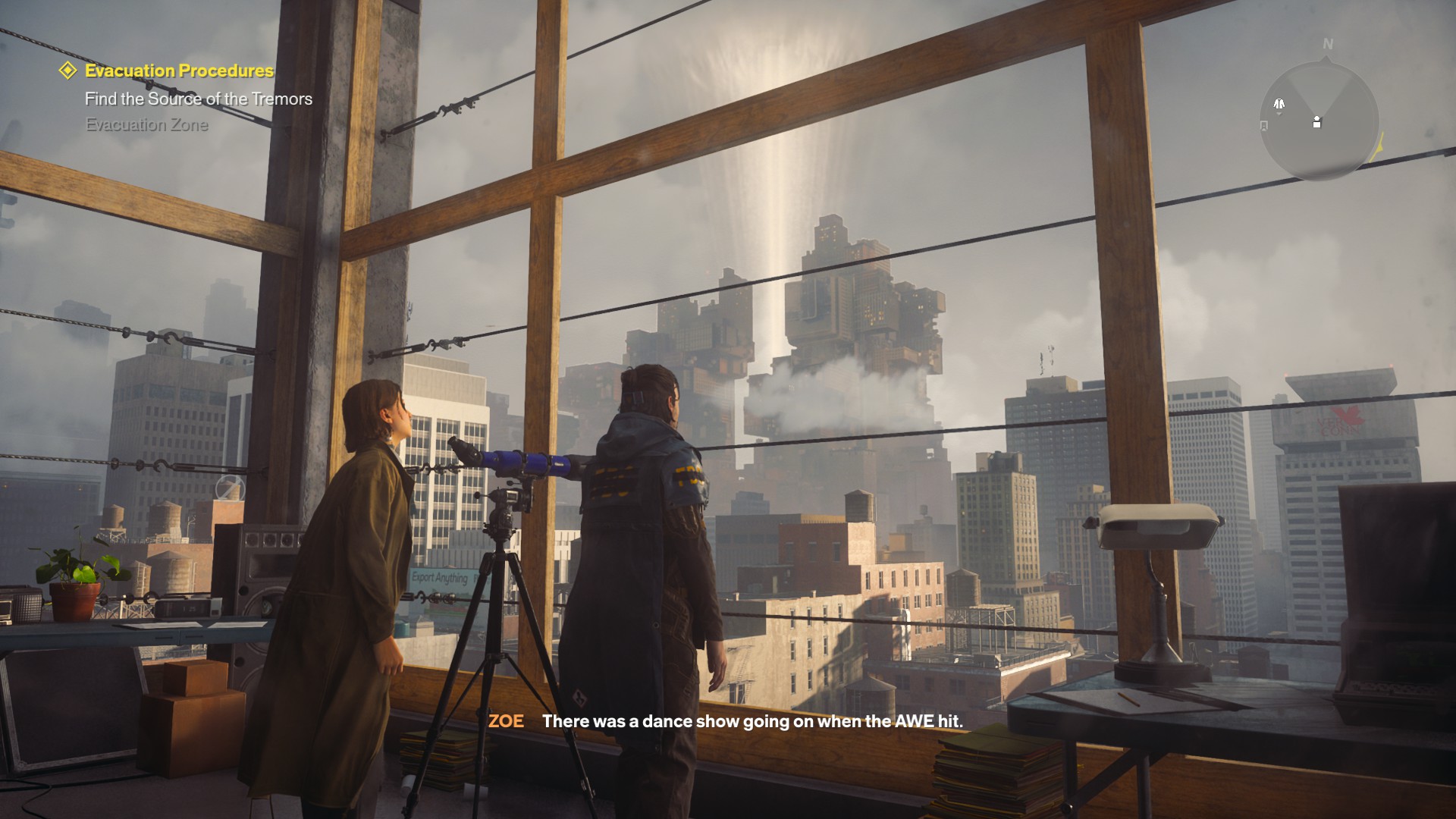
Remedy’s environmental artists and lighting tech specialists are at the height of their powers in Resonant: The stark, brutalist surrealism that saturated the Oldest House in the first game has boiled out of its breached walls and onto New York’s streets, reconstructing blocks of brownstones and downtown shopping districts into a sprawling, dreamlike mazework of impossible architecture and alternative physics.
Latest Videos FromPC Gamer
Roadways have abruptly become cliff faces, with pavement—and the buses parked on it—bent skyward at perpendicular angles. Rows of pixel-stretched structures bleed into chasms where chunks of cityscape have simply fallen away.
Whole neighborhoods spiral upwards, outwards, inwards. Some are swallowed in the telltale oilslick haze of Hiss corruption. Others have been reconfigured according to the alien logic of the Patterning—a newer, stranger force whose spreading influence sorts apartments, taxis, streetsigns, pigeons, and unevacuated denizens into inscrutable designs of sprawling radial symmetry.
(Image credit: Remedy Entertainment)
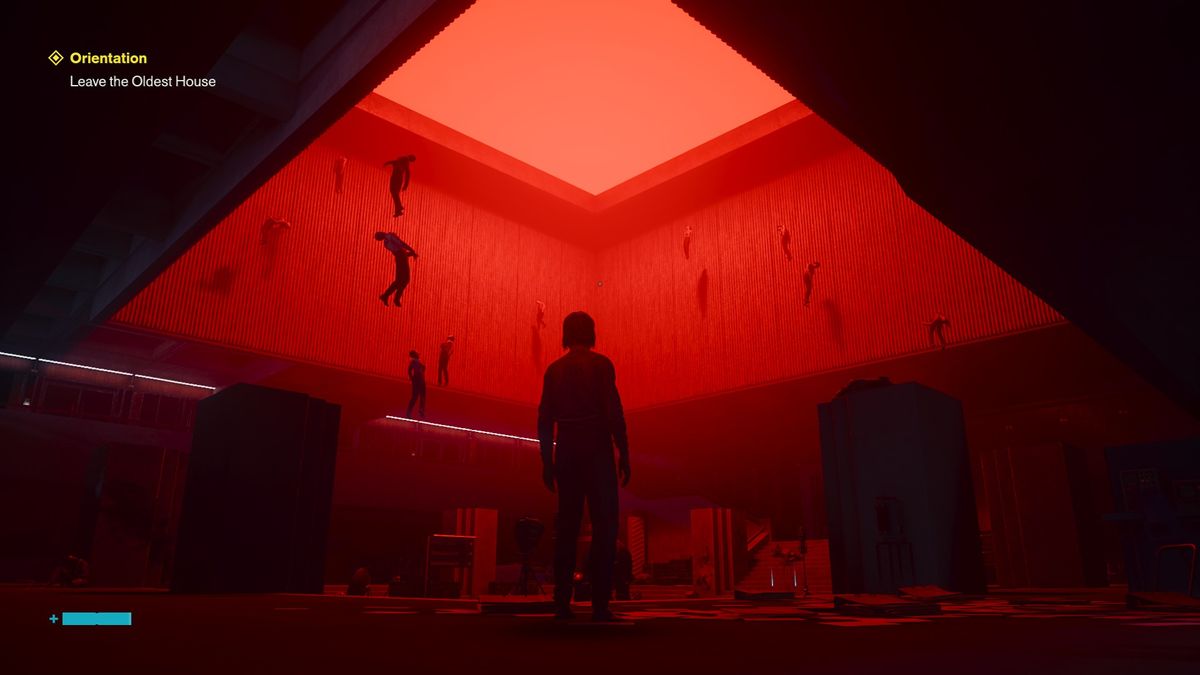
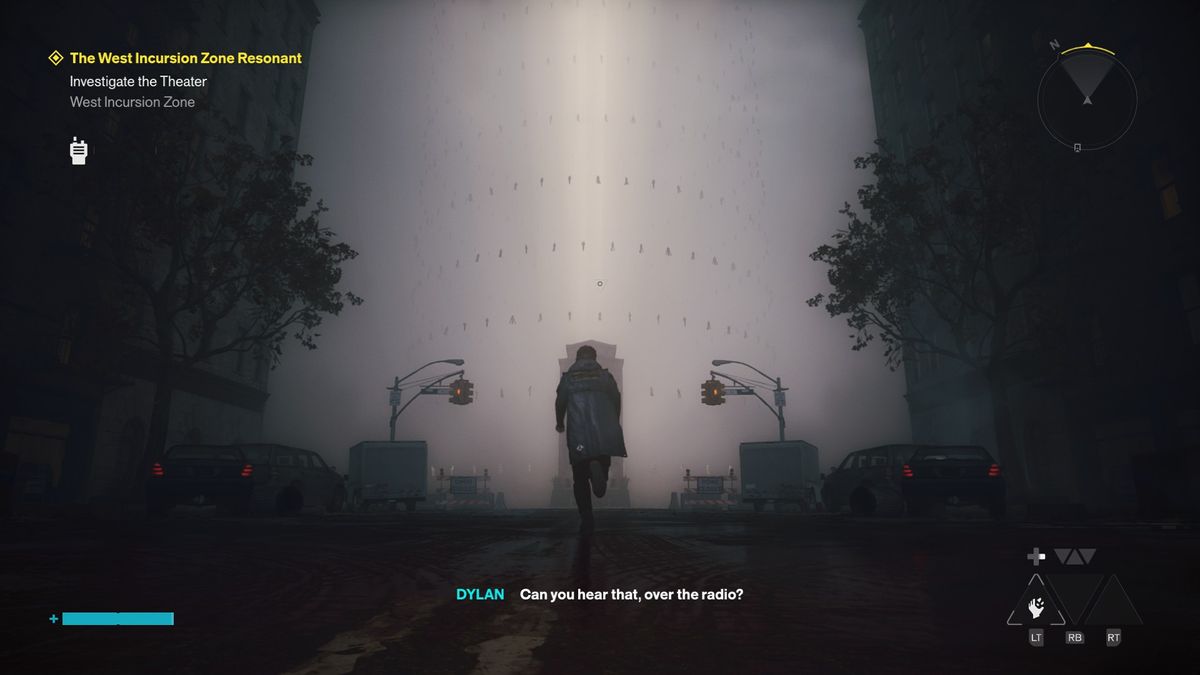
It’s arresting, at turns breathtakingly incomprehensible and queasily familiar. Nestled into the mutated Manhattan’s warped streets are pockets of untouched city life: abandoned cafes and laundromats and bespoke art galleries, which only heighten the sense of eeriness through their proximity to reality’s active unspooling.
It’s gorgeous, a sequel that’s begging for an inevitable photo mode update. And it’s a pleasure to move through, with Dylan’s accumulating collection of mobility superpowers—floating, air-dashing, double-jumping, and eventually, freely reorienting gravity—allowing for truly impressive feats of traversal design.
I just wish I could say the same for all the hours of fighting I had to do.
Break in the pattern
I wanted to enjoy the concept of Resonant’s combat. While Jesse wielded a manifold pseudogun in the OG Control, Dylan employs a different sort of shape-shifting weapon technique courtesy of the object his sister impaled in his sternum. It’s called the Aberrant, and in his hands, it can assume and discard the shapes of different melee weapons on demand: Depending on your preference, it can be a hatchet; a scythe, a pair of short swords, a hammer, a drill, an orbiting, levitating sawblade, and more.
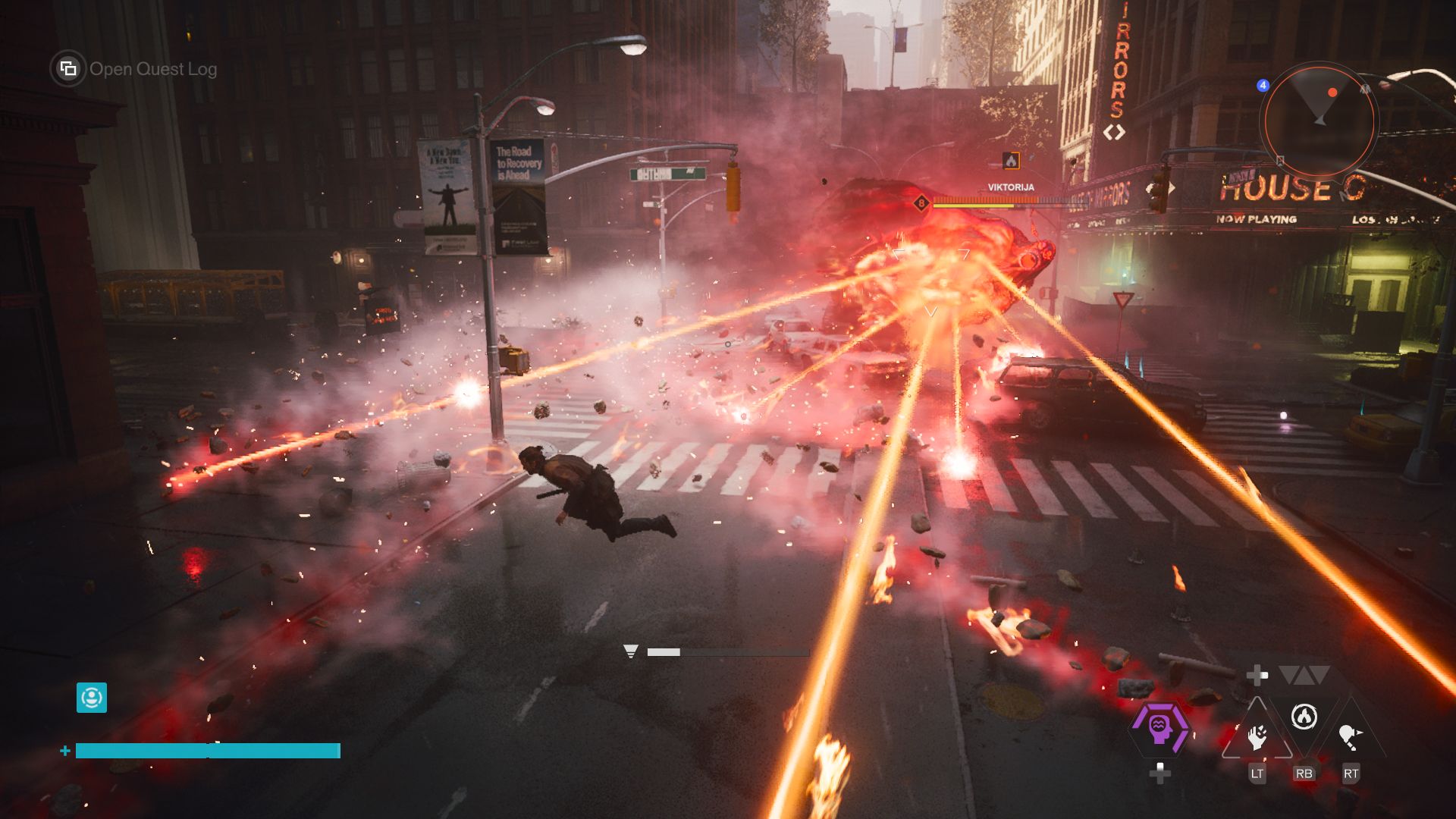
Playing a guy who can throw rocks with his brain and has a stick that can be infinite swords should be cool. In practice, it’s… aggressively fine.
While eventual unlocks add necessary depth and variety, Resonant’s opening hours suffer from the cardinal sin of its combat design: It’s an action game where basic attacks don’t have the juice. On its own, pushing the attack button won’t achieve much except lightly grazing the heavy enemies that need to be killed to finish each fight. Instead, Dylan has to pile on temporary damage bonuses—granted most easily by staggering and executing lesser enemies—to make swinging his magical mystery club worthwhile.
Resonant’s handful of boss fights are more engaging threats to navigate (though the sheer heft of their health bars still feels like a slog). But the endless rounds of generic creep culling that make up the bulk of playtime don’t provide particularly interesting problems to solve. Instead, they’re the same predicament with a binary outcome: Either you’ve stacked enough damage buffs that hitting a heavy enemy will accomplish something, or you can spend your time whittling away at its health bar until you get a chance to set yourself up properly.
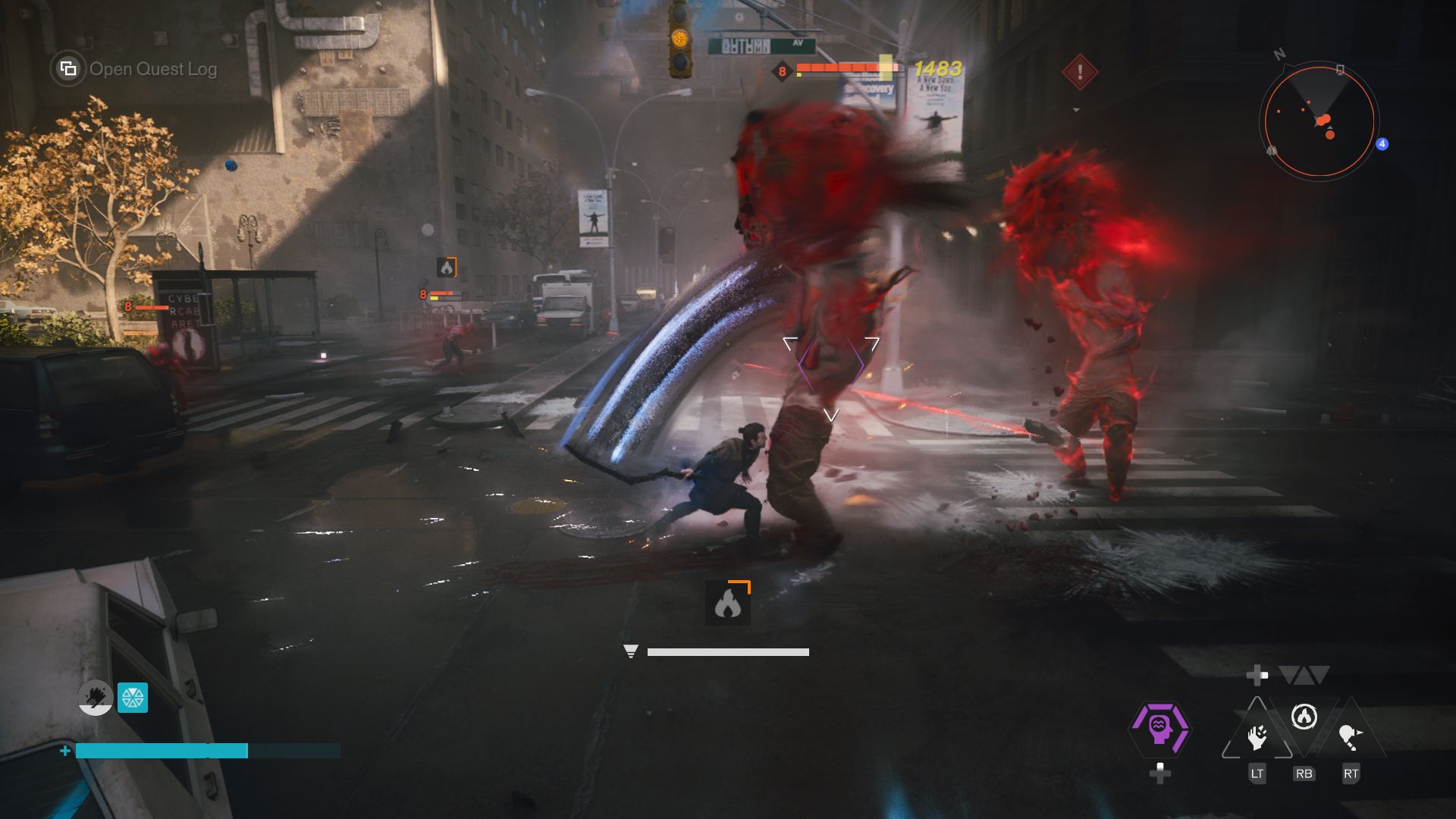
To be fair, sometimes a guy will have a forcefield on him. This provides the benefit of occasionally making things more annoying.
Still, if all the pieces of Dylan’s combat kit are moving with the right rhythm, it can deliver sparks of satisfaction. When there’s nothing to trip up my flow of staggering fodder, buffing myself with their execution, and tearing into heavy enemies with damage-boosted obsidian daggers and stone-clad fists, Dylan’s capacity for carnage makes an enjoyable spectacle as he launches from one short-lived target to the next.
Something inevitably will trip up our boy, however: My last ounce of power—the resource that fuels my combat abilities like rock telekinesis or toggleable fire damage—will be wasted when inconsistent auto-targeting flings my boulder at the wrong enemy. I’ll earn an expendable damage buff from a perfect dodge just for Dylan to lunge past the Hiss horror I intended to merc and spend it whiffing at empty air.
I’ll be staggered enough times by the sheer volume of Mold monster projectiles that I’ll miss my peak damage Goldilocks window. An enemy will teleport away just as I’m winding up a triple-buffed finishing combo. Or, after watching the same enemy’s execution animation a few dozen too many times, it’ll just feel like another few seconds separating me from the parts of Control I’m actually interested in seeing.
That said, I’m still willing to award points for the fact that the Board—the FBC’s unknowable astral plane patrons—celebrate every one of Dylan’s executions with an exultant, interdimensional honk.
Altered items
Even without those irritations, the spectacle of Dylan’s repetitive executions can’t sustain Resonant’s 30+ hour playtime. Its combat isn’t compelling enough to seek out—but it expects that I’m eager to do so. As I beelined towards the story leads and sidequests that most caught my interest, I’d enter areas where the enemies had scaled past my current level—a nebulous figure calculated from my current number of weapon upgrades, spent talent points, and collectible health and power increases.
An underleveled Dylan makes Resonant’s damage-sponginess even more pronounced, forcing me to circle back to combat encounters and world activities I’d intentionally noped out of just to get the Faden family’s sweet, soft killing machine back up to par. But even that progression scheme feels confused. Keeping pace with enemy scaling provided an excess of weapon upgrade materials and talent points—resources I needed to spend to level up, but had regularly run out of interesting options on which to spend them.
I quickly settled on a comfortable and capable set of weapon forms; once those were maxed out, any additional resources I gathered were spent on weapon shapes I never needed. Meanwhile, the glut of talent points I earned meant I was regularly choosing talents for abilities I didn’t even have access to. By the time I unlocked the game’s final combat ability, I’d already been upgrading it for hours because I had few other options left on the tree.
As progression lost its luster, the late game’s inflating enemy health pools and damage resistances stifled whatever welcome Resonant’s combat hadn’t already worn out. Mercifully, its granular difficulty adjustment settings helped soothe the chafing: Once I’d seen all the moving pieces in Dylan’s combat arsenal, I simply juiced his outgoing damage and stagger buildup to speed combat along in the story’s last few quests. I recommend anyone else do the same—ideally, earlier than I did.
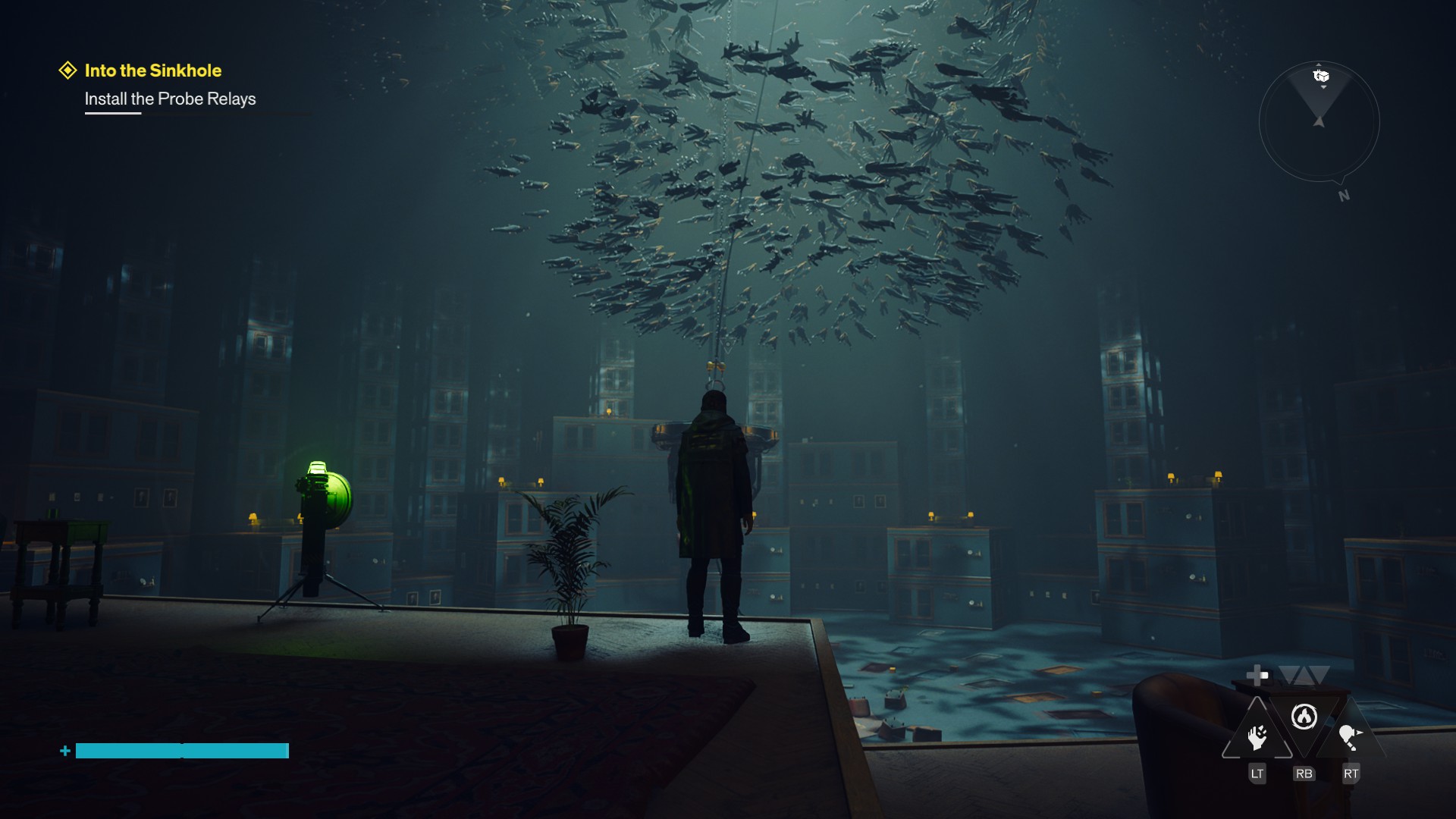
While carving up Hiss by the hundreds didn’t hold my interest, Resonant’s world did. Not all of its open world attractions are winners; I’m still not sure I understand one particular side activity I kept completing by aimlessly hurling boulders at rampant bits of junk. But I kept returning to Resonant for the privilege of existing within it.
It’s not just because the world looks good—never before has the texture of concrete been so celebrated—but it’s dense with intention that makes poking at its corners feel rewarding.
From the placement of blacked-out bureau reports to the deliberate layering of gravity-bending traversal routes, the pockets of Resonant’s Manhattan that stage its puzzles, side quests, and collectibles feel hand-crafted and considered where so many open world spaces feel perfunctory. That exploration might cash out in another chest of materials or another wave of Hiss guys to delete, but as long as I got to soak in another FBC memo, bespoke apartment interior, or ominous arrangement of questionably mundane objects, I got the prize I wanted.
Human resources
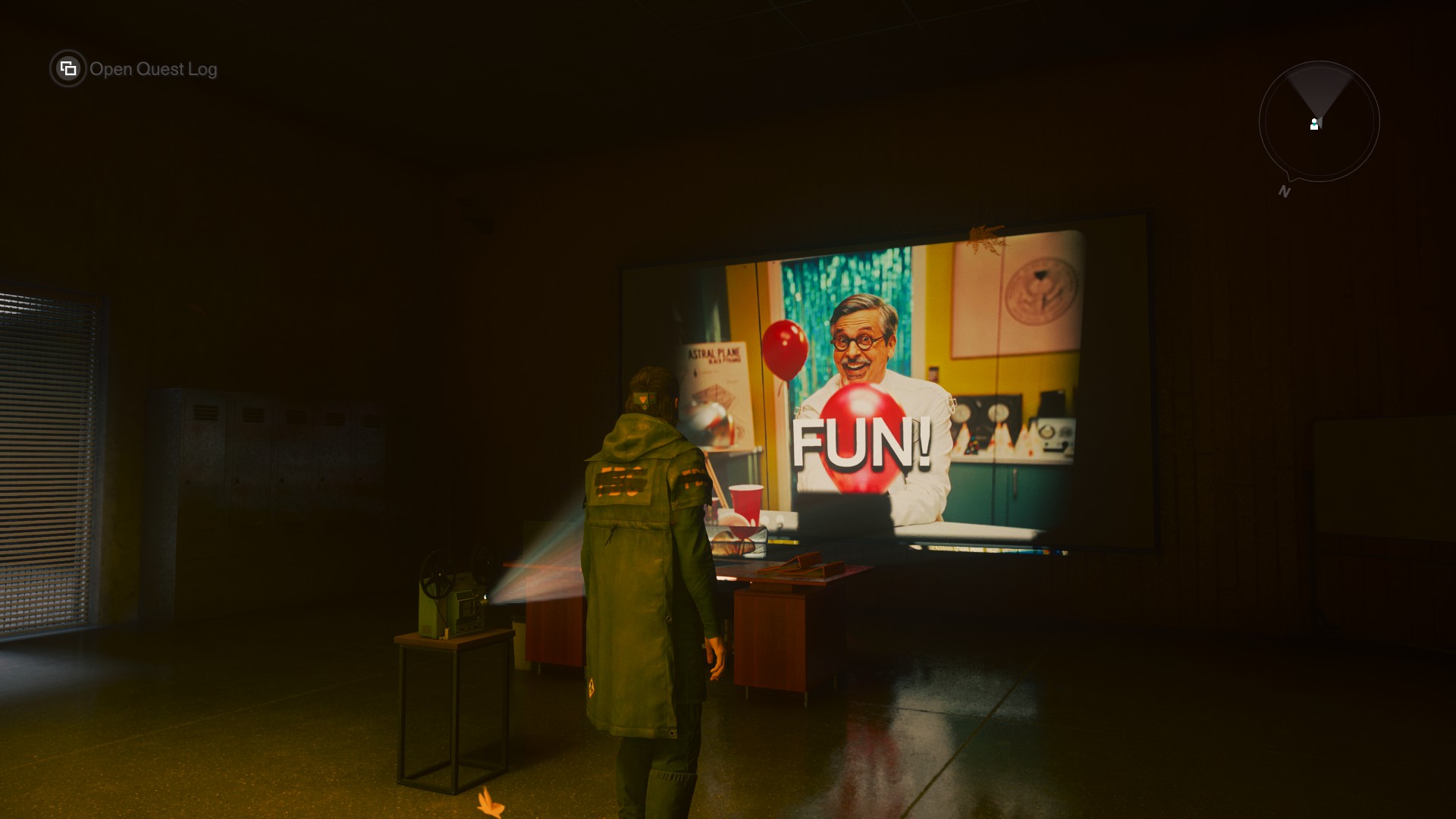
Story-wise, the sequel can’t fascinate in quite the same way Control could before it was a known quantity. But the embattled, functionalist footholds the FBC are fighting and failing to maintain throughout the city have an altogether different effect. Seeing the organization forced to abandon the redaction-heavy deniability of its paranatural purview to operate in the open and on the backfoot makes its mission of managing interdimensionally cursed radios and hellgate slide projectors feel impressively real.
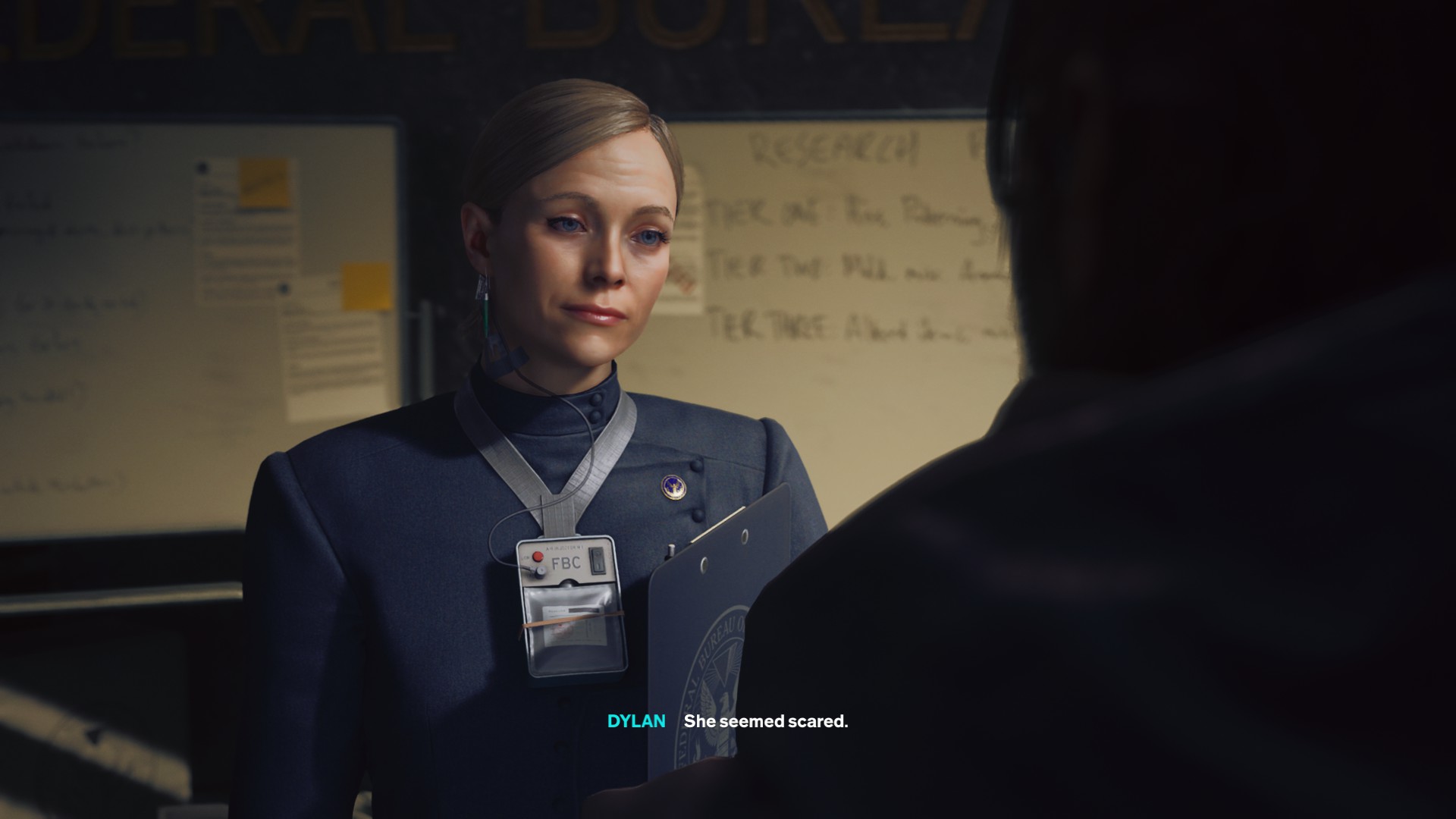
That’s thanks in large part to the talent and direction of Resonant’s voice cast. From its prime players to its nameless, proximity-barking NPCs, its performances feel so thoroughly, believably exhausted: Since the first game, half of the FBC has been isolated in lockdown within the Oldest House for seven years, only reconnecting with their bewildered and directionless fellows in the outside world when this new, unknowable apocalypse breaches containment.
And I can feel it. There’s a natural, organic cadence to the cast’s line deliveries, making Resonant’s writing read as genuine—whether its characters are overwhelmed to the point of breakdown by the scale of the crisis, entering a reverie over the metaphysical implications of a murderous stereo, or seething at the presence of the man who killed scores of their comrades.
Speaking of: Let’s talk about my sweet, slaughter-stained son, Dylan. Having endured repeated tragedy, isolation, unethical experimentation, and hostile interplanar possession for most of his life, he’s effectively a good-hearted 10 year old in the body of a 30-something year old man who can manipulate profound paranatural forces. I might have preferred another outing in Jesse’s shoes, but I warmed up to the younger Faden sibling more than I expected—aided by his growing, stumbling rapport with his impromptu FBC handler, Special Agent Zoe De Vera.
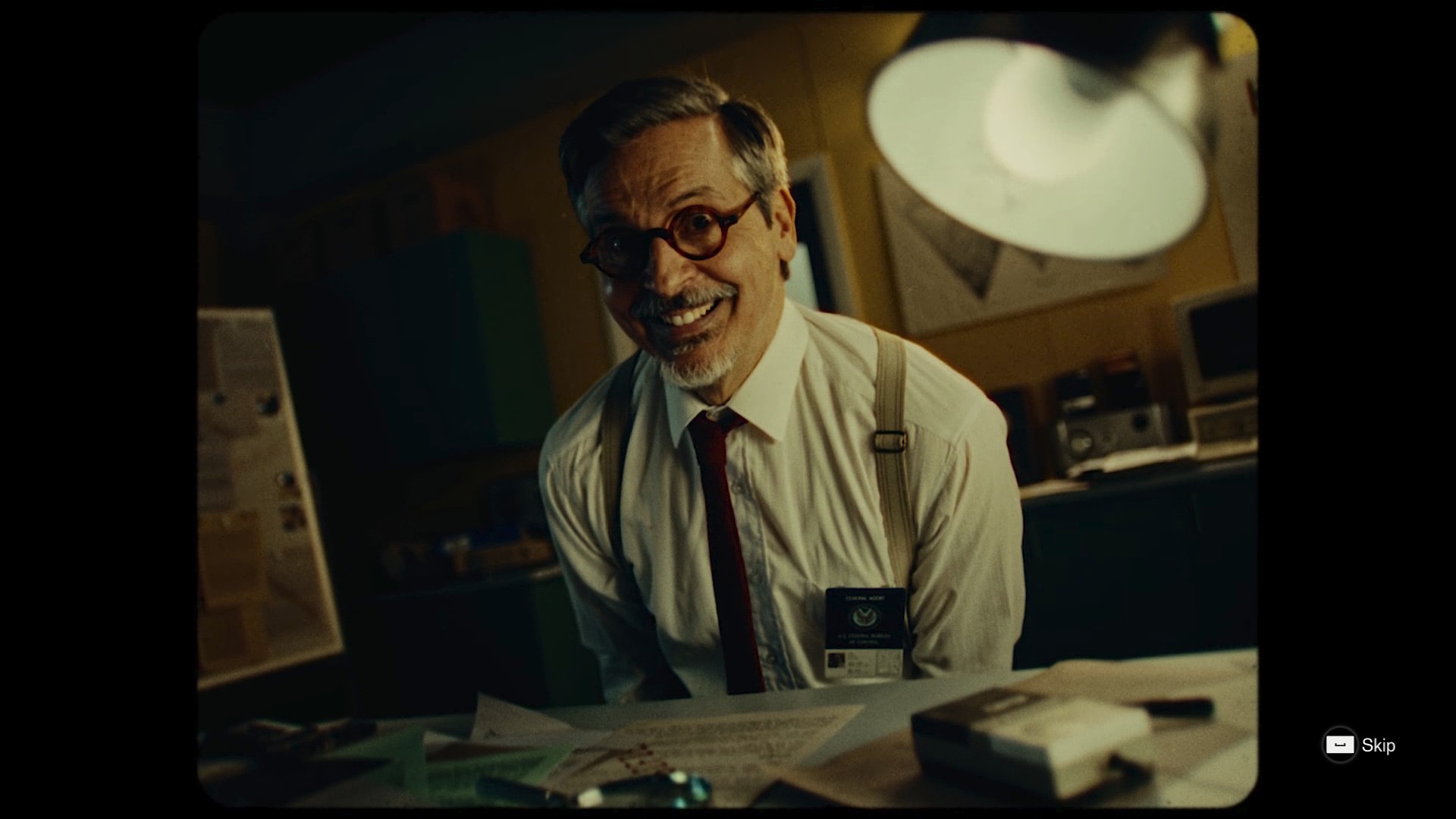
Thanks to his compound of sheltered naivety and his regret over being an implement of attempted omnicide, Dylan’s the best open world protagonist the FBC could hope to have fall into its lap: Even if he was worldly enough to know when not to offer his help, he’s too guilt-ridden to withhold it. And as the game delves deeper into his past as the subject of the FBC’s experimentation under all-timer bastard Dr. Casper Darling, he’s an excellent lens for exploring the fallout of an organization that knows just enough to be dangerous to all of reality.
If only that fallout was more fun to fight.
Read the full article here