

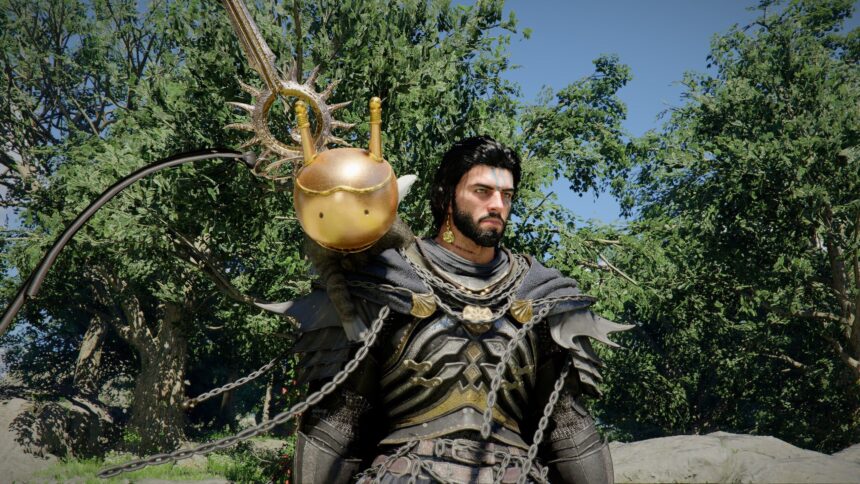
Crimson Desert, a game about simulating a large Scottish man and his friends and sometimes their adventures in space, is pretty weird. Depending on which precise member of the PC Gamer editorial staff you ask, that’s either high praise or venomous criticism (I’m neutral—the game runs terribly on my machine, so I’ve not played much of it).
Dinga Bakaba, studio director at Arkane Lyon whose name is on all three Dishonored games (including the first game’s Dunwall City Trials DLC, against which I bear a personal blood grudge), is firmly in the former camp. He’s all about Pearl Abyss’ wacky wonderful world. In a post on X, Bakaba donned his analytical hat and pointed out that “Crimson Desert functions opposite to most games of this type.”
Article continues below
Quick 🧵: interesting how Crimson Desert functions opposite to most games of this type: generally the beginning is magical and after a while you start to see the strings “ah this is close to this game, oh this is going to be repeated etc. But in CD…March 30, 2026
Plus, Crimson Desert keeps its powder dry, holding mechanics and systems in reserve to spring them on you well past where other games would: “It keeps on introducing new things, giving more significance to systems and making them interact with each other. It doesn’t hurt that most of them are ‘meaty’ and realized diegetically, and that there is also some tonal liberties with some (smartly engineered) stupid fun.”
I can certainly see where an imsim sicko like Bakaba (and me) would take a shine to Crimson Desert’s weird gamut of strange systemic goings-on. I suspect Bakaba might find it a bit heartening, too, that a game so thoroughly peculiar has garnered such a strong response from players. “In a time of fast consumption, a game that is sticky because it has friction, and not because it’s smiley feels amazing,” he says. Well, that bodes well for Dishonored 3, then.
Read the full article here