
SUBSCRIBE
Tech Journal Now
  • Home
  • News
  • AI
  • Reviews
  • Guides
  • Best Buy
  • Software
  • Games
Reading: Deus Ex: Invisible War wasn’t what it should have been because the studio moved to an engine that was really built for Thief: ‘A super-boneheaded call, very bad decision… it really tanked development’
Share
Tech Journal NowTech Journal Now
Font ResizerAa
  • News
  • Reviews
  • Guides
  • AI
  • Best Buy
  • Games
  • Software
Search
  • Home
  • News
  • AI
  • Reviews
  • Guides
  • Best Buy
  • Software
  • Games
Have an existing account? Sign In
Follow US
© Foxiz News Network. Ruby Design Company. All Rights Reserved.
Tech Journal Now > Games > Deus Ex: Invisible War wasn’t what it should have been because the studio moved to an engine that was really built for Thief: ‘A super-boneheaded call, very bad decision… it really tanked development’
Games

Deus Ex: Invisible War wasn’t what it should have been because the studio moved to an engine that was really built for Thief: ‘A super-boneheaded call, very bad decision… it really tanked development’

News Room
Last updated: March 4, 2026 9:37 pm
News Room
Share
7 Min Read
SHARE

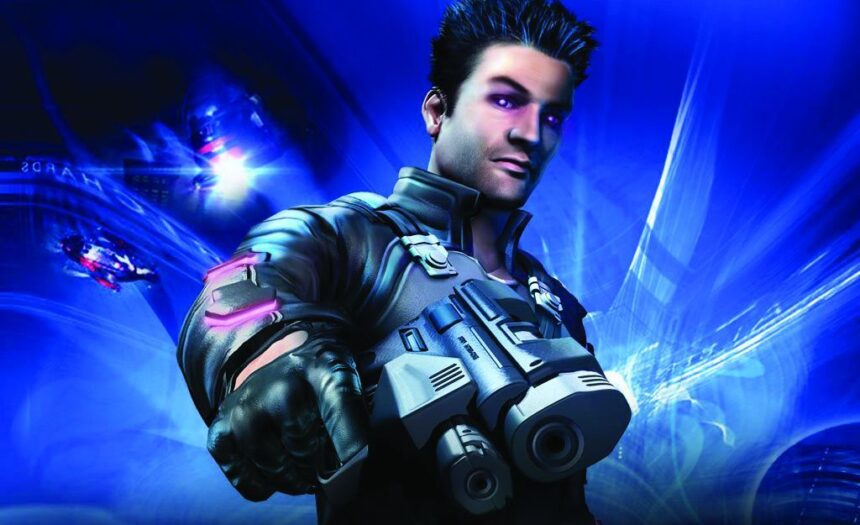
Deus Ex: Invisible War has its defenders, including PC Gamer’s own Joshua Wolens, but even the most stout-hearted of them would never go as far as saying it was a worthy sequel to the original. Where Deus Ex ripped up the rulebook and set an example that the immsim genre has struggled to replicate ever since, Invisible War was a much more trammelled game that, for all the good ideas, felt less expansive and ambitious.

Is it a decent game? I’d say yes. Is it the Deus Ex 2 we should’ve had? Not in a million years. Sorry Josh.

In a new retrospective in Edge magazine, the game’s developers discuss the various issues Invisible War faced. Fear was not one of them: the Ion Storm Austin devs were itching to get to work on it. The original game’s designer Harvey Smith is asked if he ever felt intimidated about following up such a well-loved title:


Related articles

“The truth is, no,” says Smith. “We finished Deus Ex and everyone loved it, and we just thought, ‘Well, the games we want to make are the right kinds of games’. And then you go and do something else, and you fall flat on your face.”

The issues began in 2001 when there was a top-down decision that Ion Storm Austin’s two in-development games should use the same engine. The games were Invisible War and Thief: Deadly Shadows, and the idea was that team members could more easily transition between projects that were built on the same tech. Only problem was, they didn’t have the actual tech.

The plan was to modify Unreal Engine 2 with an improved shadow and lighting system. But this was a tonne of work that needed to be handled in-house, and the focus of these modifications was Thief rather than Deus Ex. “I was a leader at the studio and I should have pushed back on that more,” says Smith.

Invisible War’s lead designer Ricardo Bare expresses his feelings rather more bluntly: “It was a super-boneheaded call. A very bad decision. It really tanked development.”

Keep up to date with the most important stories and the best deals, as picked by the PC Gamer team.

The new engine was being built for a Thief game, with smaller environments and reactive lighting, but struggled to cope with the much larger environments of a Deus Ex. Invisible War was packed with environmental details that brought the game’s frame rate lower and lower, until the devs had to strip out assets and objects just to get decent performance.

“The point of our game was to be object-dense,” says Bare. “Using that engine meant we had to compartmentalise.” Hence Invisible War’s abundance of loading screens.

(Image credit: Ion Storm)

“I wish we could redo that project and just stitch the maps together,” says Smith. “You get to a room, there’s a load. Another room, another load. It hurt the game. It sucked.”


Related articles

Added to which, Eidos had suddenly started paying a lot more attention to Deus Ex after the original’s sales, and was pushing for one change in particular that would cause enormous controversy.

“Eidos had some weird theories like ‘FPS games don’t sell’ or ‘RPGs don’t sell’,” says Smith. “And I was like, ‘Are you kidding?’ But people have their opinions and they’re trying to lead their companies, and if you have a mortgage and have a job, sometimes you have to do what the boss says. So, there was pressure from Eidos for it to be a console game.”

So: blame Xbox. Microsoft’s console became the target platform, alongside PC, but obviously had a fixed spec and couldn’t compete with the high-end gaming PCs of the day. All of which meant that the existing problems with the new engine were exacerbated even further.

“You go to console and you have a lot fewer systems for memory,” says Smith. “You need to develop for the baseline console. You can’t assume people are going to be able to upgrade, or be on the bleeding edge.

“But there were legit complaints,” he continues. “As we adapted Invisible War to console with the map sizes, the UI and everything, we walked into this kind of buggy, inelegantly-made-for-console game. It angered our most hardcore followers.”

Ultimately, Invisible War’s final form came down to these background problems rather than the team’s ideas for the sequel: they just couldn’t make the game they wanted to make. And for Harvey Smith in particular it was a painful time, though with hindsight he says his regrets are more about decisions he made as project director, rather than the final product.

“It was very painful to go from Deus Ex, where everyone was lauding us, to Invisible War, where I felt like I’d done a bad job,” Smith says. “Disappointing the fans hurt. People not liking the game as much hurt. Acknowledging that I had made mistakes hurt. It was painful. For me, hypersensitive to criticism at the time, it felt brutal.”

But painful as the fallout was, there would ultimately be a silver lining for the genre. Dissatisfied with Eidos and its management of Ion Storm Austin, Smith and Bare both left the company in 2004, alongside other senior staff like Warren Spector, and it was shut down a year later. Smith and Bare have subsequently maintained a long-lasting collaborative relationship, working on some of the best immersive sims ever made like Dishonored, Dishonored 2, and Prey.

Read the full article here

You Might Also Like

The many-boxed roadmap represents everything I hate about shooters right now

Highguard’s 5v5 raid is ‘here to stay’ after developer noticed half the playerbase jumped over to its experimental mode at the weekend

Best ways to get food in StarRupture

Debate: Which game series is the most popular to cosplay?

Fallout Season 2 has doubled the number of people playing the Fallout games on Steam

Share This Article
Facebook Twitter Email Print
Leave a comment Leave a comment

Leave a Reply Cancel reply

Your email address will not be published. Required fields are marked *

- Advertisement -
Ad image

Trending Stories

News

University of Washington team working on CPR feedback device wins health innovation challenge

March 5, 2026
Games

Marathon players accidentally smuggle rare loot out of Server Slam and into full game

March 5, 2026
News

Tech Moves: Amperity and Siteimprove name CMOs; AWS director departs; Gong’s new exec

March 5, 2026
Games

Casting demons like they were spells with Diablo 4’s warlock rules, but now I’m dying to see how Lord of Hatred will transform the other classes

March 5, 2026
Software

Why iPhone users should be concerned – Computerworld

March 5, 2026
News

Sub Pop Records leaving Amazon HQ space for new store on Seattle waterfront

March 5, 2026

Always Stay Up to Date

Subscribe to our newsletter to get our newest articles instantly!

Follow US on Social Media

Facebook Youtube Steam Twitch Unity

2024 © Prices.com LLC. All Rights Reserved.

Tech Journal Now

Quick Links

  • Privacy Policy
  • Terms of use
  • For Advertisers
  • Contact
Welcome Back!

Sign in to your account

Username or Email Address
Password

Lost your password?