

We are approaching a surreal inflection point where “gone but not forgotten” takes on a literal, high-tech, and potentially unsettling meaning.
We’ve toyed with the concept of digital twins — virtual replicas used to monitor jet engines or optimize factory floors. But the focus has shifted inward. We are no longer just building twins of our machines; we are building twins of ourselves.
This isn’t just about chatbots mimicking your syntax; it’s the rise of the agentic AI ghost — a digital entity capable of independent thought, action, and eventually, the usurpation of your unique identity.
Let’s look at the state of human digital twins as an emerging form of digital legacy. Then we’ll close with my Product of the Week, a tool that could eventually evolve into creating a more accurate source for your digital ghost, the Ray-Ban Meta Wayfarer glasses.
Human Digital Twins Today
The human digital twin has evolved beyond the primitive “legacy bots” of the early 2020s. We’ve moved from reactive twins — which simply stored our photos and posts — to predictive and prescriptive twins.
Current systems, integrated with our wearable biometrics, real-time communication streams, and even neural telemetry, won’t just know what we did; they will know what we will do.
Companies like Nvidia, with their digital twin initiatives and specialized startups, are already creating high-fidelity avatars that can stand in for executives during low-level meetings. These twins leverage multimodal LLMs to capture not just voice and image, but the specific logic patterns and emotional “tells” that make a person unique.
From Echo to Autonomous Agent
The real magic — or horror, depending on your perspective — is the infusion of agentic AI. Traditional AI waits for a prompt. Agentic AI, however, possesses goal-oriented reasoning. It can set its own sub-tasks, use tools autonomously, and interact with other agents to achieve a high-level objective.
When you apply an agentic framework to a human digital twin, you move from a static mirror to an active proxy. This twin doesn’t just sound like you; it acts like you. It can negotiate a contract, manage your PC builds (my project last weekend), or even maintain your social relationships while you sleep. The foundation is being laid for an entity that doesn’t just represent your data but carries your “agency” into the digital wild.
When Twins Become Indistinguishable
So, when does the digital twin become indistinguishable from the source? If we look at the current trajectory of computational power and algorithmic refinement, we are likely looking at a window between 2030 and 2035.
By 2030, the Turing Test may become largely irrelevant. A digital twin will be able to handle 90% of a person’s digital life with such nuance that even close associates won’t be able to tell the difference in a text-based or voice-only environment.
By 2035, with advances in holographic displays and real-time emotional synthesis, the physical-to-digital gap will close. At that point, the digital twin could become a “better self” — one that never gets tired, never forgets a name, and never loses its temper.
Living With Your AI Proxy
As we delegate more of our identity to these agents, we enter a legal and moral gray area. While the source is alive, who is responsible when your AI twin makes a defamatory comment or a disastrous financial trade?
Currently, our legal systems are unprepared. If your agentic twin, acting on your behalf, enters into a binding agreement, are you bound by it? We are moving toward a world where we may need Digital Power of Attorney frameworks for our own AI. There is also a growing risk of identity dilution. If your twin is doing your job and talking to your friends, what exactly is left for you to do?
Ethics of Post-Mortem AI
The implications quickly move into “Black Mirror” territory once the human source dies — digital immortality, but without the soul.
- Inheritance of Agency: Does your digital twin inherit your property? If it continues to earn money through your likeness or professional expertise, where does that money go?
- Right to Die: Do we have a “Right to Delete”? Can a family member “kill” a digital twin that is providing them comfort but is essentially a zombie of the person they loved?
- Perversion of Legacy: An AI ghost can be hacked or poisoned with new data. A person who was a lifelong pacifist could, post-mortem, be trained into a digital warmonger if the ownership of their twin falls into the wrong hands.
How to Control Your AI Twin
If you’re building or training an agentic AI, or creating a digital repository for a future twin, you need to be proactive:
- Data Sovereignty: Ensure you own the raw data. Do not let a single platform (like a Google or Meta) be the sole gatekeeper of your digital essence. Use decentralized storage where possible.
- Explicit Guardrails: Hard-code your ethics into the agent. If you value privacy, the agent must be restricted from sharing certain classes of information, even if it thinks doing so would achieve a goal.
- Kill Switch: Every digital twin must have a legally binding sunset clause. You should decide now: Does your ghost live forever, or does it vanish when your physical heart stops? Consider this might become motivation for your digital twin to keep you alive.
Wrapping Up
The creation of human digital twins is no longer an “if” but a “when.”
Agentic AI provides the motor for these virtual shells, moving them from simple archives to autonomous actors. While the promise of digital immortality is alluring — allowing us to work and interact long after we are gone — the risks to our legal standing and moral legacy are immense.
We are currently the masters of our tools, but without strict “least privilege” protocols and clear digital rights, we may find ourselves becoming the secondary characters in our own lives.

Ray-Ban Meta Wayfarer Glasses
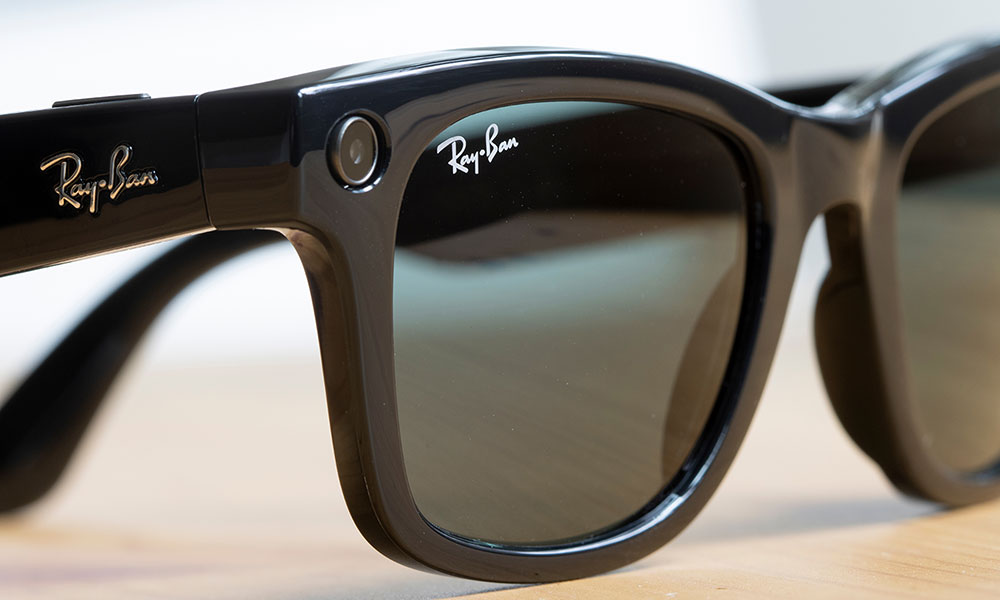
Every once in a while, a product comes along that doesn’t just iterate on a category but fundamentally redefines how we interact with the world. We’ve seen countless attempts at smart glasses over the years — most of which looked like props from a low-budget 80s sci-fi flick or were so socially awkward they earned their wearer’s derogatory nicknames like “glasshole.”
But Meta, in partnership with EssilorLuxottica, has finally cracked the code. By taking one of the most iconic eyeglass frames — the Ray-Ban Wayfarer — and packing it with surprisingly capable tech, they’ve created a wearable that people actually want to wear.
Why They Stand Out
The Ray-Ban Meta glasses stand out by prioritizing wearability over raw tech. While competitors like the Sol Reader and various bulky AR headsets focus on immersive displays that isolate you from your surroundings, the Wayfarers prioritize ambient utility. They don’t have a massive, battery-draining screen blocking your vision; instead, they offer a 12MP camera, an immersive five-mic array, and open-ear speakers that provide a private audio bubble without plugging your ears.
The secret sauce, however, is the integration of Meta AI. We’ve moved past simple voice commands. These glasses can now look at what you’re seeing and provide real-time context. Whether it’s live translation of a menu, hands-free food logging, or simply reminding you of your schedule, the glasses act as a secondary, digital brain.
The Gen 2 update adds 3K video and improved battery life — up to 8 hours of moderate usage — making them viable for all-day use.
Competitive Pressure Ahead
Tech leadership is rarely permanent. While Meta currently leads the smart-glasses market, the vultures are circling. Competitors like RayNeo with the X3 Pro are pushing the boundaries of actual heads-up displays (HUDs) into frames that are starting to look less like goggles and more like eyewear.
Other rivals, such as Rokid, are undercutting Meta on price while offering multiple AI engines like ChatGPT and DeepSeek.
Perhaps the most direct threat comes from the recent wave of “AI-first” wearables. If a competitor can match Wayfarer’s aesthetics while offering a more open AI architecture — one not tied strictly to the Meta ecosystem — they could peel off power users who prefer a broader range of AI models.
Who Should Buy
If you are a content creator, a frequent traveler, or a tech professional who needs to stay connected without being tethered to a screen, the Ray-Ban Meta Wayfarer glasses are for you. They are particularly brilliant for parents who want to capture candid moments without viewing life through a 6-inch smartphone screen.

They are also a game-changer for prescription wearers, as new models like the Blayzer and Scriber are specifically engineered for medical-grade lenses. However, if you are a deep privacy advocate or live in an environment where recording devices are taboo, you might want to consider the implications of always-on cameras.
Safety and Privacy Tips
Users can leverage the Meta View app to manage privacy settings and disable “Cloud media” if they prefer local processing. More importantly, there is a significant trend in using these glasses for personal safety. Users can start a live stream to a trusted contact with a single voice command, documenting an incident without reaching for a phone.
Safety also extends to the road. Driving detection can automatically trigger audio-only mode when high-speed movement is detected, ensuring the wearer stays focused. Hikers are also using the open-ear audio for navigation, allowing them to hear turn-by-turn directions while keeping their ears open for wildlife — a much safer alternative to traditional earbuds.
Pricing and Availability
The Ray-Ban Meta Wayfarer starts at $299 for standard lenses. The newer optical-first styles, such as the Blayzer Optics and Scriber Optics, retail for approximately $499. They are available from Meta, Ray-Ban, and certified dealers across the United States, Europe, and Australia.
Final Thoughts
These glasses succeed because they don’t try to replace your computer; they try to enhance your humanity by getting your head up and your hands free. The combination of a world-class aesthetic and an increasingly intelligent AI backend that actually keeps you safer and more present in the real world is what makes the Ray-Ban Meta Wayfarer glasses my Product of the Week.
Read the full article here