

Amazon is reportedly cutting the spines off old books and scanning the pages at a Las Vegas facility, presumably to train AI models on text that exists almost nowhere else.
The company won’t confirm that’s the reason. It gave us the same statement it provided to 404 Media, which broke the story: it “purchases books through commercial channels to help develop and improve the products and services our customers use.”
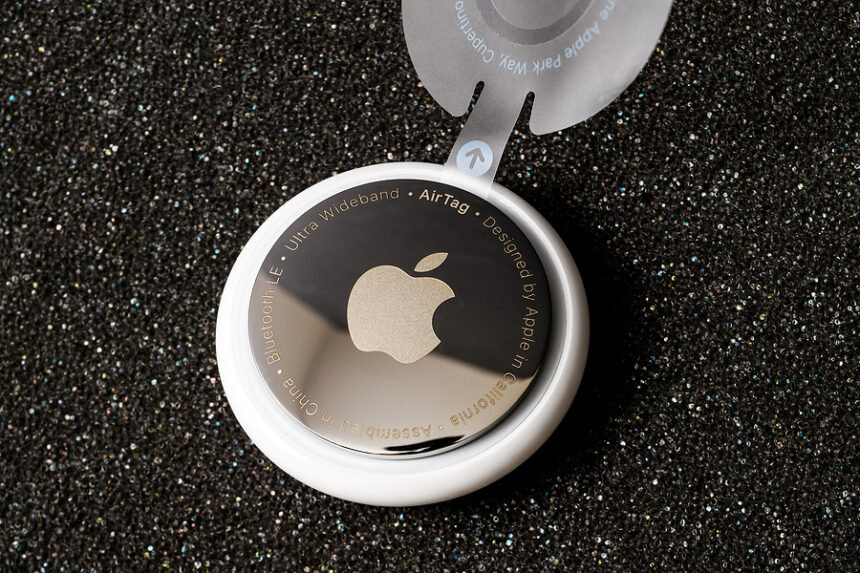
But what really got my attention (and professional admiration) was 404 Media’s means of discovering this was happening at all: reporter Emanuel Maiberg put an Apple AirTag in a rare book and watched where it went, like a biologist tracking an endangered salmon.
Maiberg, a co-founder of 404 Media, has been digging into this topic for a while. He reported in July that booksellers were seeing a massive surge in bulk orders from buyers who didn’t haggle.
According to Maiberg’s latest story, a seller informed him that they’d received an order for about 1,000 books through the marketplace Biblio, and agreed to slip an AirTag supplied by 404 Media into one of them. 404 Media granted the seller anonymity because the seller was worried the disclosure would hurt their business.
The book flew out of a California airport to Milwaukee, sat for two weeks in a distribution warehouse outside Kenosha, Wis., then went west by truck, making an overnight stop in Grand Junction, Colo., before arriving at an Amazon warehouse in Las Vegas known as LAS8.
As Maiberg recounts in the story, he was initially confused. LAS8 is largely a print-on-demand operation. It prints and ships books as customers order them, the opposite of destroying them.
But the AirTag put the book at the north end of the building, which Amazon employees who posted on a workers’ forum described as a separate operation with its own code: VGT3. Its logo, painted at the entrance, is a T. rex with an open book in its hands. Employees described a split operation: some workers cut books, others received them and scanned bar codes.
Booksellers told Maiberg the bulk orders never included the very rarest books, the ones old enough to predate ISBNs, suggesting that buyers were working methodically through the serial numbers assigned to every published book.
A history of reportorial tracking
This technique of journalistic investigation has actually been around for a while.
The Basel Action Network, a Seattle nonprofit, started planting GPS trackers inside old printers and monitors in 2014, dropping them at Goodwill locations and recyclers around the country to find out where America’s electronic waste actually ends up.
Nearly a third of the tracked devices were exported. Two old TVs dropped at Oregon recyclers traveled to a warehouse in south Seattle, then to the Port of Seattle, and to junkyards in Hong Kong. BAN’s trackers led to federal conspiracy charges against Total Reclaim, the Seattle recycler that had been handling that Oregon e-waste.
Over the years, others have adopted the same tactics. ABC News put trackers in plastic bags dropped at Walmart and Target recycling bins in 10 states, and Finland’s public broadcaster hid them in used clothing to trace where donated fast fashion actually ends up.
What’s different now is the hardware. BAN worked with MIT and used cellular trackers that needed a data plan. Maiberg used a $29 AirTag that reports its position by pinging any nearby iPhone.
What’s going on at VGT3?
Sure, it’s possible that the slicing and scanning at Amazon’s VGT3 could be for something other than training AI models. Amazon has digitized books for two decades, for example, going back to Search Inside the Book. But that program runs on files publishers submit themselves. It doesn’t require buying used copies on the open market and cutting the spines off.
Still, the circumstantial evidence is strong.
The books are rare titles with almost no resale market, but that’s exactly what makes them valuable as training data. The text was never digitized, and books printed before the AI boom are free of the machine-generated writing that degrades AI models trained on it.
The bookseller who sold the tracked shipment put it plainly to Maiberg: the books have historical and sentimental value, and the AI companies destroying them don’t care about that.
Cutting the spine isn’t just faster for scanning. It’s the specific act that made Anthropic’s version of this legal: in June 2025, a federal judge ruled that buying print books, stripping the bindings and scanning them was fair use, because the digital copy replaced an original that no longer existed.
The same ruling went against Anthropic on books it had downloaded from pirate sites, which is the claim the company has since settled for $1.5 billion.
As someone who has covered Amazon for a while, I should note that this could be some “peculiar” project that actually looks nothing like anything people are speculating about, which will only become clear “in the fullness of time,” to use some of the favorite phrases inside a company known for being “willing to be misunderstood for long periods of time.”
But in the meantime, it’s pretty fascinating to see everyday technology being used in a creative way to uncover something that otherwise might have never come to light.
Read the full article here