

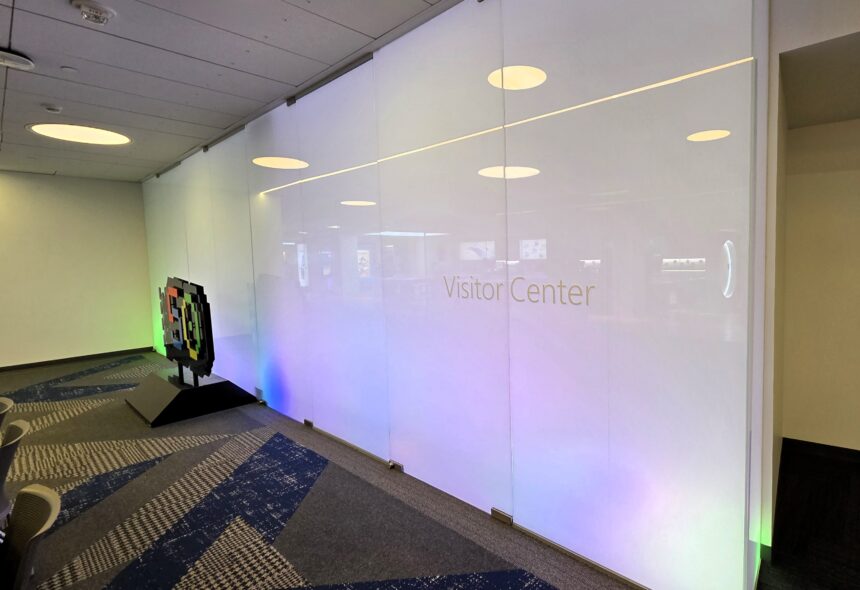
Microsoft’s Visitor Center, a hands-on tech showcase and historical exhibit in Redmond that was a destination for guests and employees for many years, has permanently closed.
The company confirmed the decision in response to an inquiry from GeekWire after we noticed that the space had been sealed off. “We have recently closed our Visitor Center and are in the process of repurposing its assets across our campus,” a spokesperson said.
The Visitor Center had been open in Microsoft Building 92 for about 15 years, following the company’s acquisition of the property, the former Eddie Bauer headquarters. Prior to that, the Visitor Center was housed next to the Microsoft Studios space on the outskirts of the campus.
The closure follows the shutdown last month of the Microsoft Library, also in Building 92, as part of what the company described as a shift to a modern, AI-powered learning experience.
Together, the changes leave a standalone Microsoft Store as the last remaining public-facing space in the building. Microsoft says the store remains open with no changes planned.
The company gave no specific reason for the Visitor Center closure. “We continuously evaluate our offices to ensure we are creating an exceptional workplace that fosters collaboration, builds community, and aligns to our business needs,” a spokesperson said in a statement.
Microsoft last year opened Experience Center One, a new four-story building and conference center on its revamped East Campus where invited customers and dignitaries get curated demos of AI solutions and meet with Microsoft executives.
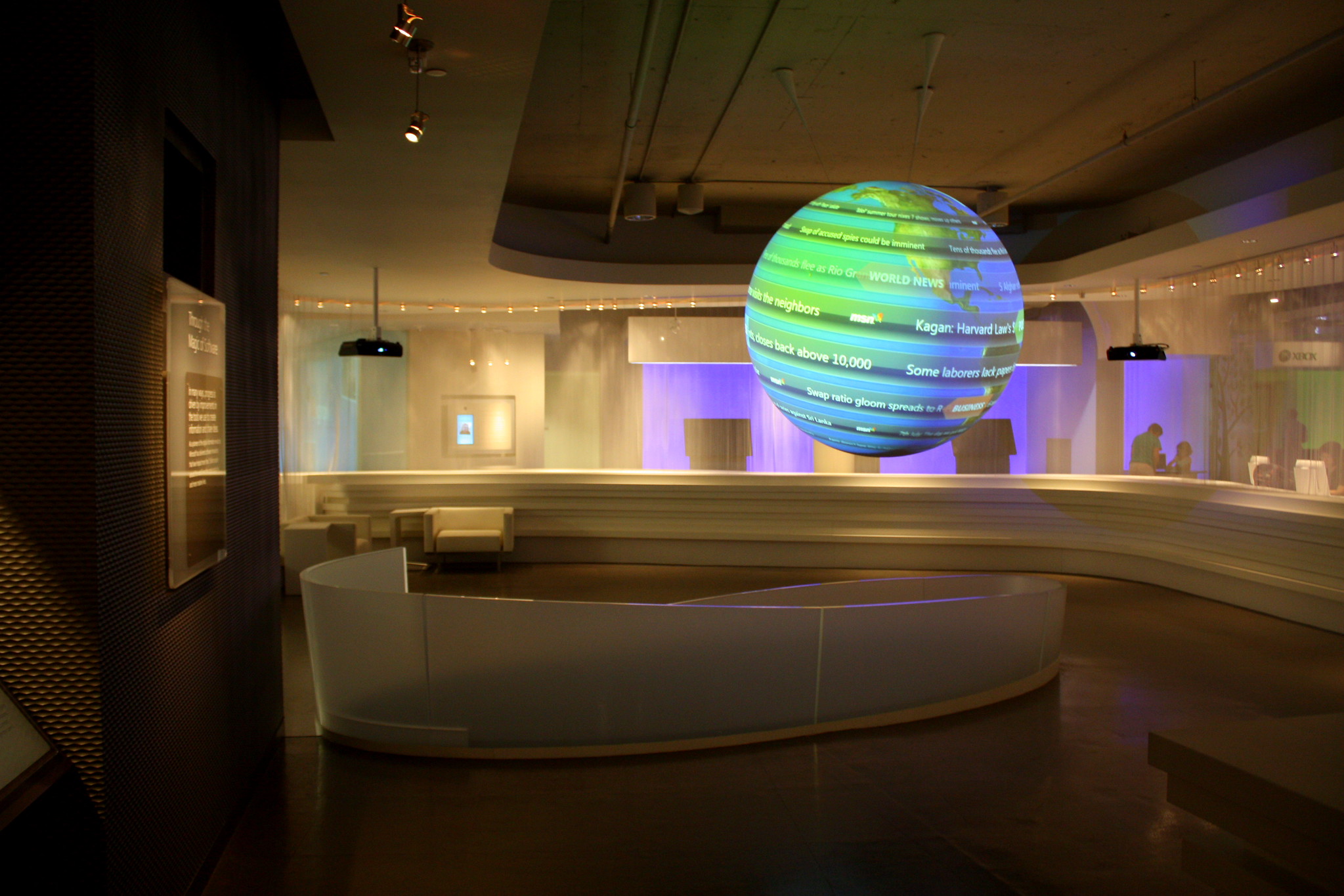
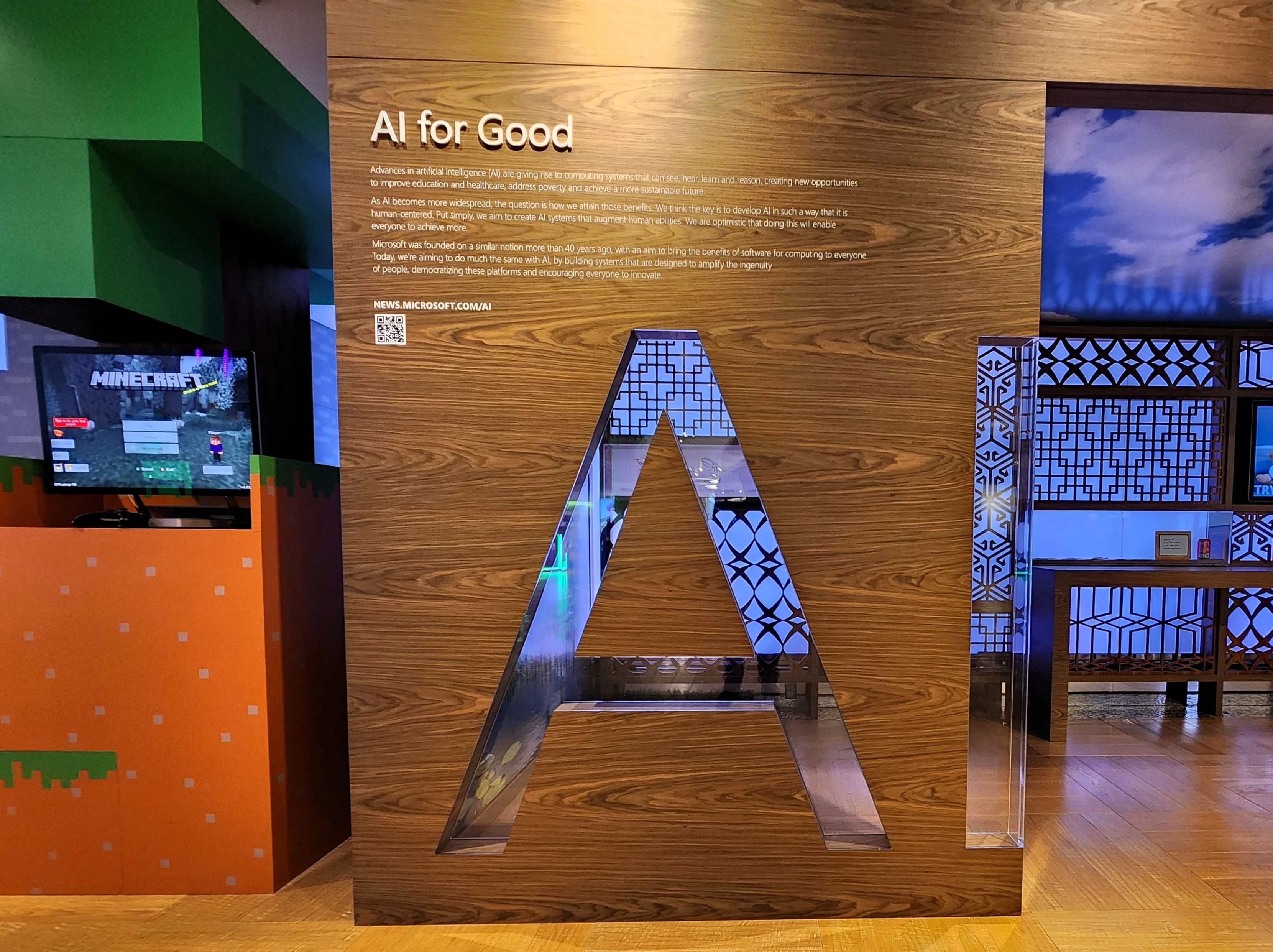
The much smaller Visitor Center was more accessible to the public, and took a different approach. The center featured interactive demos of Microsoft’s latest consumer technologies — including Windows, Xbox and Surface devices — and exhibits about the company’s initiatives in areas including sustainability and AI for Good.
Historical displays included an Altair 8800 computer, the hobbyist kit that inspired Bill Gates and Paul Allen to write the company’s original software, and a timeline wall tracing the company’s history from its 1975 founding through the modern campus renovation.
Microsoft isn’t saying how the space will be used in the future.
Read the full article here