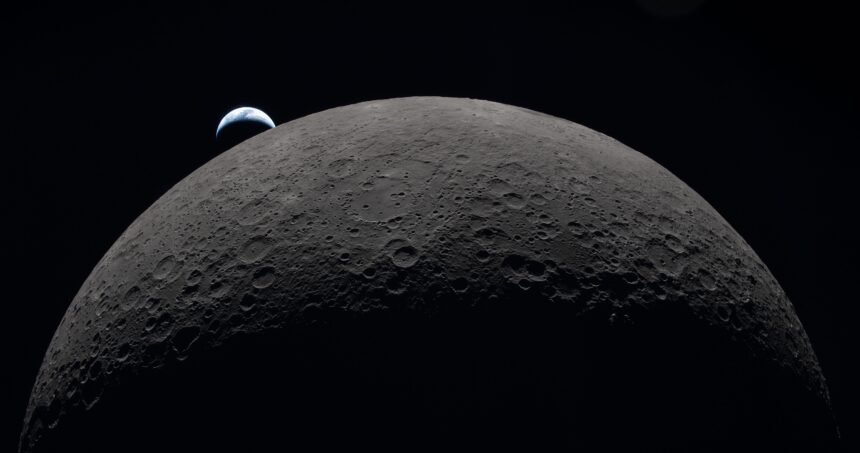
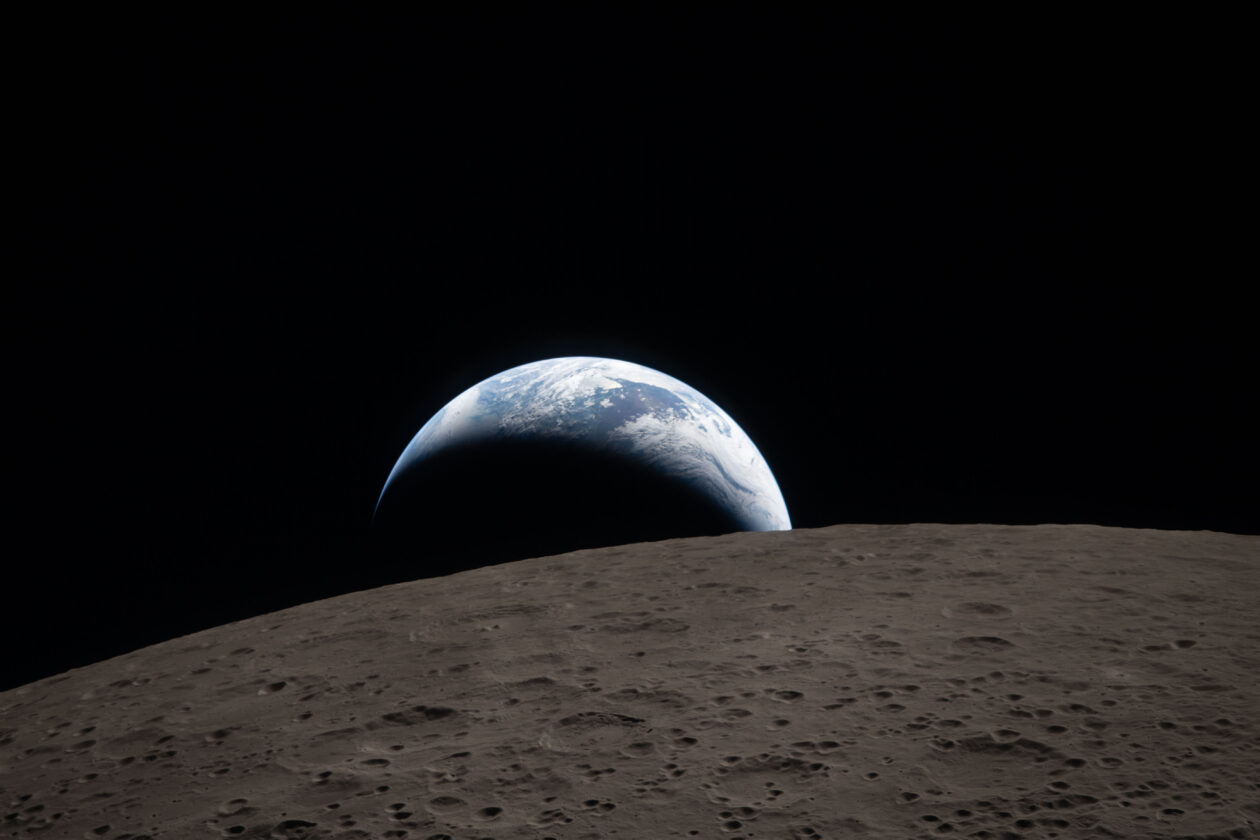
A crescent Earth sinks behind the moon’s disk in a wide-angle version of the Artemis 2 crew’s “Earthset” picture. (NASA Photo)
A day after the Artemis 2 mission’s historic lunar flyby, NASA has released a stunning set of high-resolution images documenting Earthset and Earthrise, a solar eclipse that set the moon aglow, and other views of the lunar far side and the astronauts who took the pictures.
The photographs were taken during a seven-hour lunar observation period at the farthest point of the Orion space capsule’s 10-day odyssey. The mission marked the first crewed trip around the moon since Apollo 17 in 1972, and the farthest-ever voyage by space travelers (252,756 miles from Earth, and more than 4,000 miles beyond the moon).
The Earthset photo was captured just as our home planet was sinking beneath the lunar horizon, followed about 40 minutes later by a picture of Earth rising above the horizon on the other side of the moon. The pictures rekindled the spirit of NASA’s original Earthrise photo, taken by astronaut Bill Anders during Apollo 8’s round-the-moon mission in 1968.
The original Earthrise is one of the best-known photos from the Apollo era, but it took decades to confirm who actually took the shot. Anders wasn’t the sort of person to make a fuss over attribution. After a long career at NASA, at the Nuclear Regulatory Commission, in the diplomatic corps and in private industry, he settled down in Western Washington and founded the Heritage Flight Museum in Burlington, Wash. Two years ago, he died in a plane crash in waters off the San Juan Islands at the age of 90.
Anders and the original Earthrise aren’t the only connections linking Artemis 2 with the Pacific Northwest. The success of the mission depends in part on components built in the Seattle area. L3Harris’ Aerojet Rocketdyne facility in Redmond worked on Orion’s main engine and built some of its thrusters, while Karman Space Systems’ Mukilteo facility provided mechanisms for Orion’s parachute deployment system and emergency hatch release system.
Artemis 2’s four astronauts — NASA mission commander Reid Wiseman, pilot Victor Glover, mission specialist Christina Koch and Canadian astronaut Jeremy Hansen — were scheduled for staggered off-duty periods today as Orion coasted toward Friday’s Pacific Ocean splashdown. They’re due to have a ship-to-ship chat with the crew of the International Space Station at 2:40 p.m. ET (11:40 a.m. PT), and you can listen in via YouTube.
Meanwhile, NASA’s image-processing team put in long hours overnight to work on the pictures taken by Artemis 2’s astronauts during the flyby. Pictures are being posted to NASA’s lunar flyby gallery. Check out these highlights, and click on the images to feast your eyes on higher-resolution views:
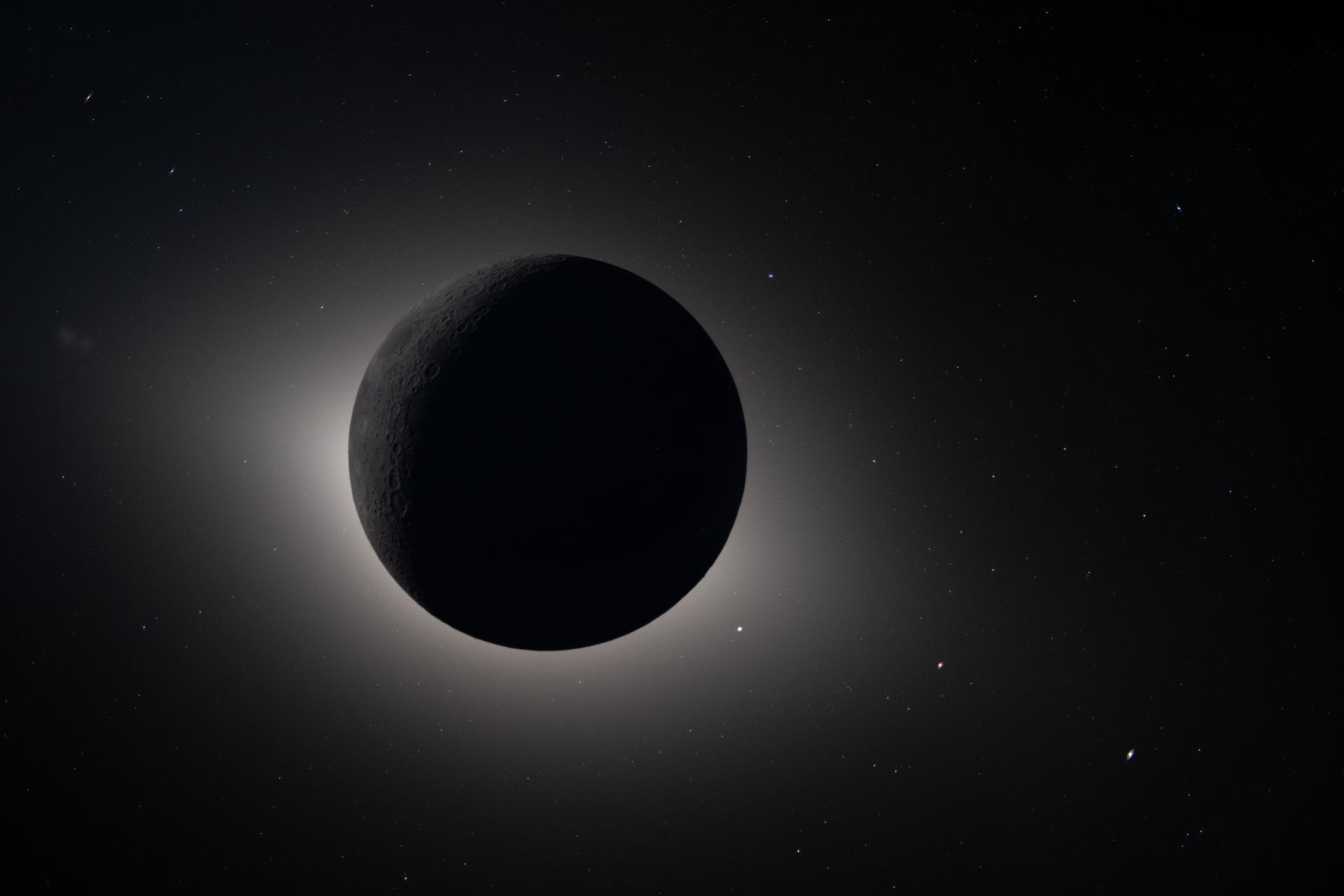
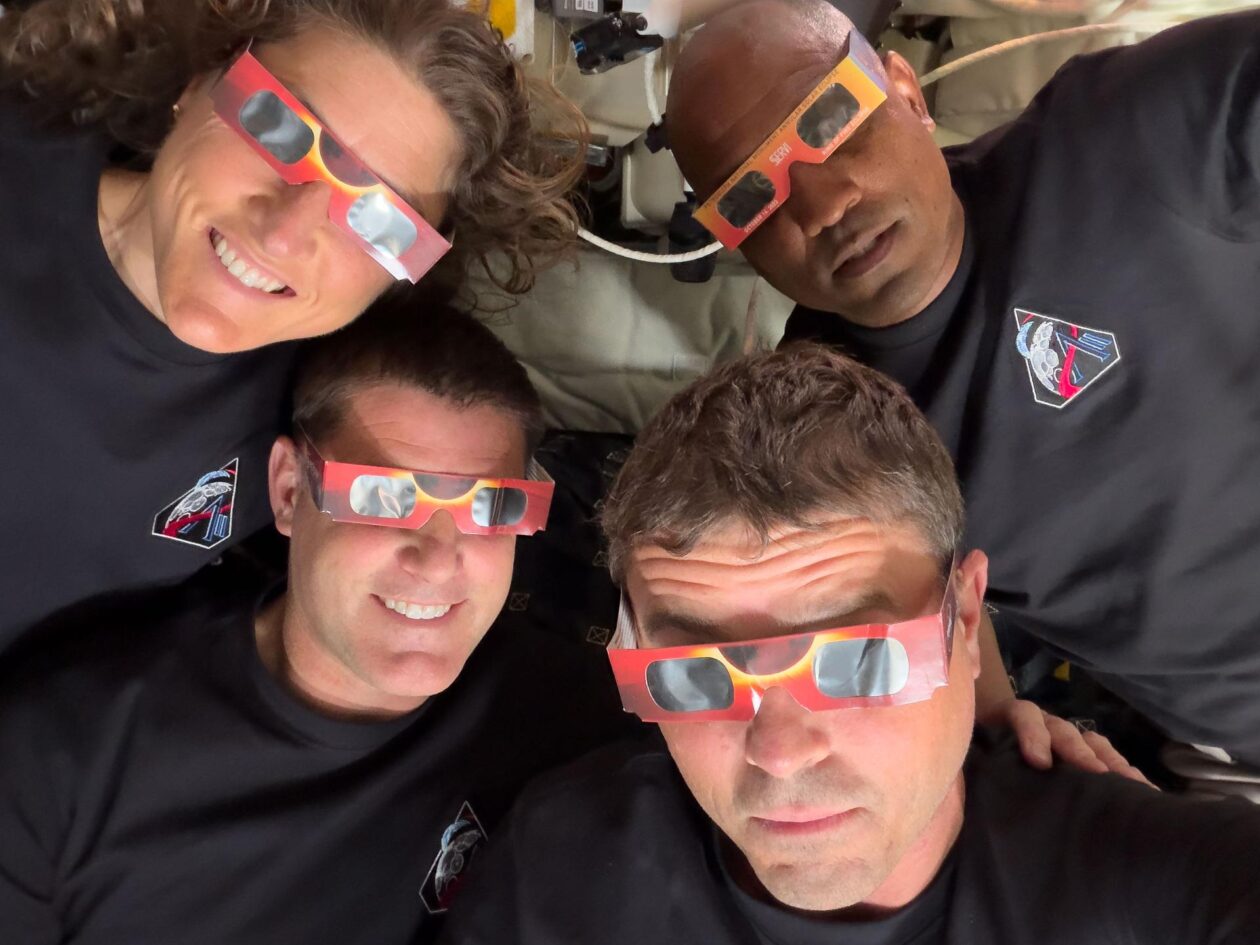
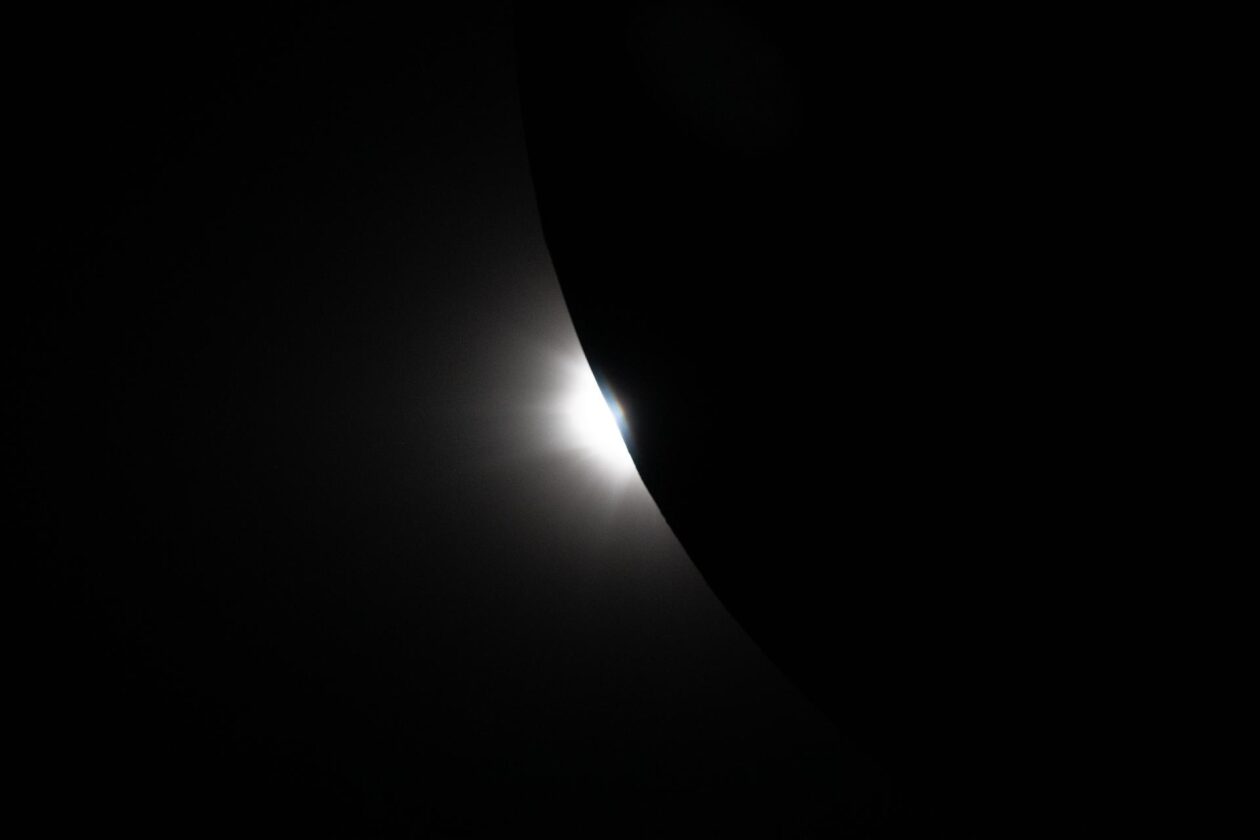
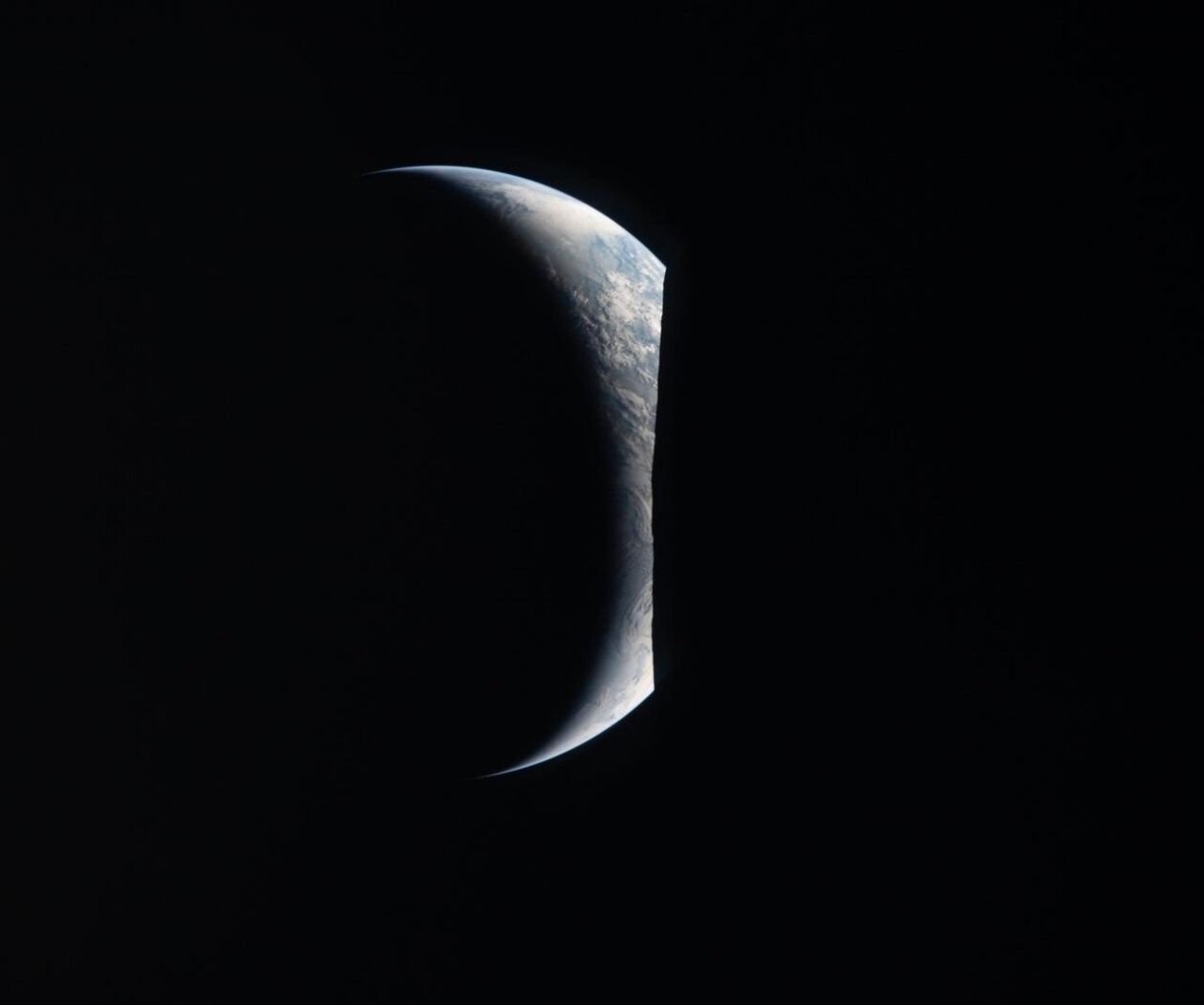
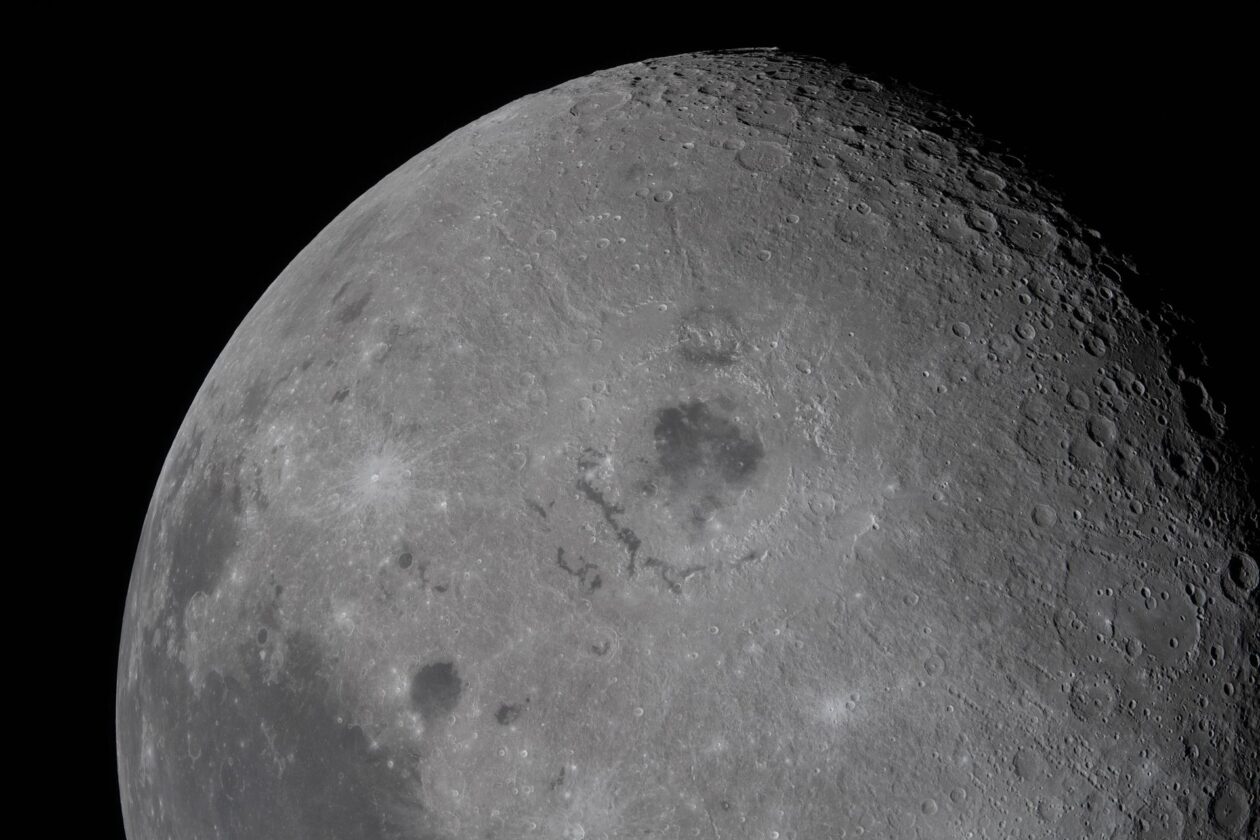
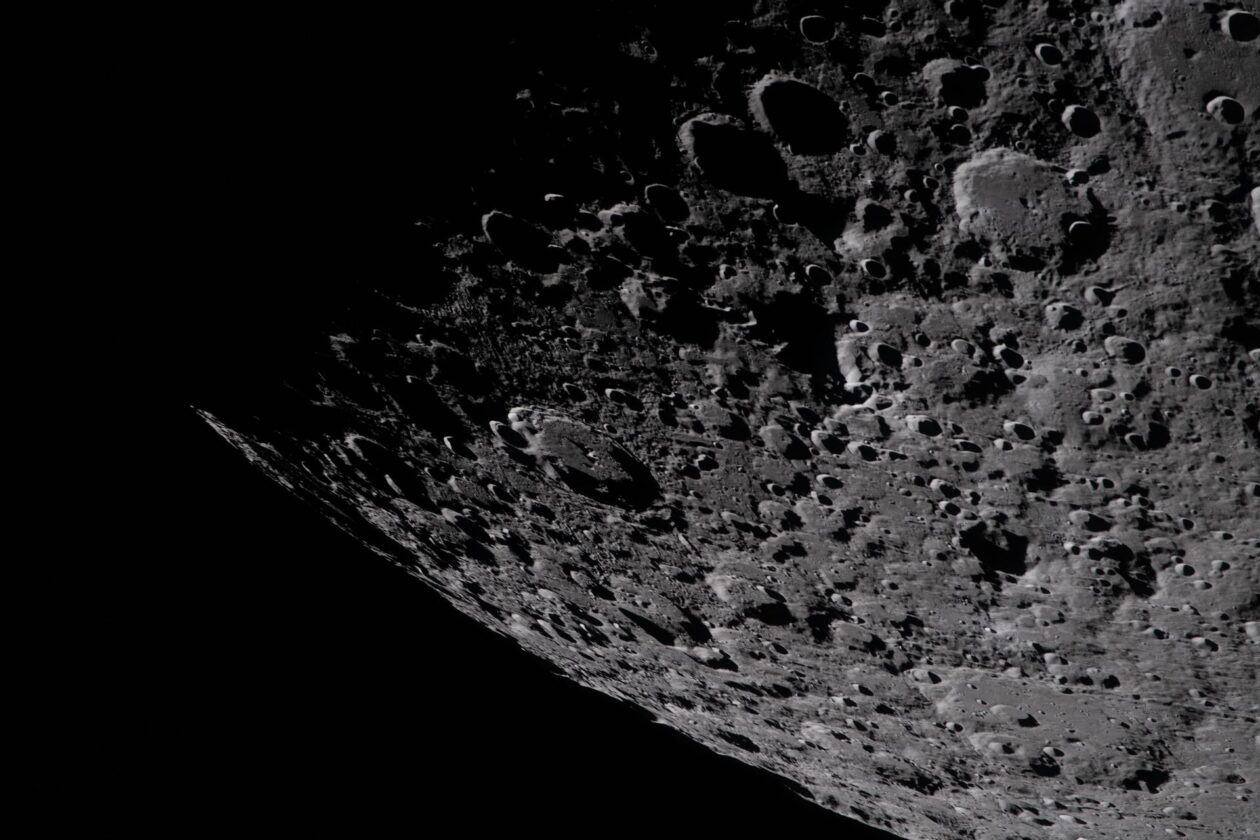
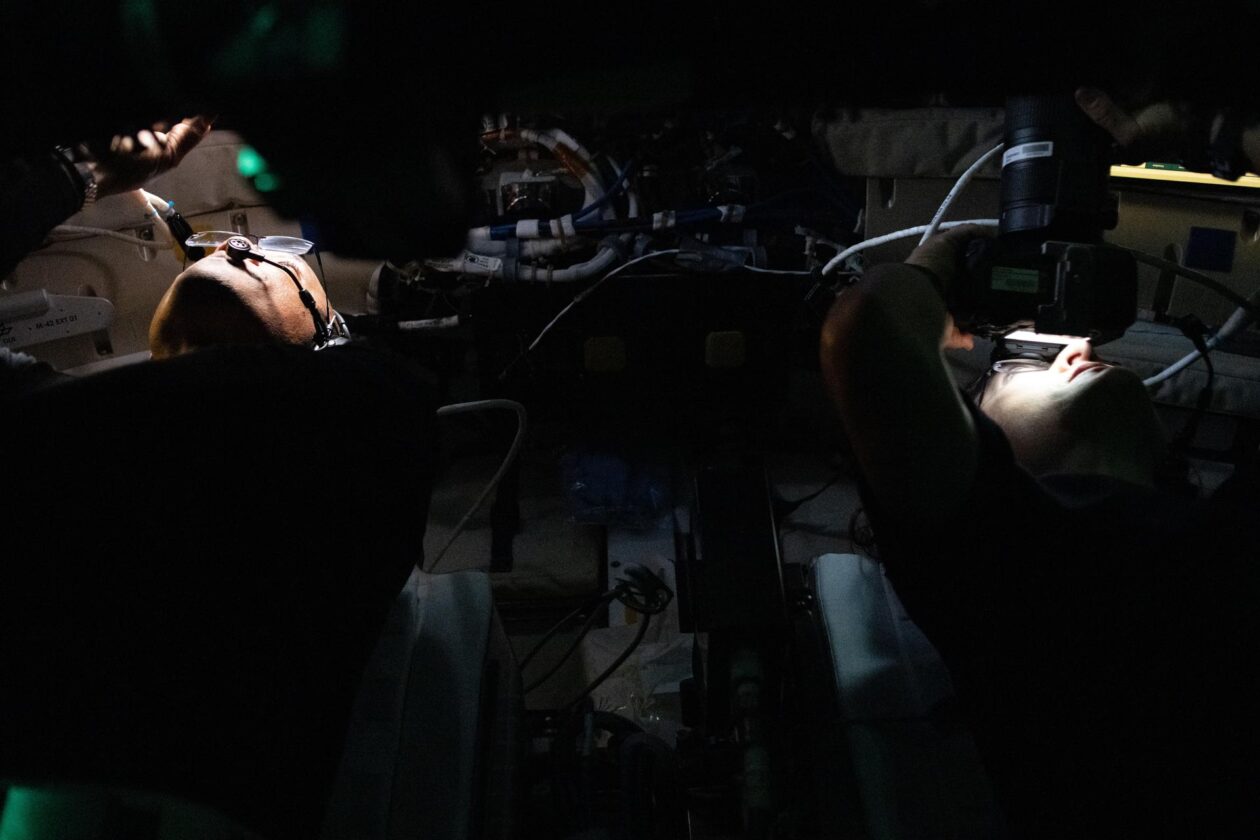
This Artemis 2 image shows the moon fully eclipsing the Sun. From the crew’s perspective, the moon appears large enough to block the sun completely, creating nearly 54 minutes of totality and extending the view far beyond what is possible from Earth. The corona forms a glowing halo around the dark lunar disk, revealing details of the sun’s outer atmosphere typically hidden by its brightness. Also visible are stars, typically too faint to see when imaging the moon. The faint glow of the near side of the moon is visible along the left edge of the disk, due to illumination by Earth’s reflected light. (NASA Photo)The Artemis 2 crew – Christina Koch (top left), Jeremy Hansen (bottom left), Reid Wiseman (bottom right) and Victor Glover – used eclipse glassesto protect their eyes at key moments during the solar eclipse. This was the first use of eclipse glasses at the moon for safe viewing of a partial solar eclipse. The glasses weren’t needed during the eclipse’s total phase. (NASA Photo)This image shows the sun beginning to peek out from behind the moon as the eclipse transitions out of totality. Only a portion of the moon is visible in frame, its curved edge revealing a bright sliver of sunlight returning after nearly an hour of darkness. (NASA Photo)Artemis 2’s Earthset picture, captured as Earth sank beneath the lunar horizon, is reminiscent of the classic Earthrise picture that was taken by Apollo 8 astronaut Bill Anders in 1968. Earthset came at the beginning of a communications blackout for the Artemis 2 crew, and was followed 40 minutes later by Earthrise and the resumption of communications. (NASA Photo)Our home planet appears as a delicate crescent in Artemis 2’s Earthrise photo, captured as the Earth emerged from behind the lunar disk. The moon itself is shrouded in darkness on the right half of the image. (NASA Photo)This photo, taken just before the Artemis 2 crew began their official lunar observation period, zeroes in on a 600-mile-wide impact crater known as Orientale Basin. The black patch in the center of the crater is a mass of ancient lava that punched through the moon’s crust in an eruption billions of years ago. Orientale Basin lies along the transition between the near and far sides and is sometimes partly visible from Earth. The small, bright crater to its left is Byrgius, which has 250-mile rays extending out from its basin. (NASA Photo)The heavily cratered terrain of the eastern edge of the South Pole-Aitken Basin is seen with the shadowed terminator – the boundary between lunar day and night – at the top of the image. The South Pole-Aitken Basin is the largest and oldest basin on the moon, providing a glimpse into an ancient geologic history built up over billions of years. NASA is targeting the moon’s south polar region for the Artemis program’s first crewed lunar landing, which is scheduled for no earlier than 2028. (NASA Photo)Artemis 2 pilot Victor Glover and mission specialist Christina Koch peer out of the darkness of Orion’s cabin to observe the moon and acquire images during the lunar flyby. Over the course of about seven hours, the astronauts took turns looking out Orion’s windows as they flew around the moon’s far side. At closest approach, they came within 4,067 miles of the lunar surface. (NASA Photo)