
Starcloud, a startup building solar-powered data centers that operate in space, announced $170 million in new funding Monday, vaulting it to unicorn status with a $1.1 billion valuation. The Redmond, Wash.-based company is now the fastest in Y Combinator history to hit that milestone, reaching the billion-dollar mark just 17 months after its accelerator demo day.
The meteoric rise follows a period of heavy skepticism.
Philip Johnston, Starcloud’s CEO and co-founder, said the company was “fairly roundly pilloried” in its early days. “If you go back to some of the comments on X when we announced, people said it was impossible and we couldn’t do it.”
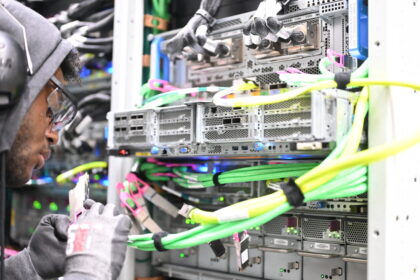
Starcloud is engineering satellites equipped with solar panels, radiation shielding to protect the electronics from the harsh environment of outer space, communication devices, and a cooling system adapted from International Space Station technology to manage the heat generated by high-performance computing.
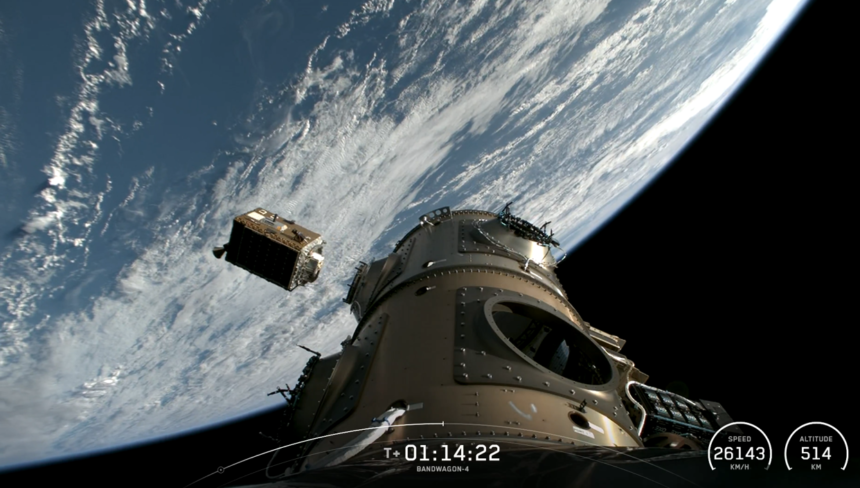
Accomplishment and new milestones. In November, the startup partnered with SpaceX to launch Starcloud-1, its 130-pound satellite carrying an Nvidia H100 chip. The mission successfully demonstrated that the hardware could process AI workloads reliably in orbit, including becoming the first to train a large language model in space, the startup reported.
Its next milestone will be the launch later this year of Starcloud-2, a satellite with 100 times the power generation capacity of the first and featuring Nvidia’s Blackwell B200 chip, considered the most powerful AI chip in the world. The system will run customer workloads.
Starcloud’s orbital pitch arrives as terrestrial data centers face a dual crisis: surging power demand and growing “not in my backyard” opposition from local communities. Residents and officials across the country have pushed back against new computing facilities that can potentially drive up electricity rates and consume vast volumes of water for cooling. From local governments to President Trump, leaders are trying to rein in the impacts of new data center deployments.
“We need to start looking for new ways to do this,” Johnston said. “And actually, what we’re doing is the most sensible.”
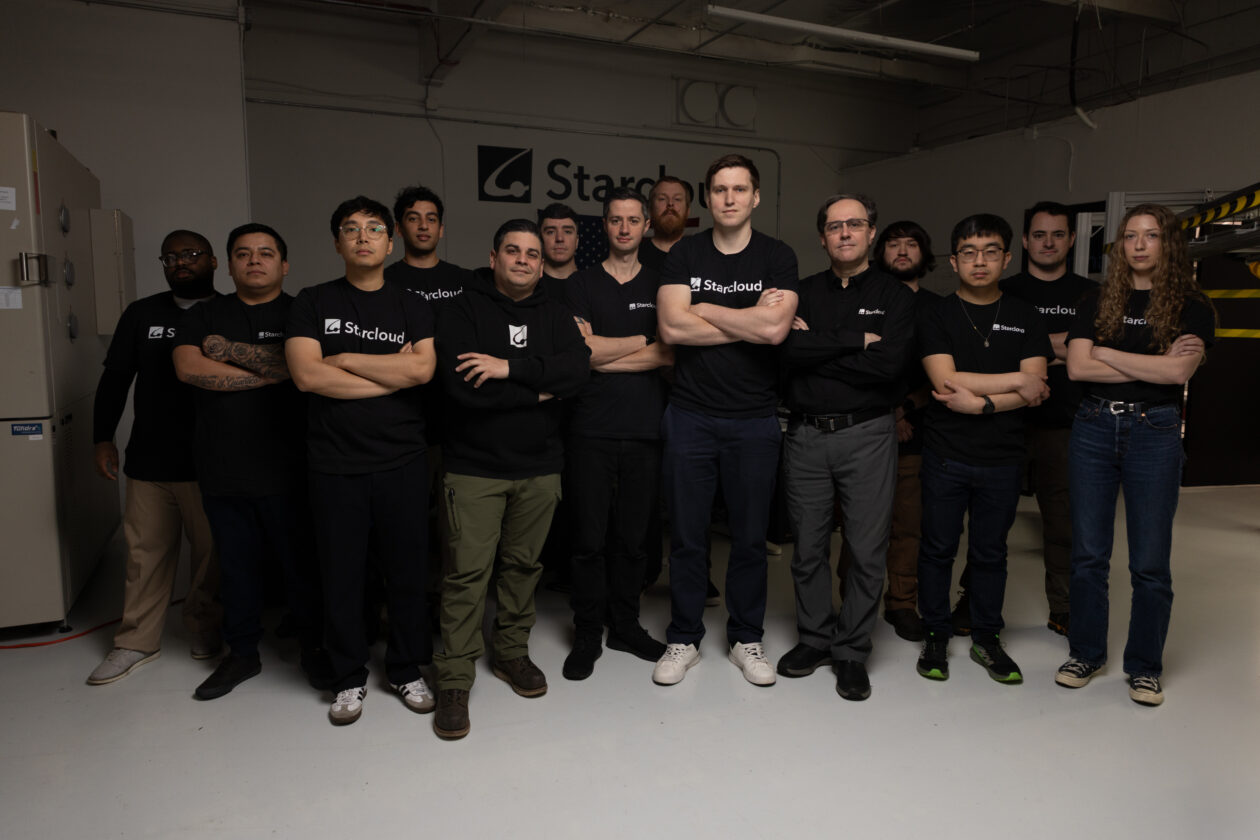
The new race to space. Starcloud was founded in January 2024 by Johnston, Chief Technology Officer Ezra Feilden and Chief Engineer Adi Oltean. The founders previously held roles at SpaceX’s Starlink, Airbus and McKinsey & Co.
The team has been on the leading edge of space-based data centers, with an initial focus on processing data from other satellites before transmitting it to Earth. The longer-term plan is to handle all manner of workloads, including data uplinked from the ground.
Other companies are joining the pursuit as well. SpaceX filed an application with the Federal Communications Commission earlier this year for the deployment of up to one million data center satellites, according to reports. Axiom Space, Kepler Communications and Sophia Space are likewise developing the technology, and Google began exploring the concept with its Project Suncatcher.
Johnston touts Starcloud’s head start.
“We have a huge edge by being first,” he said. “We’ve got the best team in the world for this. We’re moving incredibly quickly. We’re two years ahead in terms of having any kind of data and telemetry from how these chips perform on orbit.”
The economic path forward. Not everyone is convinced. At a recent Microsoft event, company President Brad Smith said the tech giant might eventually pursue the satellite strategy, but he wasn’t “betting on that.”
“We’re keeping our feet on the ground,” Smith said.
Johnston acknowledges that space-based computing won’t displace terrestrial data centers anytime soon. He expects the economics to shift in space’s favor within three to five years, but even then, less than 1% of new compute capacity coming online would be in orbit.
About a decade out, he expects the sector to hit a tipping point when satellite data centers “will be by far the fastest growing segment,” he said, “and it will continue to be fast growing until it hits almost all compute being in space.”
Funding details. A notable roster of venture capitalists is already betting on it.
The Series A round was split into two tranches: a first tranche led by Benchmark with participation from EQT — which operates more than 70 terrestrial data centers — and an extension round co-led by both firms. As part of the deal, Benchmark general partner Chetan Puttagunta will join Starcloud’s board.
The round also included the infrastructure fund Macquarie Capital, NFX, Nebular, Y Combinator, Adjacent, 776 Ventures, Fuse Ventures, Manhattan West and Monolith Power Systems. Angel investors included retired U.S. Air Force Gen. Stephen Wilson, former Boeing CEO Dennis Muilenburg, and former Starbucks CEO Kevin Johnson.
The startup has raised a total of $200 million.
Read the full article here