

Tukwila, Wash.-based Starfish Space and California-based Impulse Space say they’ve successfully demonstrated an in-space satellite rendezvous during a mission that handed over control of an Impulse Mira spacecraft to Starfish’s guidance and navigation system.
The demonstration was code-named Remora, in honor of a fish that attaches itself to other marine animals. Operation Remora was added to Mira’s agenda for Impulse Space’s LEO Express 2 mission, which was launched in January. Impulse and Starfish waited until the Mira spacecraft completed its primary satellite deployment tasks for LEO Express 2. Then they spent several weeks monitoring the maneuvers for Remora.
“About a month ago, we concluded the major steps here,” Starfish co-founder Trevor Bennett told GeekWire. “Since then, we’ve been getting data down and understanding the full story. And the full story is incredible.”
Remora was kept under wraps until today, primarily because both companies wanted to make sure that the demonstration actually worked as planned. “There was never a guarantee that there would be an outcome here,” Bennett explained. “And so what we wanted to do is talk about it when there was something to talk about.”
Bennett said the demonstration showed that Starfish’s software suite for guidance, navigation and control could be used on a different company’s satellite to make an autonomous approach to another spacecraft in orbit.
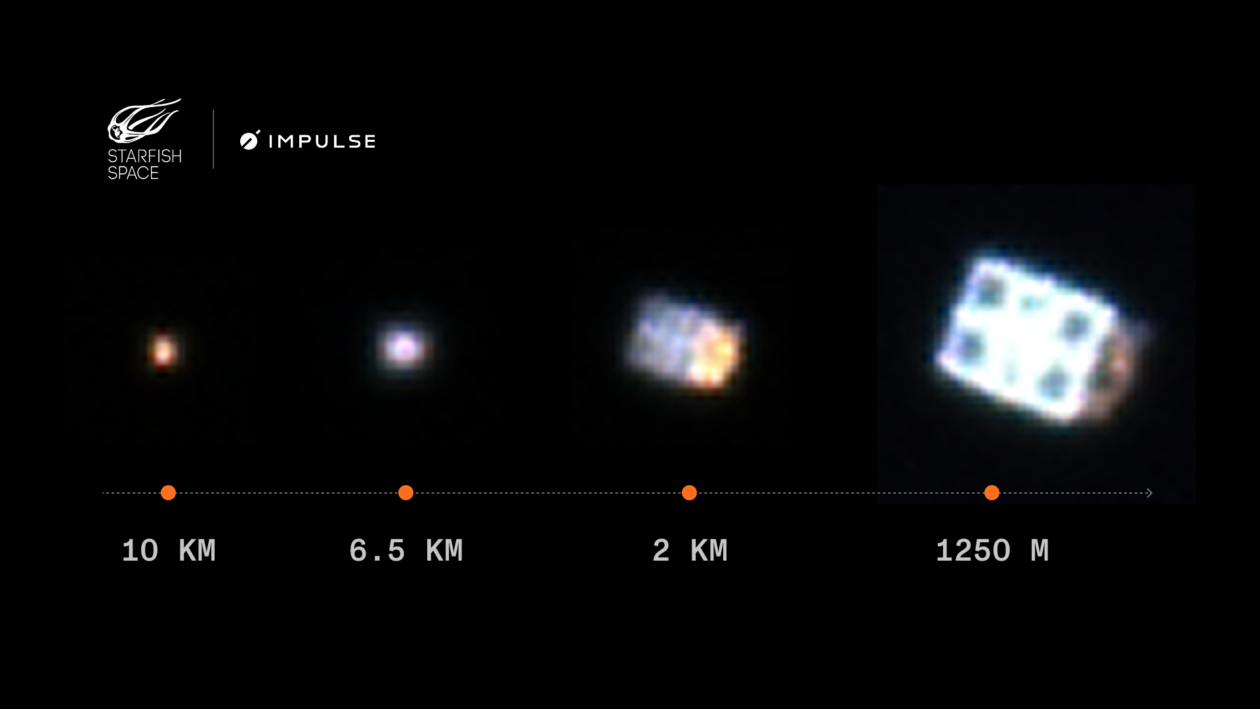
“Remora became definitely a first for us, in terms of being able to allow a whole new vehicle platform to autonomously do this full mission, all the way in and through,” he said. “Basically, we had no operator commands necessary for the vehicle to fly itself all the way down to 1,200 meters, take a bunch of pictures and then autonomously egress back out to further distances.”
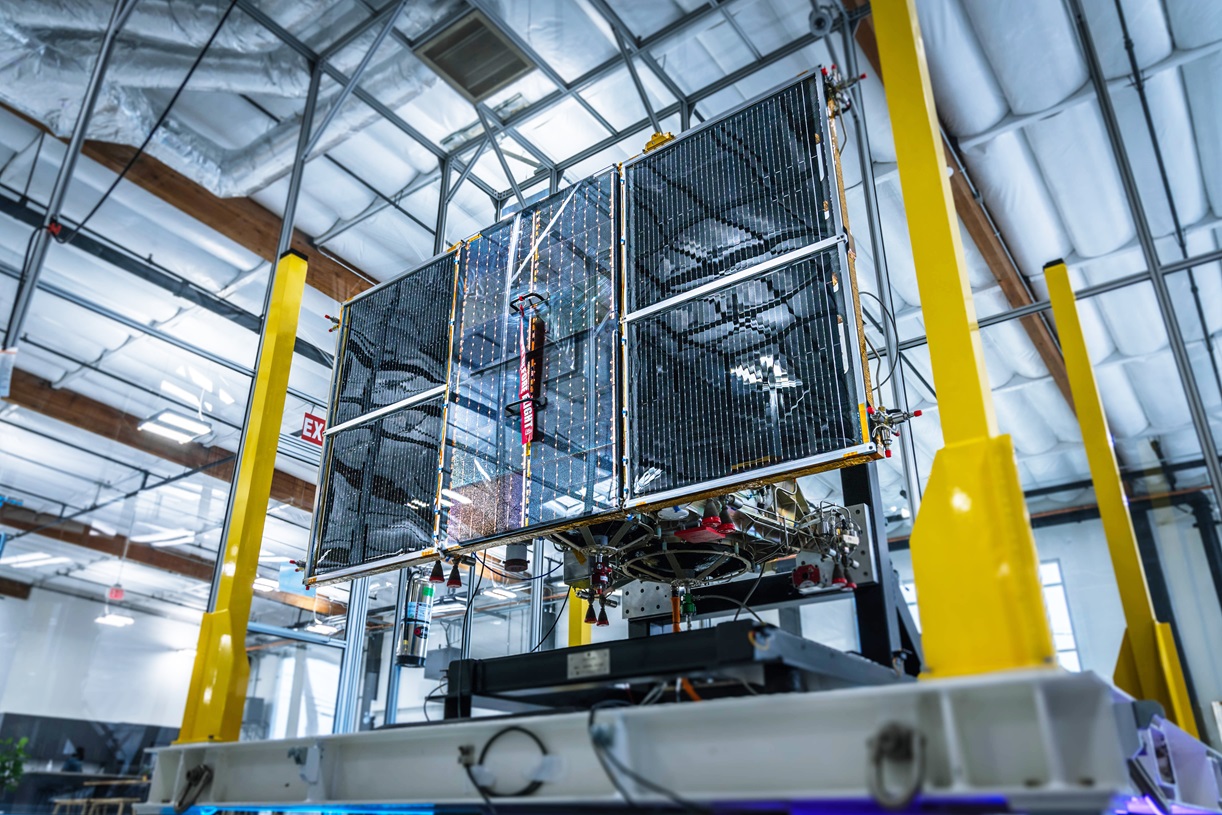
Before launch, the LEO Express 2 Mira was equipped with a peripheral flight computer that was loaded with Starfish’s Cetacean and Cephalopod software. During the Remora mission, that Mira spacecraft used Starfish’s guidance system and a single lightweight camera system supplied by TRL11 to close in on a different Mira that had been used for Impulse Space’s LEO Express 1 mission.
As the distance decreased from about 100 kilometers (62 miles) to roughly 1,200 meters (three-quarters of a mile), Starfish’s software processed the camera imagery to generate estimates of relative position. Then it computed optimal orbital trajectories and commanded Mira’s thrusters to fire accordingly.
Starfish is working on an in-house spacecraft called Otter that will be capable of approaching and docking with other objects in orbit to conduct inspections, perform orbital servicing or get rid of space debris. Bennett said the success of the Remora mission could open up new market opportunities that don’t depend on Otter.
“What we’re trying to show is that you don’t have to design a vehicle just for RPO [rendezvous and proximity operations] and docking,” Bennett said. “You can design the vehicle for the core mission that it needs to do in addition to that. … What we’re trying to do is remove this high barrier to having RPO and docking be a mainstay in our industry.”
Eric Romo, president and chief operating officer of Impulse Space, said Remora was a plus for his company as well.
“Our Mira spacecraft uses high-thrust chemical propulsion, and what that means is, we’re typically pretty good at moving really quickly between two points in space,” he told GeekWire. But Romo said some potential customers have wondered whether Mira’s high-thrust system had the precision and accuracy that would be required when operating near another spacecraft.
For those customers, the Remora mission showed that there’s no trade-off between speed and accuracy, and that Mira “has the commandability and the controllability you need to do this type of proximity operation,” Romo said.
Bennett and Romo both said their companies would look at future opportunities for collaboration. “For us, the path forward is to pull it away from just a pure demonstration mission to a truly day-to-day capability that we rely on and build on,” Bennett said. “We’re very fortunate that Impulse was our partner up to this point, and I think there are plenty of opportunities for us to be partners going forward.”
In the meantime, both companies are busy with other projects. Starfish Space is in the midst of an Otter Pup 2 test mission that was launched in June — and the company has its first three full-scale Otter missions lined up for NASA, the U.S. Space Force and the SES satellite company (which acquired Intelsat) in the 2026-2027 time frame.
Impulse Space’s third Mira spacecraft was launched last month to deploy and host payloads for the LEO Express 3 mission. Looking ahead, Impulse is pursuing a partnership with Anduril to conduct a high-precision rendezvous and proximity operations mission in geosynchronous Earth orbit in 2026. And looking even further ahead, the company has laid out a roadmap for sending medium-sized payloads to the moon.
Read the full article here