

MORGAN PARK, STAFF WRITER
This week: Made progress in Warhammer 40,000: Boltgun, the best throwback FPS I’ve ever played.
When a casual FPS enjoyer expresses a preference for a particular feature of Call of Duty, they are unknowingly picking a side. The way soldiers run, how attachments work, the shape of the maps—seemingly minor details are live ammo in a 20 year war between factions of gaming’s strangest fandom.
As Call of Duty attempts to rebound from its weakest year in a decade, it’s worth examining this unusual arrangement. Activision’s stringent schedule and widening creative differences, now spanning two decades, have created a splintered series mirrored in its increasingly tribalistic players. It’s the Call of Duty schism, and it’s fascinating.
Article continues below
The divide
Generally speaking, there are two studios steering Call of Duty’s creative direction: Infinity Ward, the OG creators of the series and Modern Warfare, and Treyarch, the creators of Black Ops. The pair have taken turns with their takes on the bestselling military shooter since 2006, when Treyarch was tapped to make Call of Duty 3 (as well as 2005’s Big Red One) while Infinity Ward took extra time on the first Modern Warfare (2007).
While it’s fair to say Treyarch was the “secondary” Call of Duty studio in those early days, Black Ops (2010) changed that. With its campy Cold War spy story, non-traditional guns, and party modes, Black Ops established Treyarch as the “fun” Call of Duty studio. Maybe it couldn’t match Infinity Ward in terms of raw craft, but the first Black Ops was an even bigger sales hit than Modern Warfare, and distinguished itself by loosening restraints and not taking these silly blockbuster shooters so seriously.
I didn’t know it at the time (being 14 and all), but this was the beginning of the schism. Black Ops is the first time I can remember heated arguments at school over whether this Call of Duty was better than the previous year’s Modern Warfare 2—a talking point that defines Call of Duty discourse in 2026.
The specific design choices that folks argue over have changed alongside the FPS genre over the years, but the core of the studio debate remains remarkably consistent. There’s nuance to these perspectives, of course, and there are some folks who don’t really care either way, but there’s a much louder contingent of fans who firmly believe one studio is killing Call of Duty and the other is its savior. Let’s talk about the two camps.
The Infinity Ward argument
Fans of Modern Warfare believe Infinity Ward’s games:
- Look better
- Sound better
- Move Call of Duty forward
- Are more grounded and mature
- Produce standout campaigns
Those who prefer Infinity Ward’s take on Call of Duty are likely to cite a higher qualitative bar. The Modern Warfare series tends to be less flashy and adventurous than Treyarch’s Black Ops, but what you get in return are the best-looking and -playing versions of Call of Duty. Infinity Ward excels at the “little” things—weapon sounds, reload animations, bullet feedback—that make Call of Duty a fundamentally satisfying shooter. The Modern Warfare “level up” stinger is the iconic example:
This sticking point goes all the way back to the early 2010s, when a new Black Ops would arrive looking less impressive than the Modern Warfare that came before it, with the exception of Treyarch’s superior fire tech. While Treyarch has narrowed the gap on sound and animations over the years (especially after it switched to Infinity Ward’s engine in 2024) the difference is still plain enough to see that most Treyarch fans won’t argue this point.
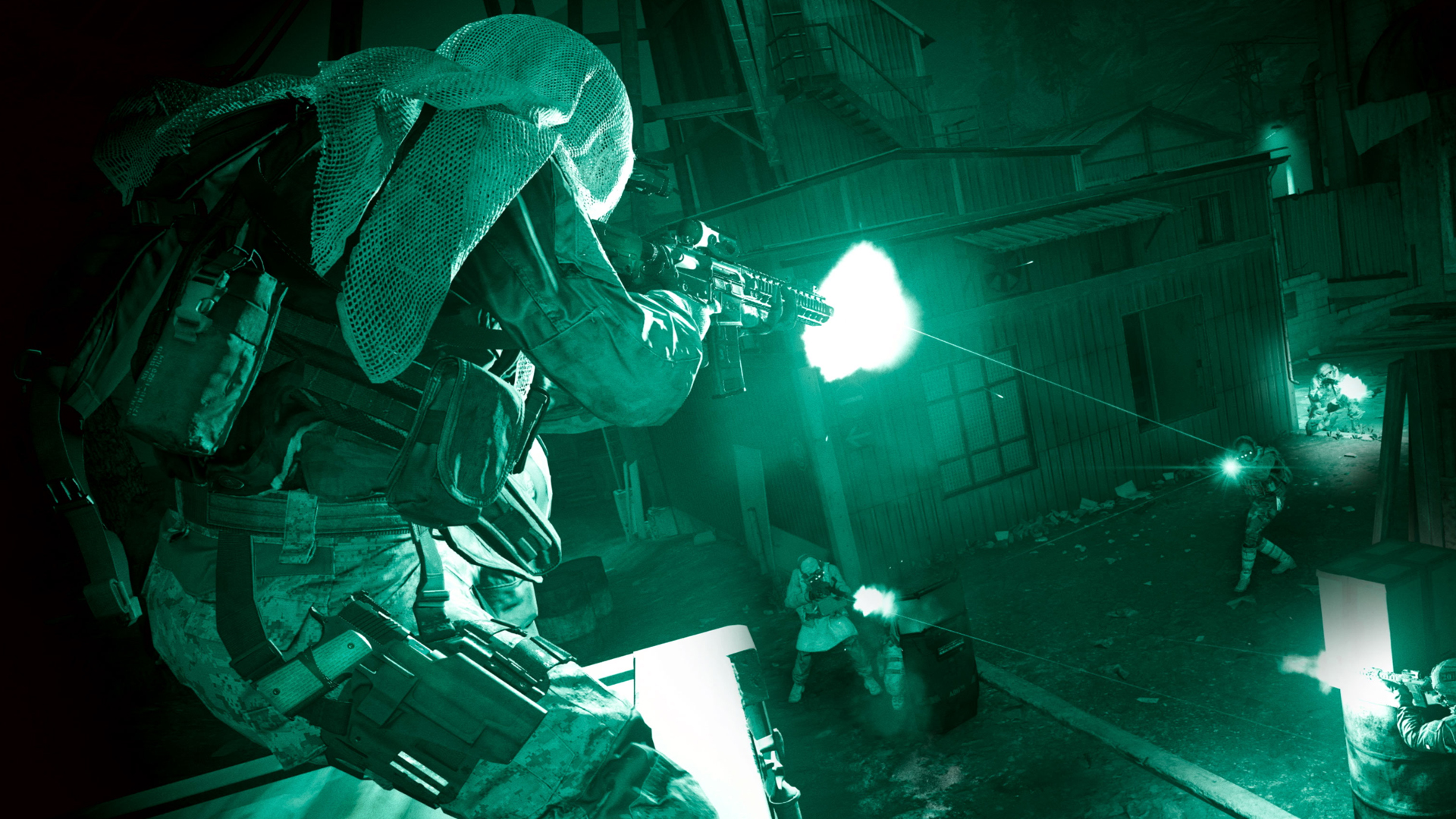
Modern Warfare enjoyers may also prefer the way Infinity Ward does a campaign, a style marked by international task forces, NATO alphabet barks, and Captain Price’s dependable mustache. These, too, aren’t as ostentatious as a Black Ops romp where characters hallucinate a zombie horde or infiltrate a Clinton rally, but deliver more grounded, often jingohistic fantasies—stealthy sniper missions, AC-130 bombardments, night vision raids in foreign countries, etc.
There’s also no denying that Infinity Ward still sets the tone for Call of Duty’s future. The first Modern Warfare established the series’ blueprint in 2007, and even at the peak of Black Ops, you could argue Treyarch’s games are largely variations on Infinity Ward’s designs. When Call of Duty’s relevance waned between 2016 and 2018, it was the technical advancements and excellent gunplay of the Modern Warfare reboot that reinvigorated the series.
Does Infinity Ward only achieve these leaps because Activision gives it a longer leash and more time?A fair question, but it nevertheless contributes to the perception that a new Infinity Ward game is a special occasion.
The Treyarch argument
Fans of Black Ops enjoy that Treyarch’s games have:
- Faster movement
- Longer time-to-kill
- 3-lane multiplayer maps
- Better campaigns
- Zombies
The Treyarch crowd undeniably skews hardcore. Many are especially active Call of Duty players, streamers, or content creators who take the competition seriously and are hungry for evolution specific to their interests. Treyarch has recognized these interests throughout the Black Ops series, designing and marketing its games around gameplay adjustments for high-skill players: fast movement, expressive sliding techniques, double jumping, jetpacks, and most recently non-skill-based matchmaking.
A Black Ops enjoyer might believe the Modern Warfare games are too slow, low skill, or less balanced while championing the strides Treyarch makes toward consistent and competitive Call of Duty multiplayer: less visual recoil, standardized 3-lane maps, and detailed weapon stats.
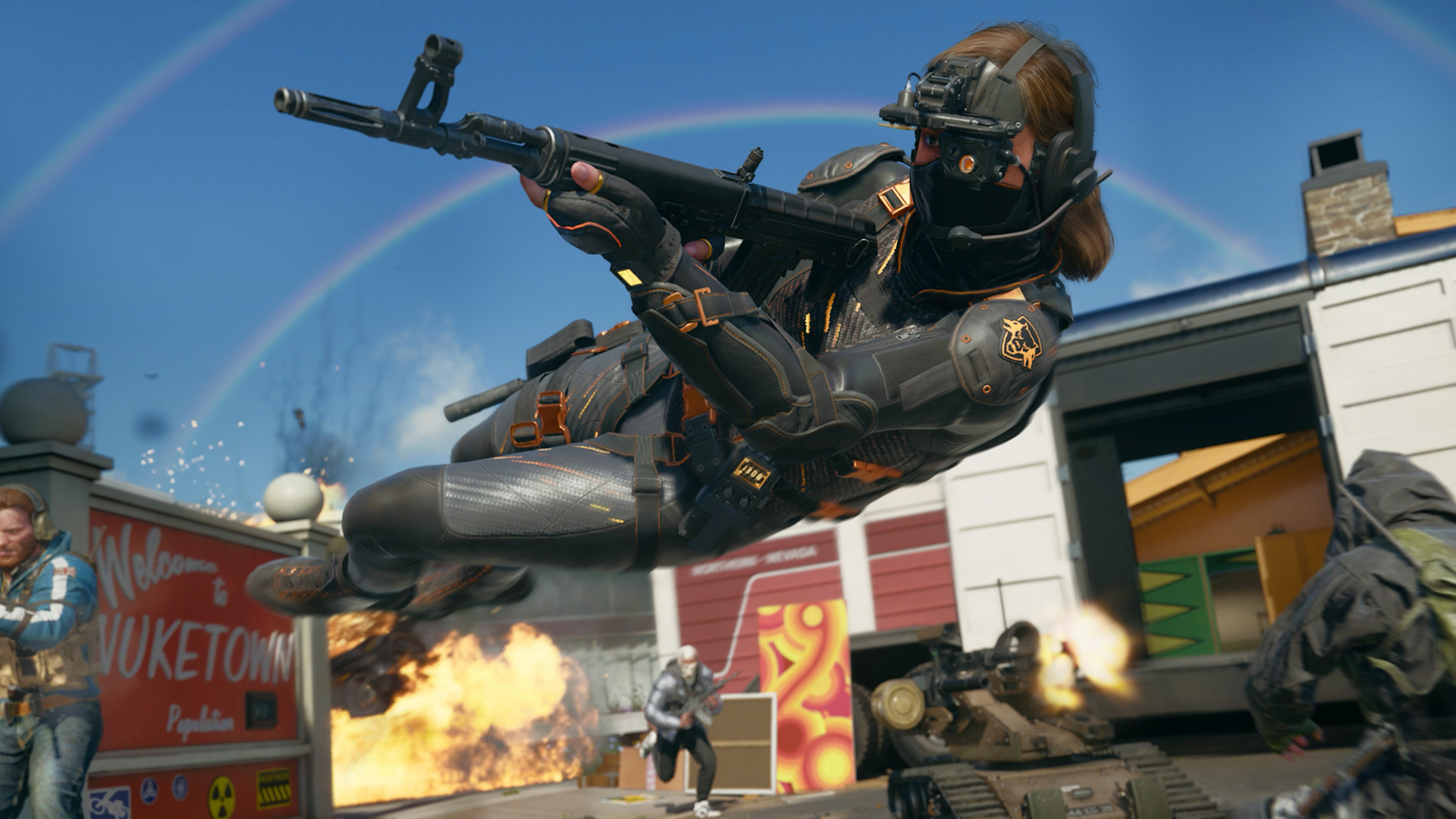
The Treyarch crowd undeniably skews hardcore.
In recent years Treyarch has also distinguished itself by taking Infinity Ward’s Gunsmith customization system and expanding on it with “prestige attachments” that dramatically change a gun’s behavior. Revolvers can become sniper rifles. ARs can have underbarrel flamethrowers. There are few rules.
The casual Treyarch diehard also appreciates the Black Ops series’ playful playlists—Modern Warfare will sometimes indulge in offbeat modes, but it’s got nothing on Black Ops mainstays like Prop Hunt, One in the Chamber, Sticks and Stones, and Gun Game. Then there’s Zombies: the beloved co-op mode of Treyarch’s creation that’s ballooned in scope over time to have its own lore and dedicated fans, all of which has no equal in Modern Warfare.
It doesn’t go unnoticed by Treyarch fans that when the Black Ops series makes universally popular changes, Infinity Ward might ignore or drop them in its next game. This contributes to the perception that Treyarch makes games “for the fans” while Infinity Ward only listens to itself.
What about Sledgehammer and Raven?
Sledgehammer Games also makes its own Call of Duty games. Or at least, it used to: For a time, it was the “third” Call of Duty studio slotted into the rotation to accommodate ballooning development times across the industry. Its first standalone project, 2014’s Advanced Warfare, was popular, but its two World War 2-themed followups were not. Since Call of Duty: Vanguard, Sledgehammer has seemingly been demoted to support studio, assisting on and co-developing yearly releases.
Recently, Sledgehammer stepped in to co-develop Modern Warfare 3 (2023), a rushed sequel to Modern Warfare 2 (2022) that Infinity Ward wasn’t involved with. It reviewed poorly and didn’t sell much better, but it was popular with hardcore players for the ways it backtracked on Infinity Ward’s decision to slow Call of Duty back down a year prior.
Raven Software is the other major series contributor. The storied FPS developer behind classics like Hexen and Star Wars: Jedi Knight was conscripted to full-time Call of Duty work in the 2010s, serving as co-developers on all of Treyarch’s recent Black Ops games and battle royale spinoff Warzone. The studio has never gotten the chance to lead a project, but the influence of Warzone and its integration into “premium” Call of Duty has catapulted into a free-to-play juggernaut.
The studio imbalance
Sledgehammer’s fate is emblematic of an imbalance within Activision’s Call of Duty factory. What used to be a predictable two-to-three year cycle with clean handoffs between studios has become a mad dash to make whatever is possible by a deadline—a workload that has disproportionately fallen to Treyarch, Raven, and Sledgehammer in the 2020s.
Look at the last six years of Call of Duty and you’ll see what I mean:
- Black Ops Cold War: Treyarch (lead), Raven Software (Campaign), Sledgehammer (assisting)
- Vanguard: Sledgehammer (lead), Raven Software (assisting)
- Modern Warfare 2: Infinity Ward (lead), Sledgehammer/Raven (assisting)
- Modern Warfare 3: Sledgehammer (lead), Raven/Treyarch/Infinity Ward (assisting)
- Black Ops 6: Treyarch (lead), Raven (Campaign), Sledgehammer (assisting)
- Black Ops 7: Treyarch and Raven (co-lead), Sledgehammer/Infinity Ward (assisting)
So far this decade, Infinity Ward has made exactly one Modern Warfare sequel while Treyarch, Raven, and Sledgehammer have upped their pace. This is not how it used to work and, I imagine, not ideal to the frontline developers.
When I zoom out, I see that Call of Duty has actually been on two cycles all along: once a year there’s a new Call of Duty, and once a decade there’s a point where that unrealistic pace catches up to Activision, and the series adopts a posture of desperation—new features are less new, old maps are added to new games to pad out a many-boxed roadmap, and player sentiment tanks. We’ve been at that point since Modern Warfare 3.
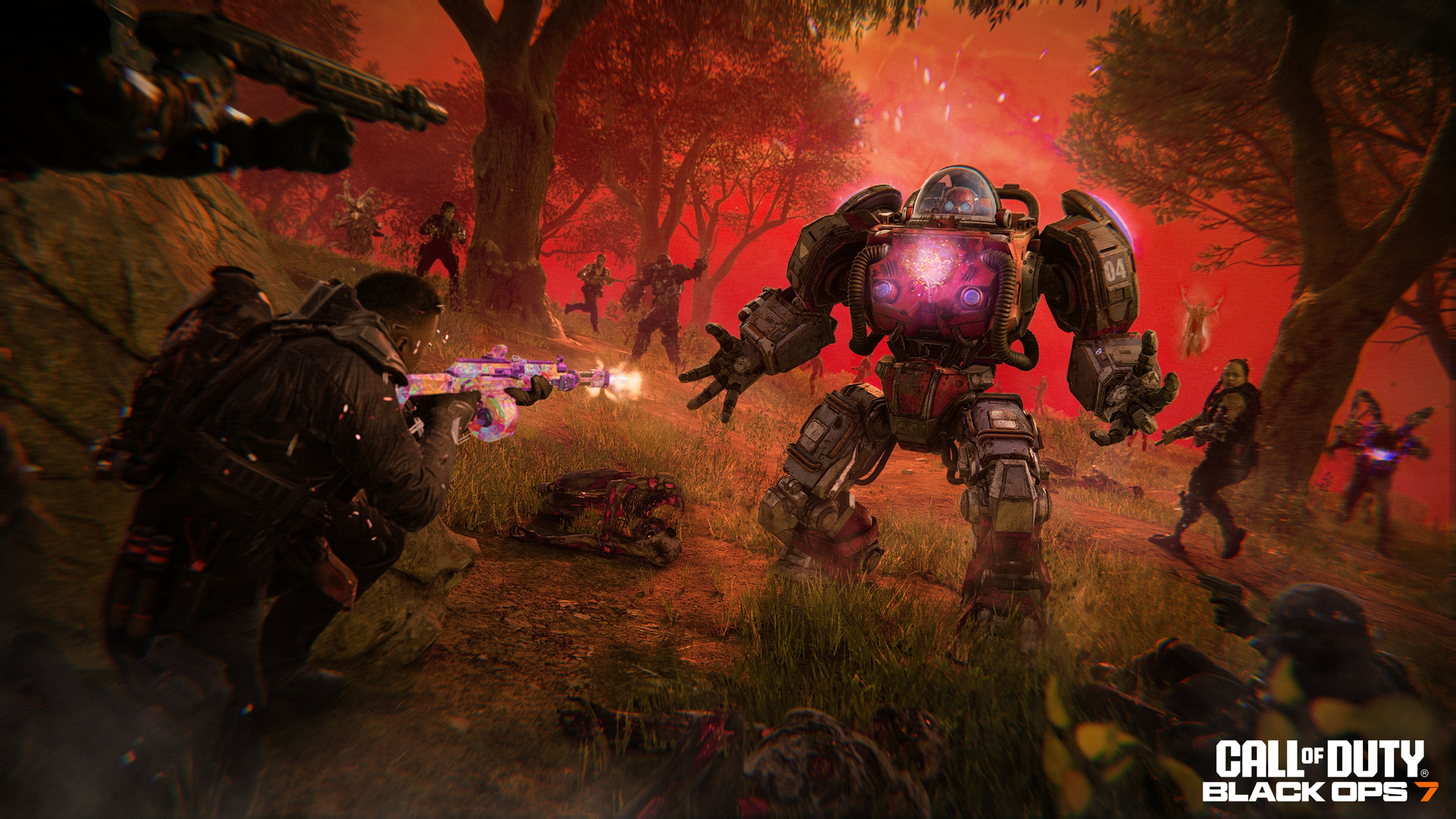
Modern Warfare loyalists can’t wait for Infinity Ward to be back in control, while the loudest Treyarch fans believe Call of Duty has been better off without them.
From the outside, it’s an arrangement that seemingly casts Infinity Ward as the flagship studio afforded as many years as it needs to make the next evolutionary Modern Warfare, while Treyarch, Sledgehammer, and Raven are tasked with keeping the lights on with quickly-made sequels that suffer diminishing returns.
This setup may work for Activision, which gets to sell boatloads of $70 boxes every Fall without fail, but it further fuels the schism. Nobody can agree on what “peak” Call of Duty is, and what used to be fun changings of the guard are now treated like existential threats—Modern Warfare loyalists can’t wait for Infinity Ward to be back in control, while the loudest Treyarch fans believe Call of Duty has been better off without them.
That makes 2026 a big year for all involved. Four years since Modern Warfare 2, it’s finally Infinity Ward’s turn again. This year’s Call of Duty will presumably have had the longest development period in series history, and it’s coming on the heels of a Black Ops sequel that not even the Treyarch crowd is playing. That sets expectations sky high: Will Infinity Ward revive Call of Duty once more, or prove that Treyarch has become its new masters?
Read the full article here