
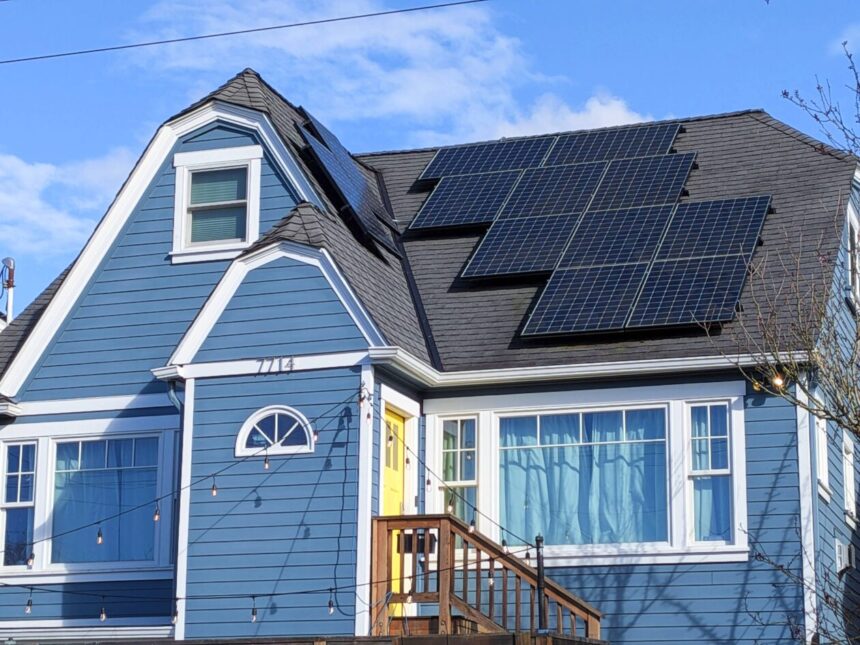
The pitch for rooftop solar has never been easier to make: energy costs are up, the strain on the electrical grid is real, and the sun shines for free. But the math has gotten harder, as federal tax credits evaporate and utility incentives dry up.
Enter loanTERRA, a Seattle startup that thinks transparent financing and vetted installers can keep the solar dream alive for everyday homeowners.
Bill Paulen, CEO and founder of loanTERRA, brings decades of experience in finance, including stints at major banks and as president and CEO of multiple Washington credit unions.
In those roles, he saw that solar loans were a natural fit for nonprofit, member-owned credit unions and community banks looking to diversify their loans and fend off competition from fintechs. He was also troubled by the dominance of national solar lenders that relied on undisclosed dealer fees, quietly driving up costs for consumers.
Paulen created loanTERRA to partner with credit unions and community banks, providing their customers with an easy-to-deploy loan agreement while the financial institutions supply the capital. The banks pay loanTERRA for each signed solar deal and fees for servicing the loan.

The startup recently launched its platform, which also provides connections to reputable solar panel and hardware manufacturers and installers to ensure the project is designed to be the right size, properly installed and works as planned.
Paulen signed his first lending partner, based in Wyoming and has raised funding from an angel investor.
He’s hopeful that the residential solar sector will keep moving ahead despite the loss of federal tax support. The Republican’s One Big Beautiful Bill spiked tax credits of 30% for the cost of home solar systems at the end of 2025, instead of the planned end date of 2032.
Homeowners can still indirectly benefit from a tax break provided to solar installers through 2027. It requires consumers to sign a lease with an installer or developer to use the solar system on their home, or they enter a power purchase agreement in which a developer sells the electricity to the homeowner at a fixed rate that’s lower than what’s charged by the local utility.
Paulen, however, said the economics are better for residential customers if they’re able to buy the solar systems outright.
LoanTERRA’s interest rates are typically higher than those offered by companies that include dealers fees of thousands of dollars in their sales agreements, but the startup’s loans are for smaller amounts. Paulen served on the working group that created Washington’s Solar Consumer Protection Act, crafting language requiring those fees to be disclosed.
While experts predict a dip in residential solar installations this year, the Solar Energy Industries Association and Wood Mackenzie expect growth to continue at an average annual rate of 7% between 2027 and 2030.
Even with the more challenging economics, solar photovoltaics remain the cheapest, quickest way to deploy clean energy, and there’s a move to add batteries to the mix, which allows a system to provide power around the clock. A recent poll found that a majority of Americans surveyed support solar power, regardless of their political leanings.
Paulen said loanTERRA benefits multiple interests that he’s eager to serve. That includes customer-focused credit unions, solar companies, consumers looking to shrink their climate impacts and benefit from off-grid power, and a warming planet.
“We are bringing clean energy online. We are reducing fossil fuel burn,” he said. “In my entire career, this is the only time where a … strongly held personal belief or interest has aligned with a business opportunity and that’s made it so much easier to do this work.”
Read the full article here