
Lunar missions once felt like the domain of history books rather than current events, but an upcoming trip around the moon is poised to generate headlines at a level not seen since the Apollo era.
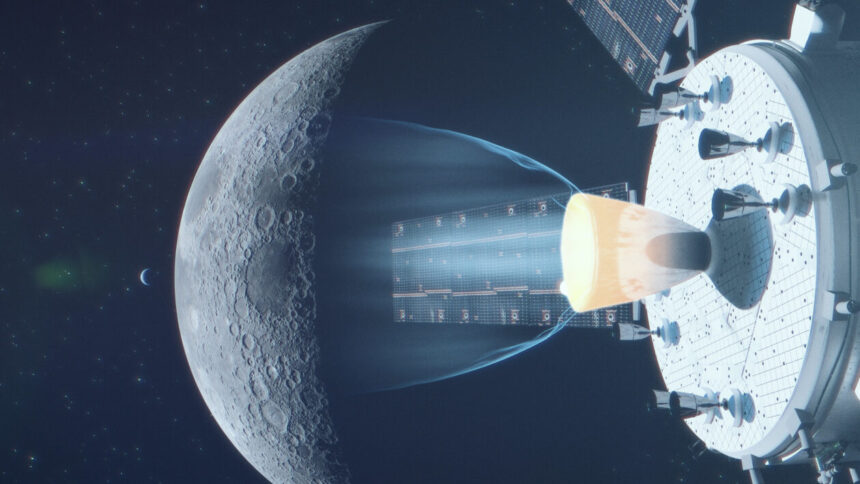
NASA’s Artemis 2 mission, which is due to launch four astronauts on a round-the-moon journey as a warmup for a future lunar landing, is shaping up as the spaceflight highlight of 2026. NASA Administrator Jared Isaacman, who took the agency’s helm this month after a tumultuous year, says it’s the top item on his must-see list.
“What’s not to be excited about?” he said last week on CNBC. “We’re sending American astronauts around the moon. It’s the first time we’ve done that in a half-century. … We’re weeks away, potentially a month or two away at most from sending American astronauts around the moon again.”
The Pacific Northwest plays a significant role in the back-to-moon campaign. For example, L3Harris Technologies’ team in Redmond, Wash., built thrusters for Artemis 2’s Orion crew vehicle. And Artemis 2 isn’t the only upcoming moon mission with Seattle-area connections: Jeff Bezos’ Blue Origin space venture, headquartered in Kent, plans to send an uncrewed Blue Moon Mark 1 lander to the lunar surface in 2026 to help NASA get set for future moon trips.
“We are taking our first steps to help open up the lunar frontier for all of humanity,” Paul Brower, Blue Origin’s director of lunar operations, said in a recent LinkedIn post.
2026 could also be the year when Seattle-based Interlune sends its first prospecting instrument to the lunar surface to hunt for signs of helium-3, a rare material the company aims to bring back to Earth for use in fusion reactors or quantum computers.
As we close out 2025, here’s a look back at five of the past year’s space milestones and five trends to watch in the year to come.
Looking back at 2025
Blue Origin goes orbital: After a decade of development, Blue Origin launched its orbital-class New Glenn rocket for the first time in January, on a mission that lofted test equipment for its Blue Ring space mobility platform into orbit. A second launch in November sent NASA’s Escapade probes toward Mars and marked the first successful at-sea recovery of a New Glenn booster. On the suborbital side, Blue Origin’s New Shepard program provided rides to space for seven crews. Notable passengers included Lauren Sanchez, who became Bezos’ wife two months after her flight; Justin Sun, the crypto entrepreneur who paid $28 million for his space ticket; and Michaela Benthaus, the first wheelchair user to fly to space.
Amazon’s satellite network gets down to business: The first operational satellites for Amazon’s space-based broadband internet service were launched in April. The network’s name was changed from Project Kuiper to Amazon Leo in November. Terminals have been shipped to early-stage customers for a preview program, and the rollout is expected to gather steam in 2026. Meanwhile, SpaceX continues to grow its Starlink network, with more than 9,300 satellites providing high-speed internet service to more than 9 million customers worldwide.
Rubin Observatory delivers first images: A decade and a half ago, Microsoft’s Bill Gates and Charles Simonyi donated $30 million to support the creation of a giant sky-survey telescope in Chile. in June, the Rubin Observatory finally made its star-studded debut, with Simonyi in attendance. Researchers at the University of Washington played key roles in shepherding the $800 million project to completion.
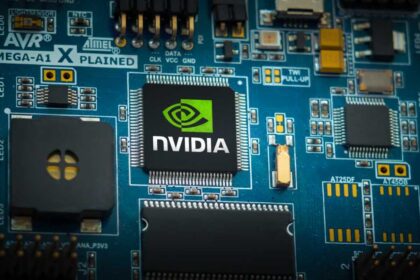
A first for orbital data centers: Redmond-based Starcloud sent an Nvidia GPU chip into orbit in November, and weeks later it claimed to be the first company to train an artificial intelligence model in space. The achievement marked one small step in Starcloud’s campaign to create a network of data centers in orbit. Several tech titans — including Bezos, OpenAI’s Sam Altman, SpaceX’s Elon Musk and Google’s Sundar Pichai — see orbital data centers as a way to satisfy the growing hunger for AI processing resources on Earth. Some say the trend is driving SpaceX’s plans to go public in 2026.
SpaceX’s Starship goes through ups and downs: Many of SpaceX’s ambitions, ranging from orbital data centers to moon landings to Mars migrations, depend on the successful development of its Starship super-rocket. Starship also plays a crucial role in the business models for lots of space startups, including Starcloud and a Seattle-based space travel venture called Orbite. Three Starship test flights ended badly in the first half of 2025, but SpaceX bounced back with two successful test flights in the second half of the year. Now SpaceX is working on an upgraded version of Starship — and dealing with the aftermath of a booster anomaly that occurred during a pressurization test in November.
Looking ahead to 2026
Artemis 2 to send humans around the moon: For the first time since Apollo 17 in 1972, humans will leave Earth orbit. The current plan calls for the Artemis 2 mission to take place in the February-to-April time frame. A crew of four — three Americans and one Canadian astronaut — will climb into the Orion spacecraft and be sent into space atop NASA’s Space Launch System rocket. The round-the-moon route will be similar to the trajectory used for NASA’s uncrewed Artemis 1 flight in 2022. If Artemis 2 goes well, that could set the stage for an Artemis 3 crewed lunar landing as early as 2027 (but more likely later).
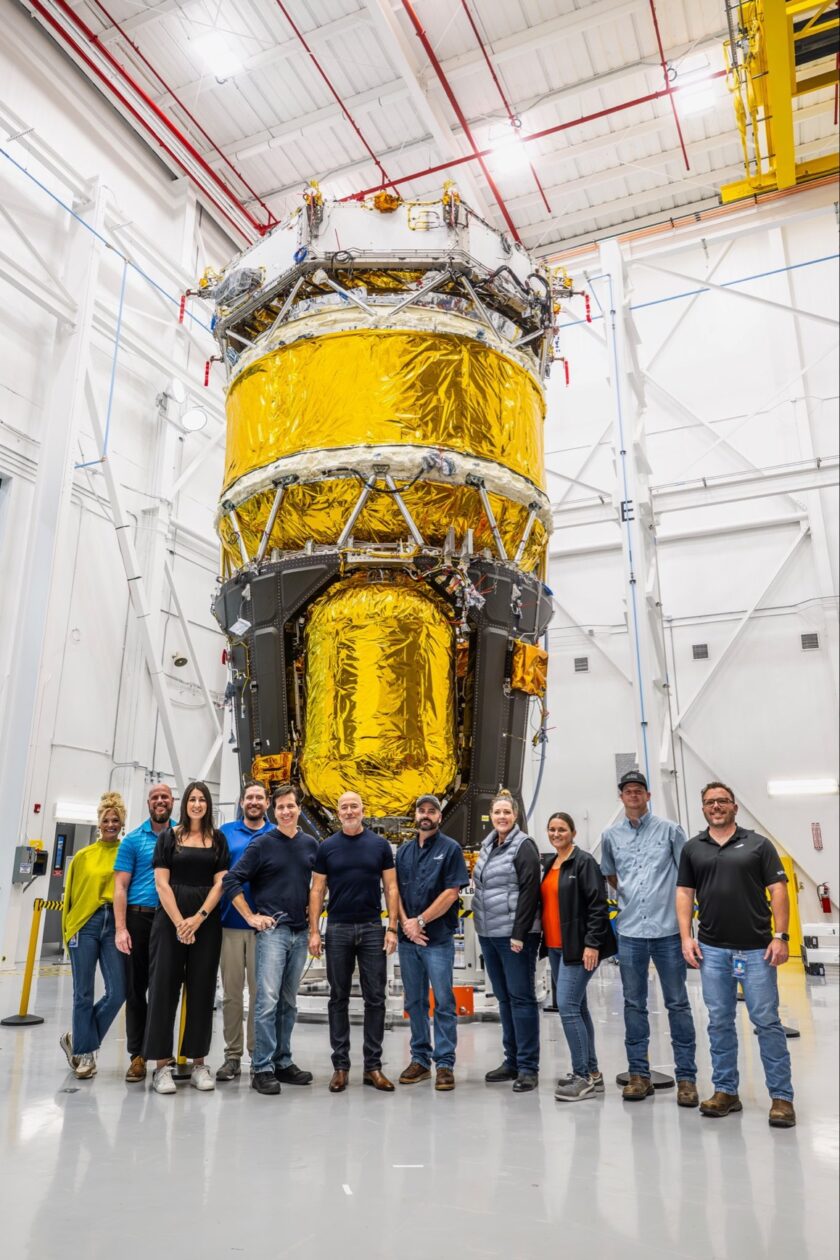
Blue Moon’s lunar delivery: Blue Origin’s uncrewed lander is tasked with delivering a NASA experiment called SCALPSS to the moon’s south polar region. Stereo cameras will document how the landing burn interacts with the dusty lunar surface — and the results will be factored into plans for future landings. This Blue Moon Mark 1 mission will blaze a trail for Blue Origin’s Mark 2 lander, which is due to start taking astronauts to the lunar surface in 2030. Other robotic spacecraft scheduled for moon landings in 2026 include China’s Chang’e 7 rover, Firefly’s Blue Ghost 2 lander, Intuitive Machines’ IM-3 lander and Astrobotic’s Griffin lander (which will be carrying two mini-rovers and Interlune’s helium-hunting camera).
Seattle space companies count down to liftoff: In addition to Blue Origin, several other companies headquartered near the Emerald City are planning big space missions in 2026. Kent-based Stoke Space could launch its first fully reusable Nova rocket from Florida. Bothell-based Portal Space Systems’ Starburst space vehicle is due to make its orbital debut. And Tukwila-based Starfish Space is scheduled to demonstrate how its maneuverable Otter spacecraft can give satellites an in-space boost.
Golden Dome takes shape: A proposed $175 billion missile defense system known as the Golden Dome is already attracting interest from space ventures — particularly ventures that are focusing on in-space mobility (such as Portal Space and Starfish Space) or in-space data processing (such as Starcloud and Seattle-based Sophia Space). Marysville, Wash.-based Gravitics is building an orbital carrier that would serve as a “pre-positioned launch pad in space” for the U.S. Space Force, under the terms of a deal that could be worth as much as $60 million. Other big-ticket military projects are likely to come to light in 2026.
Whither NASA? Or will NASA wither? Isaacman is taking over at NASA following a year of layoffs and science program cuts. He has pledged to land astronauts on the moon during the current presidential term, but funding remains a hurdle. “I almost guarantee you he’s going to be walking up the street to the White House, saying ‘I really need more money,’” NASAWatch’s Keith Cowing said on Israel’s i24 TV.
Bonus: Coming to a sky (or a screen) near you: Keep an eye out for a total lunar eclipse on March 3 that will be visible over the U.S., weather permitting. There’s also a solar eclipse on Aug. 12 that will bring totality to narrow stretches of Greenland, Iceland and Spain. Although this eclipse can’t be seen in Seattle’s skies, you should be able to catch the highlights online.
Read the full article here