
SUBSCRIBE
Tech Journal Now
  • Home
  • News
  • AI
  • Reviews
  • Guides
  • Best Buy
  • Software
  • Games
  • More Articles
Reading: Zeno Power gets a spot on Firefly moon lander for atomic heater – GeekWire
Share
Tech Journal NowTech Journal Now
Font ResizerAa
  • News
  • Reviews
  • Guides
  • AI
  • Best Buy
  • Games
  • Software
Search
  • Home
  • News
  • AI
  • Reviews
  • Guides
  • Best Buy
  • Software
  • Games
  • More Articles
Have an existing account? Sign In
Follow US
© Foxiz News Network. Ruby Design Company. All Rights Reserved.
Tech Journal Now > News > Zeno Power gets a spot on Firefly moon lander for atomic heater – GeekWire
News

Zeno Power gets a spot on Firefly moon lander for atomic heater – GeekWire

News Room
Last updated: August 19, 2026 1:10 pm
News Room
Share
4 Min Read
SHARE

by Alan Boyle on Aug 19, 2026 at 5:00 amAugust 19, 2026 at 6:08 am

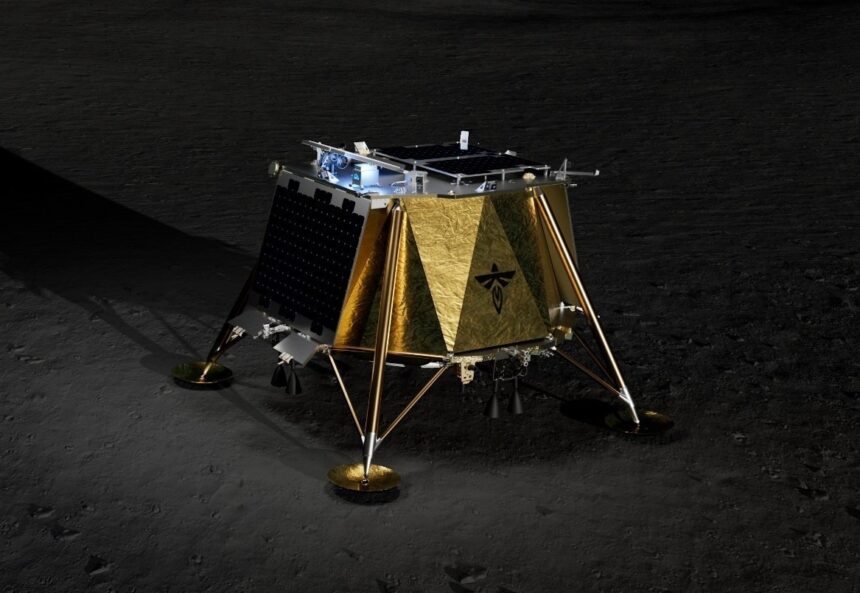
An artist’s conception shows Firefly’s Blue Ghost lander on the moon’s surface during the lunar night, with Zeno Power Systems’ radioisotope heater unit highlighted with a blue glow on the left side of the lander’s top deck. (Firefly Aerospace Illustration)

A nuclear-powered heater built by Zeno Power Systems is slated to fly to the moon aboard Firefly Aerospace’s Blue Ghost lunar lander for a demonstration mission that could take place as early as 2028.

Zeno’s Seattle engineering hub played a leading role in developing the radioisotope heater unit, which will be powered by americium-241, a radioactive isotope typically recovered from recycled nuclear material.

The unit will provide 5 watts of thermal energy — enough to sustain the lander through the lunar night, which lasts 14 Earth days. Firefly’s first solar-powered Blue Ghost lander, which touched down on the moon in March 2025, operated successfully through the lunar day but gave up the ghost shortly after sunset.

“Our first Blue Ghost mission gave us firsthand insight into the moon’s extreme thermal environment, where we measured temperatures ranging from more than 230 degrees F during the lunar day to below -275 degrees F at night,” Ray Allensworth, Firefly’s vice president of spacecraft, said today in a news release. “Now we’re looking forward to advancing technologies that can extend missions beyond sunset and support long-duration surface operations required for NASA’s Moon Base initiative and the growing lunar economy.”
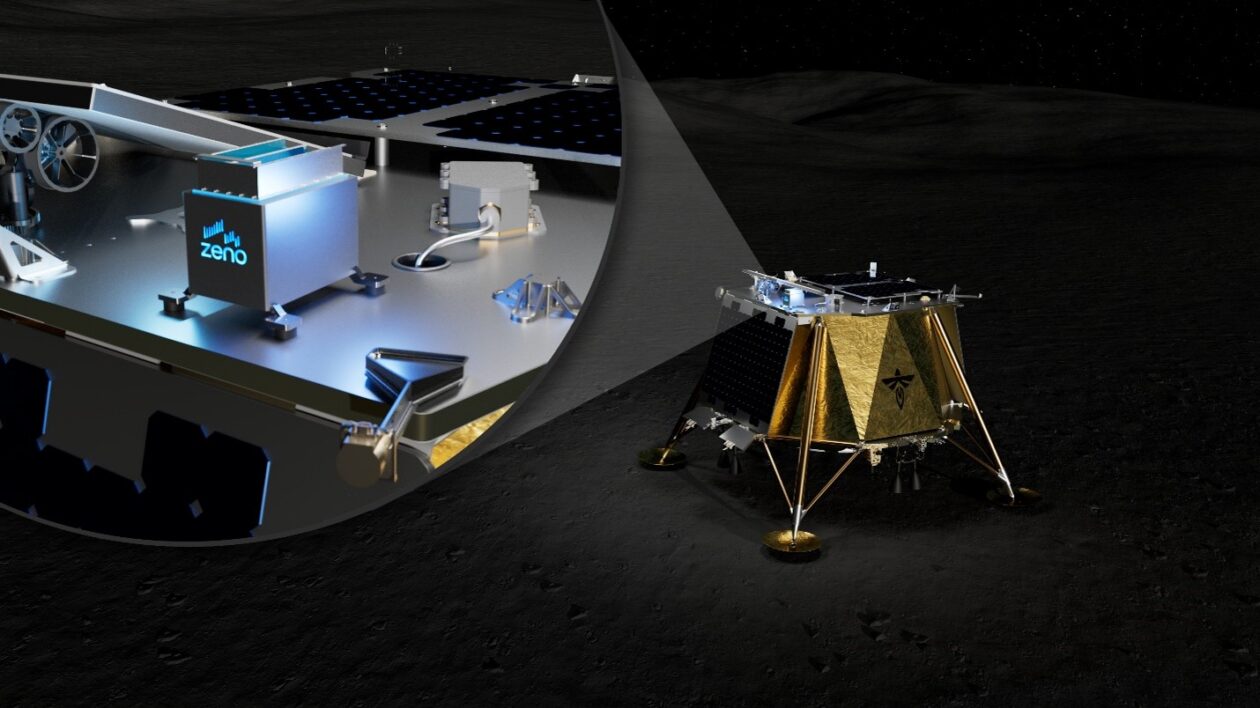
This illustration provides a closeup view of Zeno’s radioactive heater unit on a Blue Ghost lander. (Firefly Aerospace Illustration)

The lander will rely on solar power to run NASA-funded science payloads on the moon’s near side during the lunar day. When night falls, Zeno’s heater unit should be able to keep critical spacecraft components operational.

“Hardware capable of surviving the extreme cold of the lunar night will be essential to enabling sustained operations on the moon,” said Tyler Bernstein, CEO and co-founder of Zeno Power. “NASA’s Moon Base program has identified the need for technologies such as radioisotope power systems to support future lunar exploration, and Zeno is proud to answer that call to demonstrate this capability aboard Firefly’s Blue Ghost mission.”

Related


Inside the ‘kitchen’ where Zeno Power tests radioisotope recipes

Firefly has two other lunar lander missions on its manifest: a trip to the moon’s far side scheduled for no earlier than 2027; and a mission targeting a region known as the Gruithuisen Domes, set for 2028 or later.

Beyond radioisotope heater units, Zeno is developing radioisotope power generators to supply electricity for missions on the moon and in extreme environments on Earth. “As demand for long-duration lunar infrastructure grows, we are building the production capacity to support future commercial and government missions,” Bernstein said.

In addition to its Seattle engineering hub, Zeno maintains facilities in Washington, D.C., and California. The company reported the completion of a $50 million Series B funding round in May, followed by a $3.6 million funding extension from Seraphim Space.

“Zeno has raised $105 million to date in private investment and has 95 employees,” Kelsey Bates, the company’s communications manager, told GeekWire in an email. The Seattle hub accounts for the largest proportion of those employees.

Read the full article here

You Might Also Like

Report Urges States to Lead Data Center Water Oversight

Most popular stories on GeekWire for the week of Aug. 2, 2026 – GeekWire

Inside the race to power AI data centers with fusion energy — and the surprise detours along the way – GeekWire

A new series on the people shaping the company’s future – GeekWire

Seattle’s Cascade PBS spins out Local Public, a tech platform that builds streaming apps for stations – GeekWire

Share This Article
Facebook Twitter Email Print
Leave a comment Leave a comment

Leave a Reply Cancel reply

Your email address will not be published. Required fields are marked *

- Advertisement -
Ad image

Trending Stories

News

Super Cool: IBM Links Cryogenic Modules to Scale Quantum Computing

August 19, 2026
Games

Subnautica 2’s latest 1.2 update is friend focused—finally adding the key mechanic to any great multiplayer game

August 19, 2026
AI

Microsoft finally patches critical one-click Copilot vulnerability, almost eight months after learning of it – Computerworld

August 19, 2026
News

Amazon finally set to deliver on its 13-year-old drone promise, reaching nearly 500 U.S. cities and towns – GeekWire

August 19, 2026
AI

AI’s attribution problem gets worse as models scale

August 19, 2026
News

BuyWander moves HQ from Spokane to Seattle area as retail-returns startup grows team to 325 people – GeekWire

August 19, 2026

Always Stay Up to Date

Subscribe to our newsletter to get our newest articles instantly!

Follow US on Social Media

Facebook Youtube Steam Twitch Unity

2024 © Prices.com LLC. All Rights Reserved.

Tech Journal Now

Quick Links

  • Privacy Policy
  • Terms of use
  • For Advertisers
  • Contact
Welcome Back!

Sign in to your account

Username or Email Address
Password

Lost your password?