
5. What about other core Chromebook qualities — like the built-in security, lack of slowdown over time, and the true desktop browser experience they offer?
I’ll make this one easy for ya: Don’t know, don’t know, don’t know.
Once more, extremely critical questions. And so far, no known answers.
6. Will Googlebooks be able to run Linux programs — and/or Windows apps, as Google worked so hard to establish with ChromeOS in recent years?
Over the years, ChromeOS morphed into something I’ve called the “everything” OS — an ironic evolution, without a doubt, given the original Chromebook vision.
Part of that means the devices can run practically every type of app imaginable, short of Mac-native software. You can install Android apps, of course, and run anything from the web. You can also install Linux apps and, with the right add-on, even run full-fledged Windows programs on a Chromebook — a move Google made proudly and after lots of thoughtful iteration to close the gap on corporate concerns around ChromeOS limitations.
Part of the Chromebook’s appeal has also always been the desktop-caliber Chrome browser experience it gives you — something that the mobile versions of browsers have never quite been able to match when it comes to speed and unrestricted productivity. It’s a very noticeable difference when you attempt to do work on the web on a Chromebook compared to a traditional Android (or any other mobile operating system) device.
As for Googlebooks, all we know right now is that they can run Android apps. So are they essentially just a new and improved version of an Android tablet — something that’d be fine and maybe even nice for more casual use but a far cry from the sort of productivity-minded environment Chromebooks have grown into providing? Or will they retain their predecessors’ progress when it comes to that singularly versatile platform-bending software support?
Until we know those answers, it’s impossible to really wrap our heads around any of this.
7. Will the devices all be touch-centric, with touch-capable displays?
The way Google is showing its Googlebooks being used certainly makes it seem like they’re more touch-oriented devices — with keyboards available for when you need ’em.
Chromebooks, though, started out that way and then quickly evolved to showcase a more diverse range of hardware options — which, in recent years, increasingly did not include touchscreens as a baseline option.
If these are being portrayed as more traditional laptops, maybe touch isn’t necessarily expected for them, either. But if they’re more of supercharged tablets, a touch capability would certainly make sense.
So. Many. Questions. And, on that note, one more:
8. How will these be branded — and will Google itself be making Googlebook hardware?
Based on the name “Googlebook” (which, on a side note, is remarkably similar to “gobbledegook” — trust me, you’ll never unsee it now), you’d be forgiven for assuming that Google itself is the one making ’em all.
That, we do know, is definitely not the case. Google says it’s partnering with a variety of companies — including Acer, Asus, Dell, HP, and Lenovo, to start — to create the very first Googlebooks, and that alone raises so much curiosity in my mind.
To wit: Will all of those companies’ devices simply be called Googlebooks — the Acer Googlebook and the Dell Googlebook, for instance? Or will it be more of a Windows-esque model, where they’ll brand ’em however they want and then list somewhere on the packaging that they’re Googlebooks or running, erm, GoogleOS, or Android Googlebook Desktop Edition, or whatever the heck it ends up being called?
For that matter, will Google itself be making a Googlebook? It’d be weird if it didn’t, given the name “Googlebook” and the company’s ever-increasing homemade hardware ambitions. But if it does, will its device be the Pixelbook Googlebook? (Gesundheit.) And will we be seeing the same sort of awkward competition that’s present within Android now, where Google both makes and controls the OS and competes for customers as a creator of the same sort of hardware?
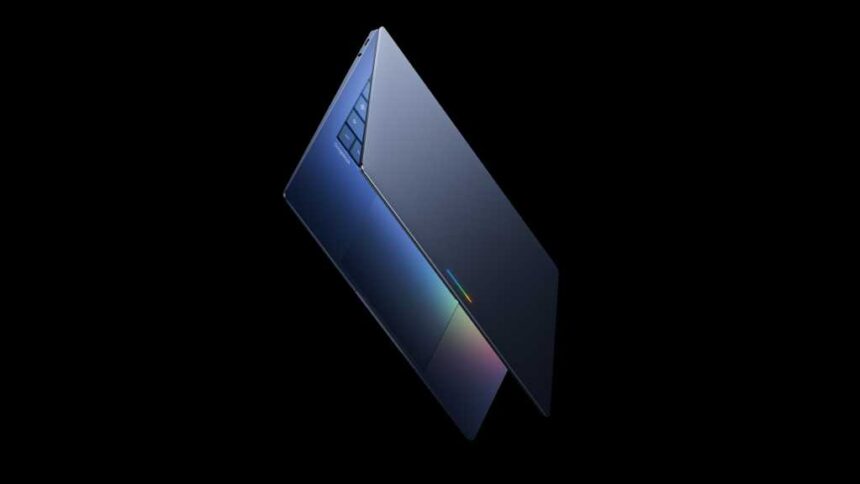
For now, all we can really say is that Googlebooks are coming — and they appear to establish a whole new horizon for how we think about laptops, Android, and ChromeOS. They’ll have a neat glowbar that brings to mind earlier Google hardware products, and they’ll feature a bunch of bits of native Gemini integration. And they’ll interact with Android in some interesting ways.
Beyond that, let’s hope that the answers to all these questions become apparent as the months march on and we grow closer to the Googlebook’s launch — ’cause without these answers, Googlebooks really are just a bunch of gobbledegook, albeit gobbledegook surrounded by a cryptically pretty enclosure and plenty of hazily promising potential.
Want even more Googley knowledge? Come check out my free Android Intelligence newsletter and get next-level insight delivered directly to your inbox.
Read the full article here