
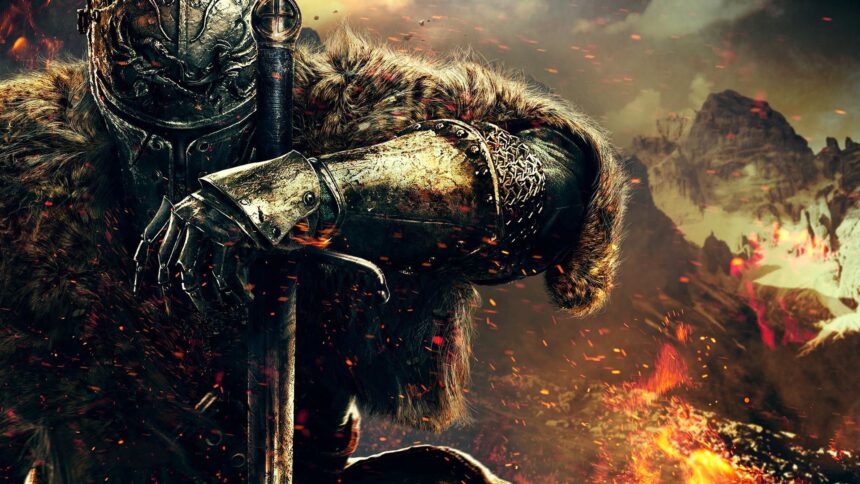
Whether you think Dark Souls 2 is FromSoftware’s worst Souls game or its best (as many diehard fans believe) it’s undoubtedly the game that had the roughest development in the series. The sequel went through a mid-development reboot that resulted in a complete story overhaul, as well as the various level design quirks evident in its strange, surreal world.
One of the byproducts of this reboot was a host of cut content, ranging from small items to parts of levels to giant crab bosses. But one of the largest cut sections is an enormous sewer map that was ultimately replaced by The Gutter, a similarly subterranean area that connects The Grave of Saints and Black Gulch.
Article continues below
Watch On
There are a couple of areas worth spotlighting. One, which Doneda describes as “maybe the best part of the cut map” is a tavern hidden within the Blighttown-ish section. Aside from the fact that it’s one of the map’s more complete areas, it’s also neat to see a dedicated recreational space in a series that tends to be all tombs, torture chambers and poison swamps.
Another, more traditionally Souls area is what initially appears to be a boss arena. Passing through a placeholder fog doorway, Doneda enters a chamber flanked by two enormous statues, with a central dais surrounded by what initially look like swords. As Doneda notes, however, they are more likely to be unlit candles. Either way, these objects call into question whether this actually is a boss arena, as all those sword-candles would get in the way of a fight. Perhaps, then, it’s just where you were supposed to meet an important character.
Aside from seeing what could have been for DS2’s Gutter, the video also provides a fascinating insight into the design of Dark Souls 2. Right at the outset of his guided tour, Doneda encounters a pathway that isn’t connected to the rest of the map, and notes that the designers were likely undecided on how exactly the player should proceed at this point.
In a way, it serves to highlight Miyazaki’s own point that Dark Souls 2 “carried the rest of the series forward” in terms of all the things the team figured out over the course of that project, and how some of the studio’s best work in games like Sekiro: Shadows Die Twice and Elden Ring might not exist without its difficult gestation.
Read the full article here