
Amazon Web Services on Thursday announced that efforts to curb water use at its data centers have made it seven times more water-efficient than the industry average.
The company says it’s 75% of the way toward its goal of being water positive by 2030, meaning for each gallon consumed at a data center, it will return a greater volume to the same community where it was drawn.
Data center operators are trying to address concerns about water and energy usage as AI adoption drives massive expansion of the facilities.
Even in Amazon’s backyard, resistance is growing. Seattle’s city council this week unanimously approved a one-year emergency moratorium on new large data centers inside city limits.
AWS executives said the reality of these facilities can differ from public perception.
“As we’ve been engaging with our local communities, they’ve been very pleasantly surprised about how little water we are using,” Kerry Person, AWS vice president of Data Center Operations, told GeekWire. “We’re starting to share more and more of this information publicly to really just educate folks.”
Data centers use a variety of strategies to keep their electronics cool. Those include fans, air that’s cooled using evaporated water, air conditioning and direct liquid cooling. The approaches involve resource tradeoffs: air conditioning draws more electricity but saves water, while evaporative cooling is less energy-intensive but consumes more water.
AWS uses fans to cool its facilities about 90% of the time, drawing in outside air, blowing it past server racks and releasing it back outside. The company switches to evaporative cooling when outside temperatures exceed roughly 85 degrees. Another water savings was gained by researching the maximum temperatures its electronics can tolerate, and running machines under warmer conditions.
That allows the company to use 0.12 liters of water per kilowatt-hour of operations, compared to an industry average of 0.84 liters. The rate applies to both Amazon-owned facilities and leased data center space internationally, and has been verified by outside auditors.
While it touts its own accomplishments, Amazon also notes that the global data center industry uses less water than many may realize, accounting for 0.5% of all industrial water use worldwide.
Other tech companies are likewise implementing water-saving strategies and policies. Earlier this year, Microsoft pledged a 40% improvement in water efficiency by 2030 and committed to replenishing more water than it uses in each district where it operates. It also started installing closed-loop systems where water flows past heat-generating processing chips, drawing off heat that it carries to chillers. Then the cooled water starts the journey all over again.
But public concerns persist, particularly in regions facing water shortages. In 2025, Bloomberg reported that nearly two-thirds of the U.S. data centers that were built or are under development in the past three years are located in water-stressed areas.
Simon Hans Edasi, a Seattle-area data scientist and geospatial researcher, has examined data center locations in Washington state relative to water availability, energy access and other factors. He raised concerns about Amazon’s planned $4.8 billion campus in Burbank, near the Columbia River. The industry overall is moving “deeper into arid eastern Washington,” Edasi said.
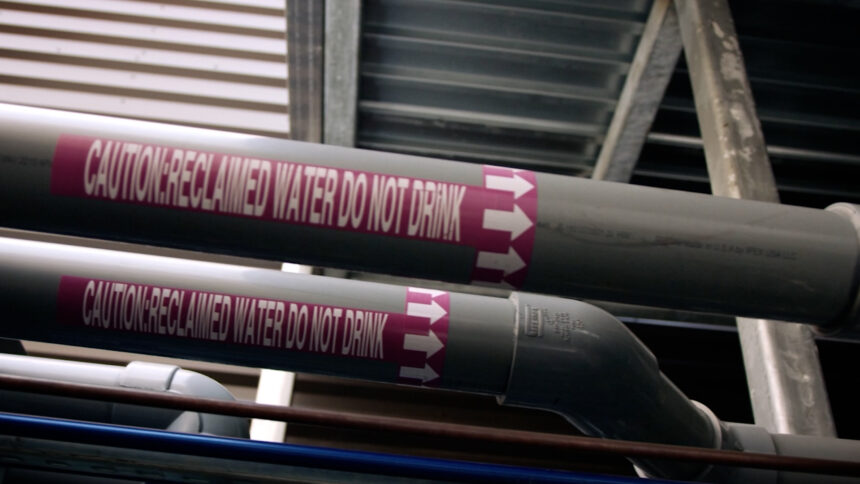
Without addressing that specific project, Will Hewes, Amazon’s water stewardship lead, said the company focuses on three things at each location: drawing as little water as possible, using recycled water sourced from treatment plants rather than drinking water supplies, and partnering with local organizations to replenish water back into the area.
“For any of those water-stressed basins where we’re operating, we’re making sure that in each of those we’re also putting more back,” Hewes said.
Replenishment efforts vary by location. They can include programs such as helping farmers use wastewater from data centers for irrigation, or working with building managers to fix water loss from running toilets and leaky faucets.
AWS consumed about 2.5 billion gallons of water for its data centers worldwide last year. Through replenishment efforts, the company reports returning 3 gallons for every 4 that it used.
Read the full article here