
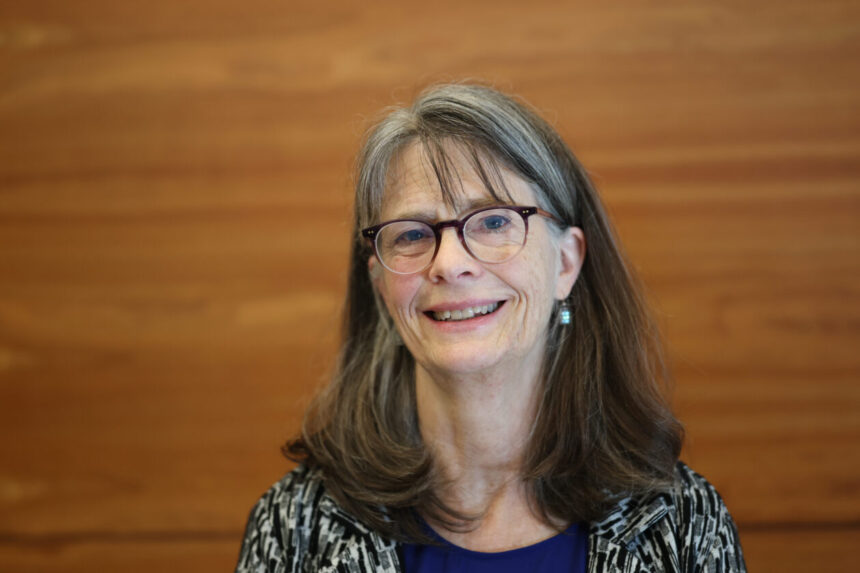
This year’s University of Washington commencement speaker has decades of experience in a field that increasingly benefits from AI and machine learning — but unlike some of her counterparts this graduation season, she almost certainly won’t get booed off the stage.
Mary E. Brunkow is a UW alum and scientist whose research in immune system regulation helped scientists better understand how the body controls its own defenses. She and her colleagues won the 2025 Nobel Prize in Physiology or Medicine for their research. She will be the featured speaker Saturday at the UW’s 151st Commencement.
Brunkow works at Seattle’s Institute for Systems Biology, where machine learning and AI-driven approaches have been part of the research toolkit for years. She is not a tech executive, not a venture capitalist, and not in the business of forecasting the future of work.
This year, commencement speakers at campuses across the country have faced pointed pushback when raising AI. At the University of Arizona, former Google CEO Eric Schmidt was repeatedly booed after telling graduates the question wasn’t whether AI would shape the future, but whether they would help shape it.
At Middle Tennessee State University, music industry executive Scott Borchetta told graduates that AI was rewriting production and, when students pushed back, responded: “Deal with it. Like I said, it’s a tool.”
But the graduates aren’t simply booing AI. They’re booing the people saying it — executives with obvious stakes in the futures they’re describing, speaking with certainty about lives they don’t live.
At a moment when students have spent four years watching AI reshape classrooms, hiring, and creative industries, many appear far more willing to listen to voices grounded in inquiry than in certainty.
Brunkow understands the exhaustion.
“AI is touching everything that people are doing; a lot of times, it’s presented in stark or ominous terms,” she said in an interview. “I can understand the backlash.”
Rather than dismissing those concerns, she acknowledges them — while making the case that humanity has been in similar positions before. “This isn’t the first time that there’s been a revolutionary new technology or new way of thinking, and the human race is pretty good at adapting and using those new things,” Brunkow said.
Her perspective comes from years inside research environments where computational tools transformed discovery long before AI became a cultural flashpoint. That gradual exposure shaped a more measured view of both the promise and the limits of the technology.
“If you’re going to throw something into your analysis that you don’t have a complete understanding of how it works, then how are you going to judge the results that come out in the end?” Brunkow said.
In scientific culture, new tools are only valuable if they produce results that withstand scrutiny: a very different posture from the “disruption is inevitable” framing common in tech circles.
She sees AI accelerating discovery without replacing the judgment behind it.
“You’re still going to need the subject matter experts,” Brunkow said. “A human brain is still going to be needed to ask the right questions and then to look at results, so you know how to ask the next right question.”
That is a more measured vision of AI than the one many graduates have encountered from commencement stages this spring. The technology may accelerate discovery, Brunkow said, but it does not eliminate the need for curiosity, judgment, or the ability to know what question to ask next.
“It’s not like we will solve every problem, just because we have stronger and faster tools, but we can arrive at answers faster,” Brunkow said.
Brunkow isn’t planning to warn graduates about AI, nor urge them to master the latest trends. She’ll talk about something less predictable: staying curious. Careers and discoveries, she said, rarely unfold according to plan.
“Serendipity is an underrated part of a person’s life,” Brunkow said. “Keep your eyes and ears open to things that come along unexpectedly.”
Read the full article here