
By all indications, Bungie’s revival of its Marathon franchise should not have worked out. Despite a CEO’s departure, an indefinite delay, several controversies, and targeting a saturated genre, Marathon came out earlier this month and has become one of this year’s unexpected successes.
Marathon, developed by Bellevue, Wash.-based Bungie (Halo 2, Destiny), is a multiplayer online shooter and a follow-up to Bungie’s classic Marathon trilogy on the Mac. Originally announced in 2023, Marathon is also a competitive, player-vs-player “game as a service” (GaaS, or simply live-service), which is meant to be consistently updated so it can be played indefinitely.
That was the first warning sign. As a GaaS, Marathon was up against heavy competition from the moment it debuted, both from other online shooters such as Fortnite and Call of Duty and other “forever games” like World of Warcraft and Dead by Daylight.
A successful GaaS can be a license to print money for its publisher, which has led to many game studios adopting the model in the last few years. Bungie itself was purchased by Sony Entertainment in 2022 as part of a plan by Sony to shift its internal game development to emphasize GaaS, owing largely to Bungie’s expertise running the Destiny series.
However, that same widespread publisher interest has flooded the market, especially in the last few years. The problem with a game that’s meant to last forever is that once it gets its hooks into a player, it’s rare for them to switch away from it, due to time investments, community ties, and — let’s face it — the sunk cost fallacy. Many live-service games are even designed to reward players who consistently log in every day, so a player who uses some of their finite leisure time to check out a competitor’s product can actively harm their overall experience.
As a result, anyone who wants to launch any kind of GaaS (or really, any video game at all) in 2026 has an uphill battle ahead of them in order to find an audience. They not only have to reach interested consumers, but they often have to implicitly convince them to stop playing something else.
If you’re trying to market a “hero shooter,” for example, you have to be aware that almost all of your prospective players are already heavily invested in Overwatch, Marvel Rivals, or Valorant. It’s not enough to offer them a good game. You have to give them a reason to switch.
It’s a tall order. Even major publishers working with famous licenses have had difficulty getting into this market sector, which has created a bloodbath. There’s already an entire virtual graveyard for recently discontinued live-service games, featuring releases such as Anthem, Multiversus, Rumbleverse, and most recently Highguard, which was infamously shut down less than 50 days after its launch in late Jan.
It didn’t help that Marathon in particular kept racking up warning signs. It was indefinitely delayed last summer, which followed several waves of layoffs at Bungie; longtime CEO Pete Parsons departed the company in Aug. 2025; Marathon’s publisher Sony abruptly abandoned another GaaS, Concord, in Oct. 2024, which seemed to suggest it was backing off of its bets on live-service gaming; and there was a controversy, since resolved, regarding visuals used in Marathon that had been stolen from a Scottish freelance artist. It initially looked like Marathon was headed into disaster.
Instead, Marathon has taken off. At time of writing, it has a Very Positive rating on Steam with over 33,500 simultaneous players, as well as a respectable 79 on Metacritic. Against the odds, Bungie appears to have a solid hit on its hands.
Marathon is a revival of one of Bungie’s earliest franchises. The first three Marathon games were some of the first and only exclusive games for the Mac back in the ‘90s, and can be seen as a spiritual precursor to Halo: Combat Evolved. (Both games are first-person shooters about a cyborg in power armor following an AI’s orders while they fight aliens. The finer strokes are different, but there’s some connective tissue.)
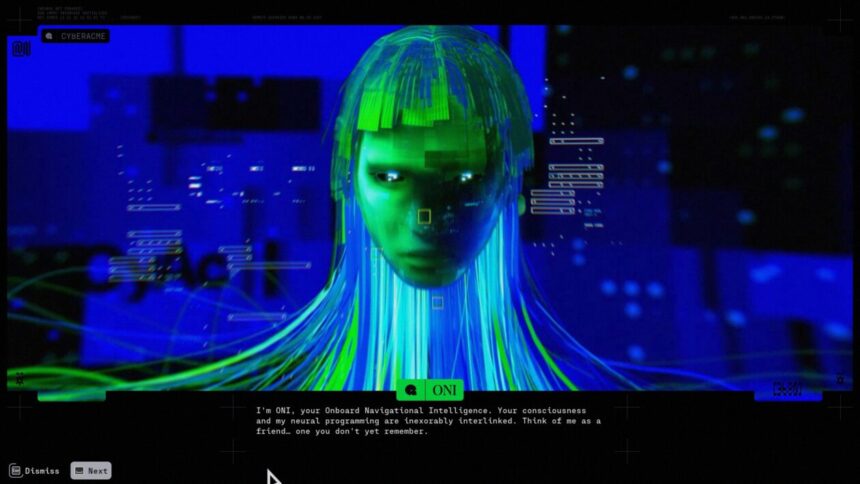
2026’s Marathon is an interquel set 99 years after the events of the first game, on the planet Tau Ceti IV. It’s been several hundred years since the UESC Marathon left Earth’s solar system on a mission to establish an offworld colony and subsequently vanished. In 2893, Earth finally receives a distress signal from the ship.
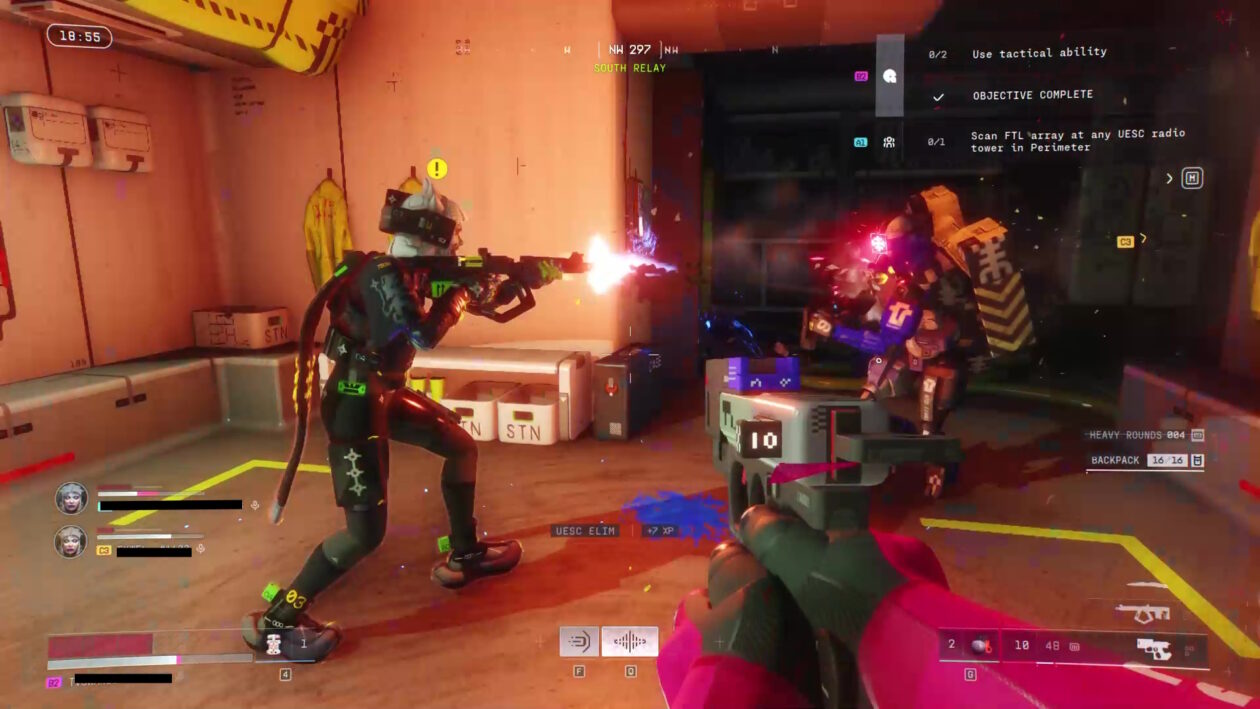
Earth reacts by sending a squad of “runners,” humans who’ve digitized their minds and can download them into cybernetic shells, to Tau Ceti IV. Once there, the runners are thrown into an ongoing struggle between UESC forces, alien invaders, rogue AIs, and each other. Each individual runner is a wild card, who can opt to work for multiple factions from both on- and offworld.
Marathon, as a game, is what’s often called an “extraction shooter.” Players team up in groups of one to three to infiltrate various locations throughout Tau Ceti IV and must take on both computer-controlled and human enemies in order to grab whatever they can find. If you’re able to survive your mission and successfully evacuate the area, you can keep what you’ve found and use those salvaged resources to improve your equipment for your next run.
That gives Marathon, and other extraction shooters such as Escape from Tarkov, a unique tension compared to more typical PVP action games. Your survival actually matters, as opposed to another shooter where you might die 6 times in a good match, and you have something to lose.
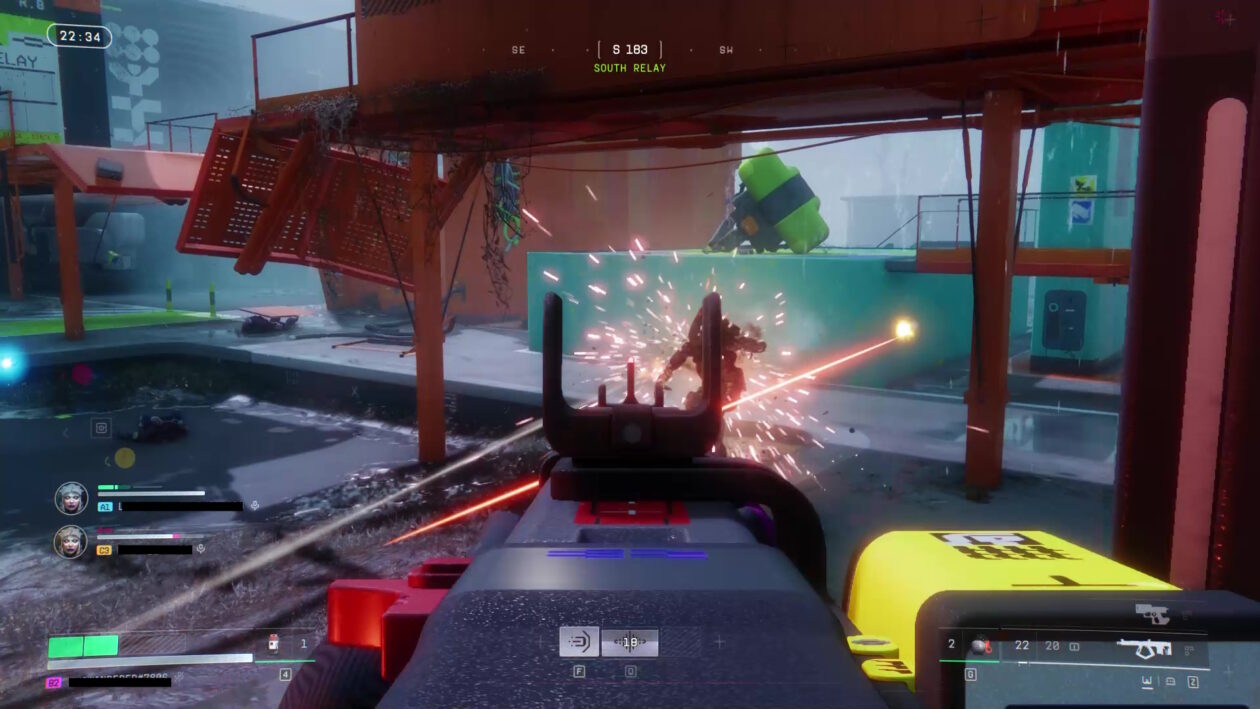
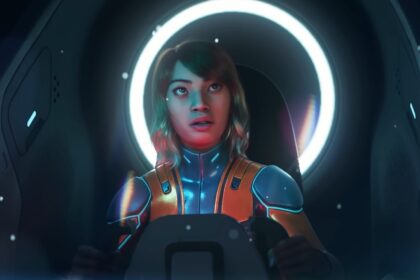
Marathon combines that with strange dreamlike visuals that are reminiscent of ‘90s cyberpunk, particularly Ghost in the Shell. Tau Ceti’s abandoned facilities are all colorful mazes, full of strange sights and narrow corridors, and all your fellow runners are barely humanoid robots. The whole game has a feel like it’s set inside a half-corrupted archive of experimental digital artwork, all the way down to its font choices and complicated menu structure. It’s a deliberate blend of the 1990s’ vision of the future with cutting-edge 2026 graphics, and looks like nothing else that’s currently on store shelves.
That also means that it’s got a couple of different learning curves. After spending a weekend with the game, I don’t feel like I’ve got a handle on it yet, either as a shooter or as an audiovisual experience. Marathon’s menus are a deliberate riot, and while its basic mechanics will be comfortably familiar if you’ve played other recent extraction shooters, it’s a little harder to navigate them than it needs to be.
For right now, my biggest takeaway from Marathon is that it’s beaten the odds. I wouldn’t have guessed at this time last year that Marathon would have a successful launch, between Bungie’s issues and current market forces, but it seems like there’s still at least a little room for this kind of FPS in the modern market.
Read the full article here