
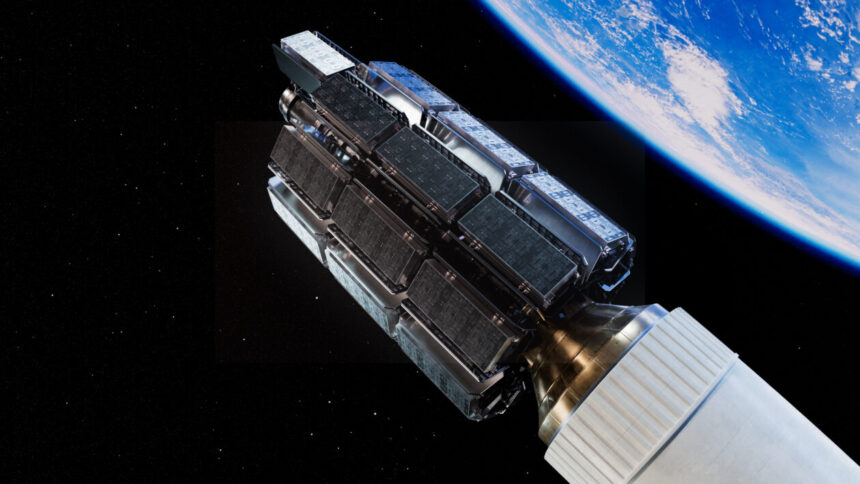
The Federal Communications Commission has freed Amazon from a requirement to deploy the first 1,616 satellites in its Amazon Leo broadband internet constellation by July 30.
The looming deadline had been a condition of the FCC’s 2020 license for the network, when it was known as Project Kuiper. But in January, Amazon asked for a two-year extension of that deadline, citing the limited availability of commercial launch opportunities.
Instead of pushing back July’s interim deadline, the FCC issued a conditional waiver. Amazon is still required to deploy all 3,232 of its planned Gen 1 satellites by July 2029, as originally mandated.
SpaceX — which operates Starlink, a rival satellite broadband network with more than 10 million subscribers — opposed giving Amazon more time. It argued that the FCC should make Amazon wait for a future license processing round before allowing more satellites to be launched. But in an order filed on Friday, the FCC said its remedy was “tailored to ensure that Americans quickly benefit from multiple, facilities-based providers of next-gen satellite services.”
Under the conditional waiver, Amazon Leo satellites launched after July 30 would temporarily lose priority status. That means Amazon bears the regulatory burden of ensuring its newer satellites won’t interfere with other constellations, including Starlink.
Amazon can reclaim its priority status in March 2028, or sooner if it hits the 50% deployment milestone before then. The order also includes a provision to restore priority status in October 2027 if Amazon can prove it has manufactured all necessary hardware and fully secured the required launch manifests to hit that 50% mark.
Amazon still faces a challenging schedule to meet its final milestone. It has reserved dozens of launches on rockets ranging from United Launch Alliance’s Atlas 5 and Vulcan, Arianespace’s Ariane 6 and SpaceX’s Falcon 9. The company has also been counting on Jeff Bezos’ Blue Origin space venture to launch Amazon Leo satellites on its New Glenn rocket. But two weeks ago, a New Glenn rocket blew up on its Florida launch pad during a static-fire test — forcing what’s likely to be months of delay in Blue Origin’s launch schedule.
Read the full article here