

A surge in electricity demand from data centers and AI use, compounded by more frequent extreme weather and wildfires, is finally putting Seattle startup Edo‘s 5-year-old mission in the spotlight.
Edo’s technology creates virtual power plants (VPPs), which dial back the electricity used by commercial buildings during periods of high demand — a strategy that has drawn serious new interest from utilities and building operators alike.
“It is in the forefront of every conversation in the circles we’re in — and it’s more mainstream,” said Hellai Sherzoi, marketing director.
Virtual power plants help utilities handle peak demand by curtailing non-essential use. Without that flexibility, utilities either must build expensive new power generating facilities, install giant batteries or trigger blackouts and brownouts that cut electricity indiscriminately.
VPPs also help building operators save money. Utilities are increasingly implementing “time of use” pricing, which can include dynamic pricing akin to the fluctuating costs familiar to Lyft and Uber riders that makes real-time responses essential.
To limit exposure to high rates, building operators can take steps like pre-cooling and pre-heating spaces, charging electric vehicles, or running non-time-sensitive functions when electricity is cheaper. Sites with solar power or battery storage can send power back to the grid when it’s most needed.
Smart home devices and companies such as Tesla, Sunrun and EnergyHub are creating VPPs in residential settings, while Voltus, CPower Energy and others focus on industrial businesses.
But commercial buildings are a significant target market, accounting for an estimated 35% of U.S. electricity consumption, according to federal sources. That sector has largely been left out, said Jesse Rebello, Edo’s managing director: “This big chunk of load has been unserved.”
The U.S. Department of Energy estimates that VPPs could provide 80-160 gigawatts of flexible capacity by 2030 if quickly adopted. At the low end, that’s equivalent to building 66 nuclear reactors like Eastern Washington’s Columbia Generating Station.
“VPPs have evolved from niche solutions to essential capacity resources, reshaping long-term grid planning,” a DOE blog post noted.
Edo launched in 2021 as a collaboration between McKinstry, a national construction and energy services company, and Avista, a Pacific Northwest utility.
PitchBook reports Edo received $15 million in investments from Avista and McKinstry. The company was also awarded a $6.7 million DOE Connected Communities grant, with Avista and other partners contributing $4.9 million in matching funds. The company has not reached profitability.
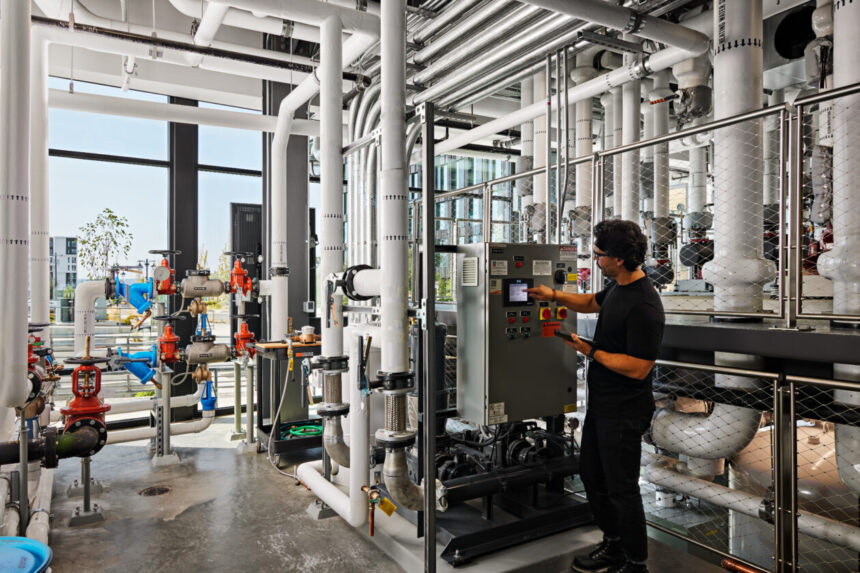
The 45-employee team works with more than 7,000 buildings across the U.S. Edo installs hardware that connects to the systems controlling a building’s operations, analyzes complex inputs, and maps which systems are using how much power and when. The startup then collaborates with building operators to identify where flexibility exists and adjust energy use to meet utility demands.
“We give commercial buildings visibility and insights they’ve never had,” Sherzoi said, “and all while giving utilities reliable ways so they can tap into that building as a resource when the grid needs relief.”
Read the full article here