

Backstage at a Seattle tech event in the early 2000s, Chris Diorio was waiting his turn to speak. Next to him was Jeff Bezos, whose company was already becoming a household name.
Diorio, the leader of Impinj, then a tiny local startup, turned to the Amazon founder: “Jeff, you’ve got a much bigger near-term opportunity than we do,” Diorio recalls saying, “but we’ve got a much bigger long-term opportunity than you do.”
Before Bezos could respond, he was called onstage.
“The technology turned out to be way harder than I thought,” Diorio acknowledged after telling that story in a recent interview. “But that’s what I told him — and I still believe in those words. Our opportunity is to deliver physical intelligence for every item in the world.”
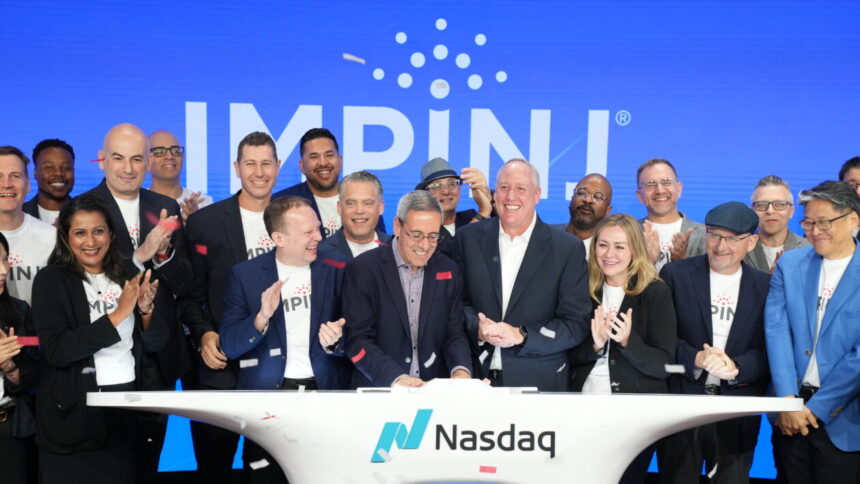
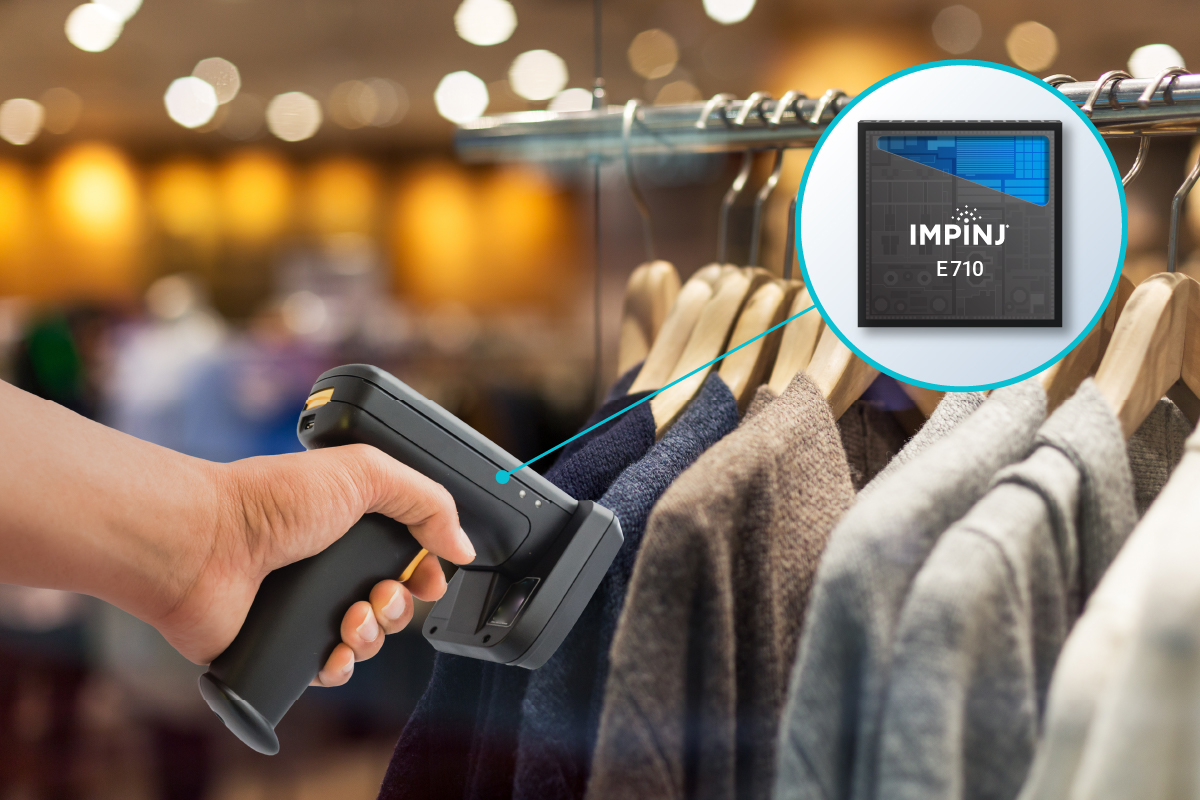
A quarter-century after that chance encounter, Diorio rang the Nasdaq opening bell Tuesday morning in New York City to mark the 10th anniversary of Impinj’s IPO. The company’s tiny, battery-free RFID chips — each smaller than a grain of sand — have been embedded in more than 160 billion items, including clothing, pharmaceuticals, airline luggage, and groceries.
Impinj commands 51% of its market, won a patent war against a rival 15 times its size, and has grown from a $250 million IPO valuation to a market cap of more than $4.2 billion. Along the way, the company survived a billion-dollar industry hype cycle that killed nearly every competitor.
And yet, Impinj has posted exactly one profitable year since going public — thanks to a $45 million legal settlement at the time. Its accumulated deficit stands at $400 million, its financial reports show. Less than 1% of the items it envisions connecting are connected today.
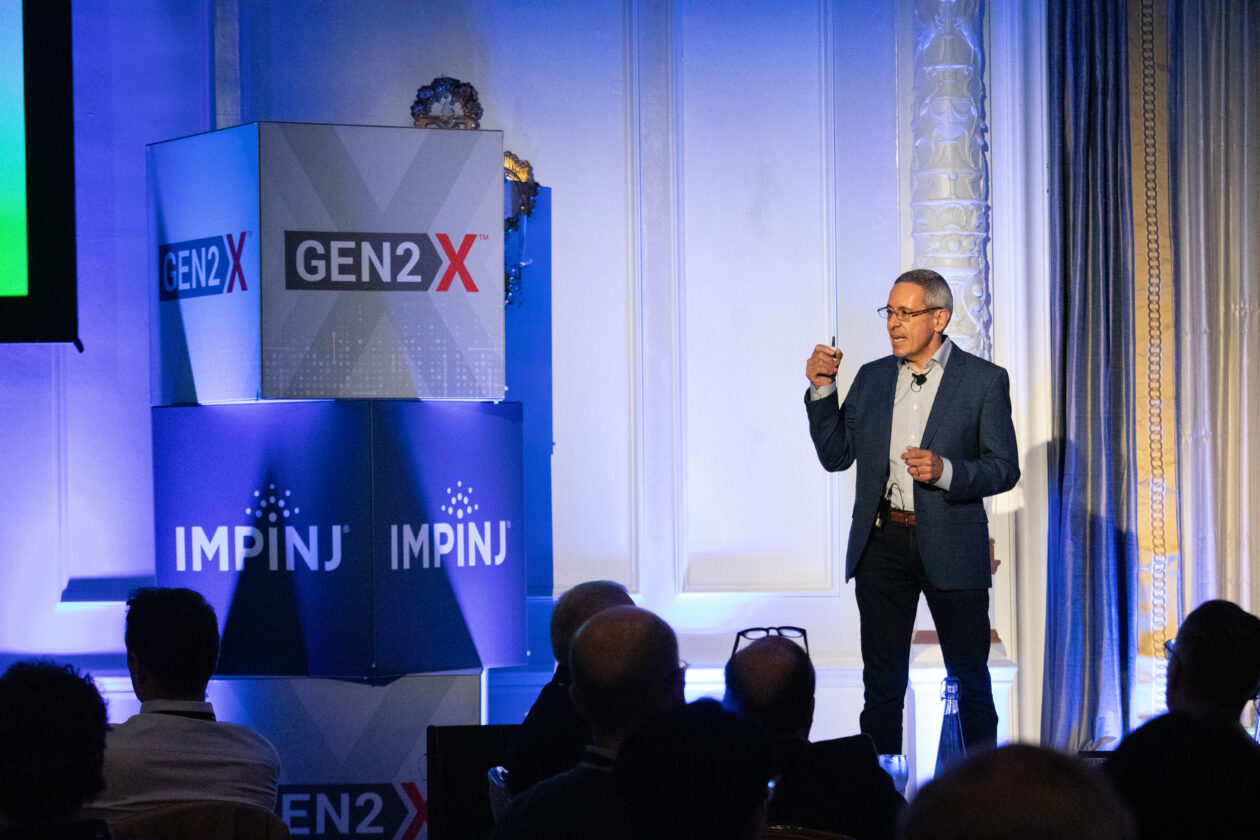
To Diorio, that speaks to the potential. The company is barely scratching the surface. He cited the 1% stat in his comments before ringing the Nasdaq bell on Tuesday morning, saying the “opportunity is so gigantic that we’ll still have a huge runway ahead of us 10 years from now.”
That the company has gotten to this point is as much a Seattle story as it is a technology story. Impinj has benefitted from a network of patient local investors, academic connections and supporters who gave the company the time that Silicon Valley never would have.
But no one imagined it would take this long when they got started.
From Caltech to Seattle
The origins of Impinj were at Caltech in Pasadena, Calif., in the 1990s. Diorio was a graduate student working under Carver Mead, the physicist and engineer who helped coin the term Moore’s Law and helped lay the intellectual foundation for the modern semiconductor industry.

Together, they discovered a way to change a transistor’s electrical properties after it had been manufactured — a quantum-mechanical phenomenon called “impact-ionized hot electron injection.” That made it possible to build chips so efficient and inexpensive that they could be embedded in disposable packaging. (“Impinj” is derived from that scientific name.)
In an oral history later recorded by the Science History Institute, Mead described Diorio as “a super-bright, super-high-energy guy” who “burned up the track” at Caltech.
After finishing his PhD, Diorio was recommended by Mead to the University of Washington’s computer science department. There was resistance among the UW faculty — his research in analog circuits wasn’t an obvious fit — but professor Larry Ruzzo carried the day.
Ruzzo essentially said, “This guy is brilliant, and even if he is nothing other than our gift to the rest of the university, we should hire him,” recalled Ed Lazowska, the department chair at the time.
Diorio joined the UW faculty in 1997. Over the next few years, his research earned a string of honors, including Packard and Sloan fellowships. A couple years later, Diorio met up with Mead on a trip to California, over dinner at Fresh Cream, a long-since-closed French restaurant in Monterey. Diorio asked Mead if it was time to start a company.
“Are you up for it?” Mead asked. Diorio said yes. They started the paperwork the next day.
Impinj was incorporated in April 2000, headquartered in Seattle. It quickly got the attention of two local investment firms, with behind-the-scenes help from the everpresent Lazowska.
On April 21, 2000, the UW computer science chair emailed Bob Nelsen at Arch Venture Partners and Tom Alberg at Madrona. He explained that he was urging Diorio and Mead “to get some local $ for the connections,” and that he had pointed them to Arch and Madrona.
Patrick Ennis, then at Arch, reached out to Diorio that same day. As Ennis recalled in a recent interview, there were plenty of Silicon Valley firms that wanted in, thanks to Mead’s reputation, but Diorio and Mead decided to take Lazowska’s advice and go with Seattle investors.
Diorio, who likes to take walking meetings, negotiated the terms with Ennis as they made their way on foot through the University of Washington Arboretum one day. The investment closed that summer: $15 million, split evenly between Arch and Madrona.
Impinj at the time had patents, prototypes, and no real business plan.
“That’s how venture capital should be done,” said Ennis, who has since become a Madrona venture partner. “You make big bets on great technology and great people.”
Betting the company on RFID
Bill Colleran joined Impinj as CEO in January 2001. He and Diorio had designed satellite chips together at defense contractor TRW in the 1980s. Colleran had just sold his Bluetooth startup, gotten married, and gone on his honeymoon. He came home to a message from Diorio: he’d started a company in Seattle and wanted Colleran to join.

Colleran was soon in Seattle — one of six or eight people working out of what he warmly recalls as “a crappy little building” in the University District, several of them former TRW colleagues.
“We were kind of getting the band back together,” he said.
RFID wasn’t the original plan. Impinj’s first target was improving power efficiency for 3G wireless base stations, but the dot-com bust killed that market, and regardless, the company was too small to compete with the major chipmakers in the wireless industry.
The team spent two years exploring what to do with their technology. Cable modems required too much dependence on Intel, as Colleran recalled. Cell phone radios were dominated by players too big to compete against. GPS turned out to be a poor technical fit — Impinj’s chips excelled at low power, but GPS demanded low electrical noise, a different problem entirely.
So they eventually settled on RFID, the technology that uses tiny wireless chips to identify and track physical objects. The industry was young, the standards were still being written, and Impinj’s low-power technology seemed tailor-made for it.
Then, a stroke of luck: In June 2003, Walmart announced it would require its top suppliers to tag every pallet and case with RFID chips. The Impinj team celebrated their good fortune.
“We all high-fived,” Diorio recalled. “We did it. Eighteen months, we’re gonna IPO.”
In reality, it would be another 13 years.
Surviving the RFID hype cycle
Walmart’s announcement triggered a gold rush of venture capital investment into RFID technology startups. But there was no global spectrum allocated, no standard that worked, and no products ready to deliver on the promise. Walmart’s own January 2005 deadline came and went. Only half of its top suppliers could comply.
By 2008, the hype cycle had collapsed. Nearly every RFID startup died or got acquired.
“More than $1 billion of VC money got poured into RFID,” Diorio recalled. “Way up, crashing down, and only one company that made it out the other side. … We were lucky enough that it was us.”
The real inflection didn’t come until around 2010, when retailers began tagging individual items, not just pallets. Knowing exactly which products were where, in real time, could lift same-store sales by as much as 10%, by solving a basic problem: getting items out of back rooms and onto shelves, making them available for purchase before customers gave up looking for them.
Impinj filed to go public in April 2011, seeking to raise $100 million. But choppy markets — capped by the botched Facebook IPO in May 2012 — closed the window, and the company withdrew the filing that summer, raising $21 million privately instead.
After 14 years as CEO, Colleran stepped aside in 2014.
“I didn’t know if I wanted to be a lifelong RFID guy,” he said.
An exit wasn’t in sight — the IPO window was shut, and a sale didn’t make sense because Impinj made both chips and readers, and “any of the companies that would be interested in boxes weren’t chip companies, and the chip companies weren’t interested in boxes.”
Diorio took over as CEO that November. The venture investors were 14 years in and needed a path to liquidity. He spent the next two years sorting things out and getting the company ready.
The long road to IPO
Tim Porter, now a Madrona managing director, who had worked closely with Alberg on the Impinj investment since 2007, recalled the final stretch. One of the first target dates for trading landed on the day Britain voted to leave the European Union, sending markets into a tailspin.
“It was a little bit like, are you kidding — what next?” Porter said.
But on July 21, 2016 — some 16 years after its founding — Impinj went public on the Nasdaq at $14 a share, raising $67 million at a market cap of just over $250 million.
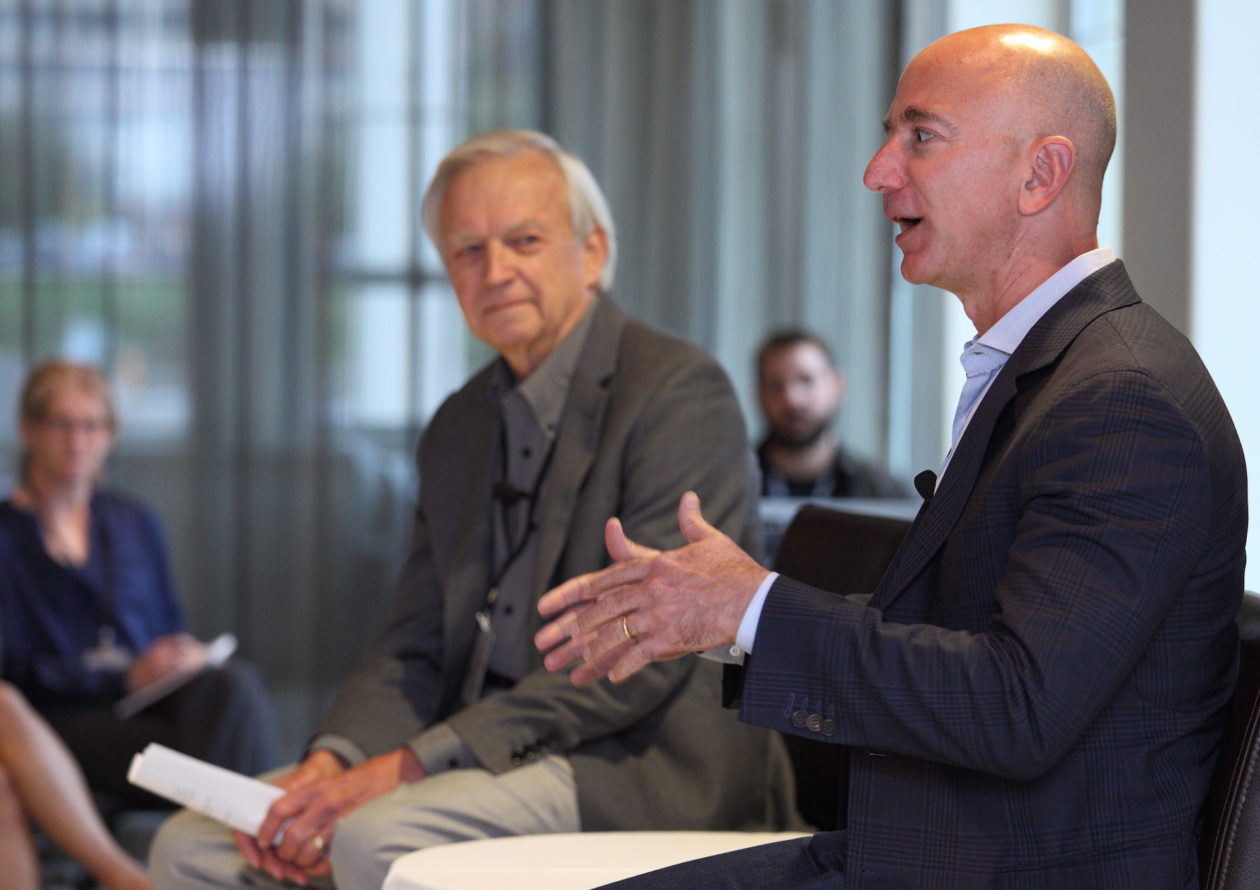
Alberg, the late, legendary investor, who was one of the first people to back Bezos’ fledgling online bookstore, personally invested $500,000 in the offering — a rare move among venture investors, who typically use IPOs to finally cash out, not double down.
Porter called Alberg’s move “a really big signal” to the market that demonstrated his long-term belief in Impinj. It was also a smart investment, as it turned out. As noted during the Nasdaq bell-ringing Tuesday morning, Impinj’s share price has grown by nearly 900% since the IPO.
But there was one last hitch. On the night before trading began, the offering was so oversubscribed that the final allocation became a drawn-out negotiation between the board and the bankers over how many shares to issue. It dragged on so long that Diorio and CFO Evan Fine, stuck in Chicago for the roadshow, missed their flight to New York.
Fine had been one of the first people hired at Impinj, joining Colleran in the University District office in 2001 and staying through the whole ride. He was not about to miss the bell-ringing.
The CFO wanted to make a run for it, but Diorio told him there was no way — the flight departed in 30 minutes from O’Hare. Fine tried anyway. He didn’t make it. They stayed in Chicago overnight and caught a flight the next morning.
The company’s CTO at the time rang the bell in Diorio’s place.
Trial by fire
The celebration was short-lived. After the IPO, demand for RFID surged — but Impinj, thinly capitalized after years of private fundraising, didn’t have the operational capacity to fill the orders. The stock quadrupled from its $14 IPO price to more than $60. Then it all came apart.
NXP Semiconductors, a Dutch chipmaker roughly 15 times Impinj’s size, moved aggressively on pricing and took business away. Customers who had been stockpiling RFID tags pulled back on orders. Revenue declined. On Feb. 2, 2018, the stock plunged 47% in a single day.
What followed was the darkest stretch in the company’s history. The company laid off 9% of its workforce. Then a former employee complaint triggered an audit committee investigation, forcing the company to miss an SEC filing deadline and drawing a deficiency notice from Nasdaq.
For months, the outcome was uncertain. Executives couldn’t trade their stock or issue grants to employees. The investigation cost $1.4 million. NXP, sensing an opportunity, continued to press its advantage.
Diorio described the investigation as mentally draining. The company was spending millions of dollars, the outside attorneys weren’t sharing their findings along the way, following the standard practice, and there was no way to know for certain how it would end.
“You firmly believe you haven’t done anything wrong,” he said, “but who knows if somebody actually did something wrong that you don’t know about.”
The investigation ultimately cleared the company, finding “no credible evidence” of wrongdoing, and Impinj received what Diorio called a rare letter from the SEC formally closing the matter. The stock surged 35% on the news.
Diorio called 2018 a turning point. “It was the year where everything got really difficult, the team and the company rallied, and it was the strength and the persistence of the team and their dedication that pulled us out the other side,” he said. “I’ll never forget that.”
The following year, Impinj went on offense. In June 2019, the company sued NXP, alleging it had copied 26 of Impinj’s patents. NXP countersued. The litigation stretched across five years and four lawsuits. In 2023, a federal jury found NXP had willfully infringed Impinj’s patents and awarded $18.5 million in damages. NXP settled in 2024, paying $45 million upfront and agreeing to ongoing royalties of roughly $17 million a year.
Where Impinj stands today
Diorio helped coin an industry term for the technology Impinj had built: RAIN RFID, short for “RAdio-frequency IdentificatioN.” It distinguished what Impinj does (using battery-free chips to identify and track individual items at scale) from other flavors of RFID used for key cards, animal tags, and contactless payments.
Today the company employs more than 450 people, most of them based in its headquarters at 400 Fairview Ave. N. in Seattle, with a test and development lab on Beacon Hill. The workforce is a fraction of NXP’s, which has more than 32,000 employees — a reminder that Impinj has built a market-leading position with a comparatively small team.
Impinj holds 51% of the global market for RAIN RFID endpoint chips, overtaking NXP for the first time in 2024, according to ABI Research. The industry shipped nearly 53 billion chips that year, roughly one for every six or seven people on Earth. Impinj has connected more than 160 billion items cumulatively.
Each chip is battery-free, costs a few pennies, can be read wirelessly from 30 feet away, and identifies individual items at a rate of up to 1,000 per second. Vision systems can’t identify individual items. QR codes require line of sight. NFC has a range of four inches. Bluetooth requires a battery.
“Name any other technology that even gets close,” Diorio said. “You won’t come up with one.”
Privacy concerns nearly killed the RFID industry in its early years, when consumer groups campaigned against the technology in the mid-2000s. Although there’s privacy innovation still to come, Diorio said those fears have largely faded. The chips carry only a number, respond only when powered by an external reader, and don’t track people.
One retailer already turns its tags invisible after the point of sale, though Diorio noted that’s “not the best solution because then that inhibits recycling.”
His longer-term goal is cryptographic security, chips that can’t be cloned, putting “a dent in global counterfeiting” while keeping consumer data protected.
Meanwhile, the competitive landscape is shifting. Diorio views NXP as the only real competitor — “everybody else in the market is a partner,” he said — but the competitor list in Impinj’s SEC filings has grown from two names at the time of the IPO to more than six, including four Chinese chipmakers. When a product costs pennies, low-cost competitors have a natural opening.
Retail apparel remains the core market. About 60% of all RAIN RFID tags go on clothing. But that reliance has made the business volatile. Three times in 10 years as a public company, demand from retailers has dropped sharply, dragging revenue and the stock with it.
Earlier this year, Impinj’s stock plunged after the company issued guidance well below expectations. Part of the challenge: the company’s top three customers account for 61% of revenue.
The financial picture reflects a company that is still proving itself. Revenue has grown from $123 million in 2018 to $361 million last year, but Impinj has posted just one profitable year since going public — a $41 million gain in 2024, boosted by the NXP settlement.
To Diorio, all of this is prelude. Apparel, he said, is “tiny” compared to the total market of every item manufactured, transported, and sold. General merchandise, supply chain logistics, pharmaceuticals, food — each is an order of magnitude larger, or more.
“We have a gigantic blue ocean,” he said. “It’s the size of the Pacific.”
Machine learning and AI
The company is also using machine learning to move beyond handheld inventory scanning. Fixed readers mounted in ceiling tiles and other locations can track items autonomously at store choke points, from receiving docks to fitting rooms to exits, replacing employees who currently walk the aisles waving handheld scanners.
More broadly, Diorio sees tagged items as a data source for AI, generating hard information at every point in a product’s journey from factory to shelf to recycling bin.
“Most of the modeling that goes on today is based on guessing,” he said. “If the models are based on hard data, it’s immensely more valuable.”
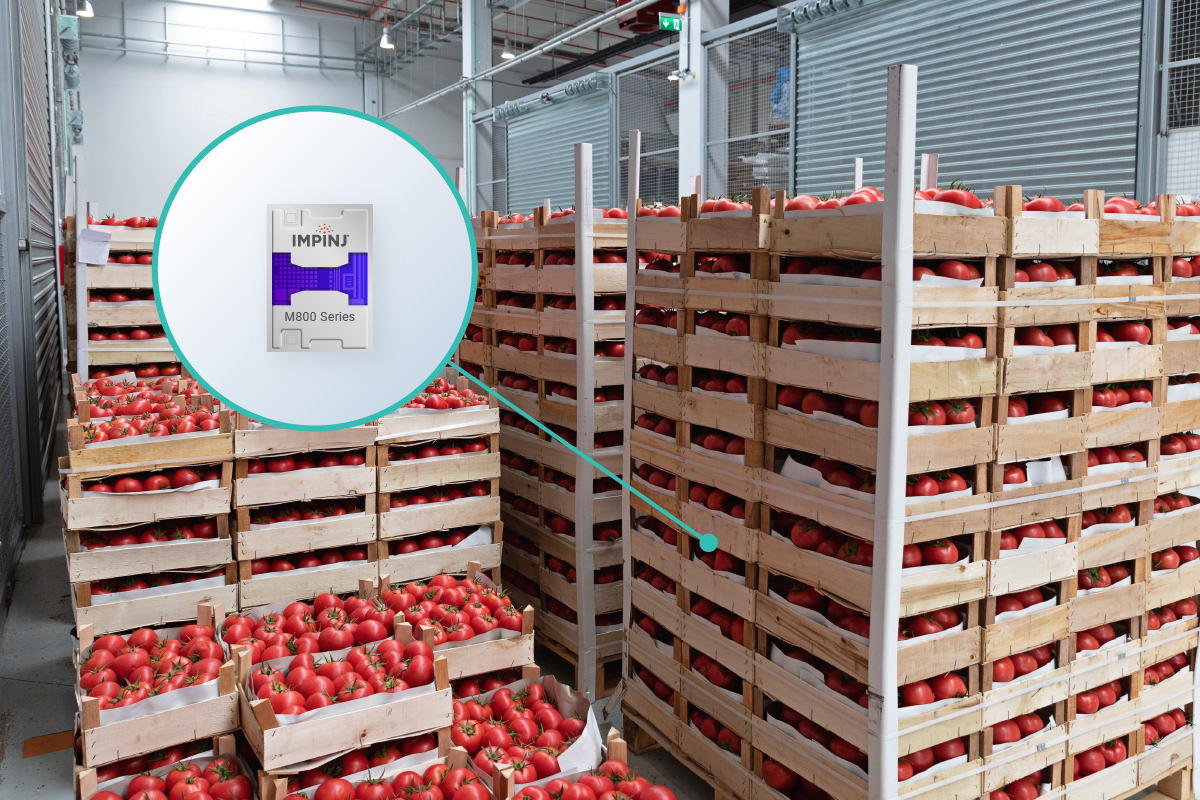
The biggest bet ahead is food. Three of the top five U.S. grocers (Kroger, Walmart, and Albertsons/Safeway) are piloting RFID for food freshness, according to Diorio, using tags to identify items approaching their expiration dates so they can be marked down before they end up in the trash.
A European grocer is pushing toward fully automated checkout, where a basket of tagged items moves down a conveyor and is read instantly, no scanning required.
These are pilots, not deployments. The grocery market dwarfs apparel in volume, and Impinj has yet to prove it can crack it at scale. But here again, Diorio sees this as untapped potential.
“My enthusiasm is as high as it’s ever been,” he said. “We are just getting going.”
And this time, he made it to New York to ring the opening bell.
During his Nasdaq remarks on Tuesday morning, Diorio told the story of getting stuck in Chicago for the IPO a decade ago, using the anecdote to make a larger point.
“The team stepped in,” he said. “The team that was here covered everything, rang the bell, did all the process, and did it beautifully. In fact, probably better than we could have. And that is the story of Impinj. It’s the team.”
Read the full article here