

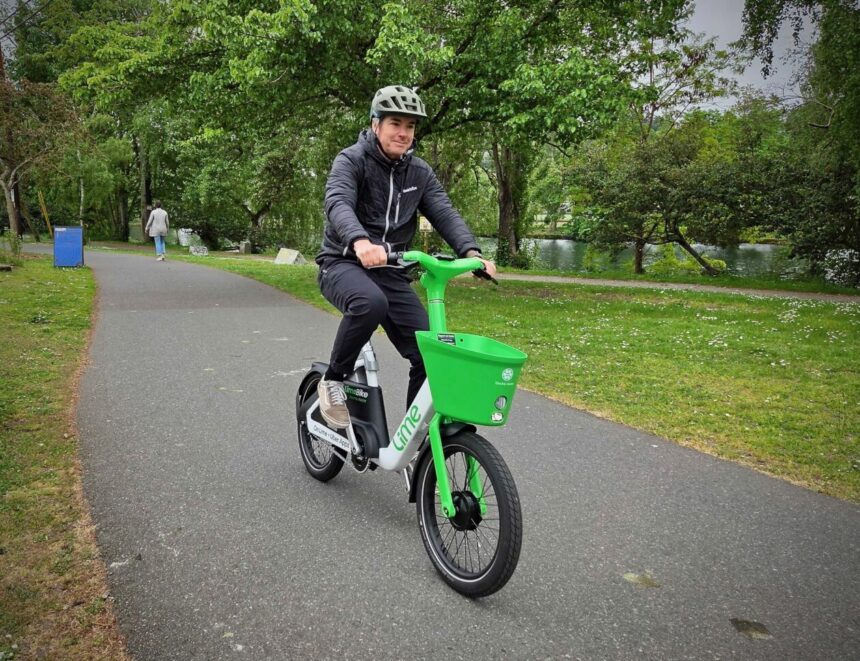
Lime’s newest electric bike is being billed mostly as an accessibility upgrade, but don’t let that undersell it — this thing is nimble, punchy and genuinely fun to ride.
The new LimeBike, which plays on the company’s original name, is hitting Seattle streets this week, combining some of the comfort and ease of its compact, sit-down LimeGlider scooter with a quick-off-the-line bicycle powered by its throttle and pedal-assist.
The San Francisco-based micromobility company is betting that an easy-on, easy-off bike will bring new riders into the fold, particularly those who’ve found its existing hardware too intimidating or physically demanding.
While GeekWire appreciated the accessibility tweaks, a zippy test ride around Fremont left us equally impressed. The LimeBike accelerates fast, handles hill climbs and feels like a legitimate candidate to replace a car trip or two.
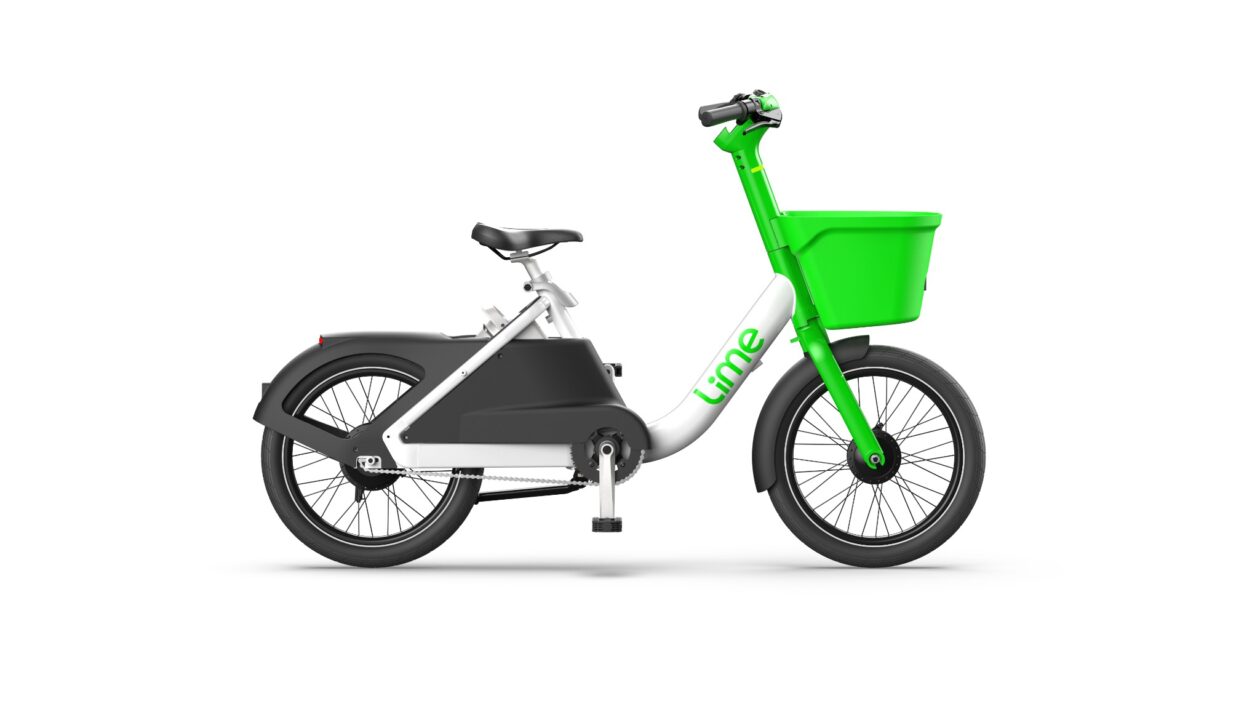
What’s new: The LimeBike features 20-inch wheels — smaller than those on the Gen4 e-bike — giving it a more compact, approachable feel. A step-through frame makes mounting and dismounting easier. There’s even a new seat clamp designed to let riders adjust height more easily. In the U.S., the bike comes equipped with a handlebar throttle, so riders can pedal with electric assist, use the throttle alone, or combine both.
Other upgrades include wider front baskets positioned lower on the frame for easier turning when loaded, ergonomic hand grips designed to reduce fatigue, and a sliding clamp-style phone holder. Lime also repositioned the battery and updated the wheels to lower the center of gravity — a tweak aimed at improving stability, particularly for smaller-statured riders.
“It wasn’t just learnings from the glider,” Parker Dawson, Lime’s senior regional lead for government relations in the Pacific Northwest, told GeekWire. “It was really talking with frequent riders, infrequent riders, and even non-riders in cities around the world, wanting to understand how to make a more accessible and even intuitive experience for more people.”
Who it’s designed for: Lime says the LimeBike is aimed at riders who may struggle with extended pedaling, with a particular focus on making the experience more approachable for women and older riders — two groups the company says have been underserved by existing e-bike designs.
But the target is broader than that. Dawson said the goal is for the LimeBike to be additive to Lime’s fleet rather than a one-to-one swap for a particular trip type or rider — helping more people find more reasons to leave their cars behind.
How it rides: For a rider who has tried everything Lime has to offer, the LimeBike checks a number of the boxes the company was going for when it comes to ease of use. But compared to older model bikes, it’s also just more fun.
Sure, the seat adjusted easily and the step-through frame made getting on and off a breeze. The bike feels more compact thanks to the lower center of gravity, much like the LimeGlider, which GeekWire tested back in 2024.
But the LimeBike also feels lighter and is quick off the line, reaching 15 mph in short order via throttle, pedal assist, or a combination of both. The ability to alternate between the two — coasting on the pedals, then leaning on the throttle — gave the ride a natural feel while still leaving room to actually break a sweat.
The bike handled moderate hills in the Fremont neighborhood without much drama, losing a little speed on the climb but staying comfortable throughout.
And if you’re thinking the last thing Seattle or its bike trails need is another way-too-fast e-machine, the LimeBike is still much slower than the 25 mph speeds (or more) that many modified commercial e-bikes are reaching.
By the numbers: Lime will roll out 500 LimeBikes to start, slotting them into a Seattle fleet that currently totals around 15,000 devices — including 4,000 Gen4 e-bikes, 7,000 scooters, and 4,000 gliders. Seattle is Lime’s largest shared micromobility market in North America by fleet volume.
The company is also now Seattle’s sole micromobility operator, a status it assumed April 1 following the exit of competitors including Bird, which previously filed for bankruptcy. Dawson said riders had been choosing Lime over rivals well before the field thinned out.
The consolidation hasn’t hurt demand. Lime provided 2.3 million rides in Seattle in the first quarter of this year, up roughly 50% from 1.4 million in Q1 of last year — itself coming off a record 10.1 million rides in 2024.
What’s ahead: With Seattle set to host FIFA World Cup matches this summer, Lime is expecting a surge in demand — but Dawson said the company isn’t planning to dramatically expand its fleet for the tournament. Instead, Lime made a conscious decision earlier this year to request 1,000 additional gliders, prioritizing seated options for Seattle’s regular riders over a one-time influx of hardware.
“We are very confident in our operations team that we can be delivering a great user experience and be a really strong asset to the transportation network on game days,” Dawson said.
Dawson also said progress is being made on Lime Vision, the company’s previously announced AI-powered compliance technology, saying 50% of the standing fleet will be outfitted by June 1. Lime is also continuing to work with SDOT on expanding its network of parking corrals across the city — a key piece of making the overall system more convenient for riders.
Lime’s current contract with SDOT runs through the end of the year, and Dawson said the company, which has been in Seattle since 2017, is eager to compete for a longer-term deal.
“Seattle is one of our oldest, most well-developed markets that we have across the world,” Dawson said. “That’s something of an innovation center. A lot of our tech folks live here. A lot of our new technologies are born and bred here to be exported around the world to other cities.”
Read the full article here