


Mark Russinovich writes a lot of LinkedIn posts. Going forward it appears he’ll be formatting the text for those posts in a new tool he built.
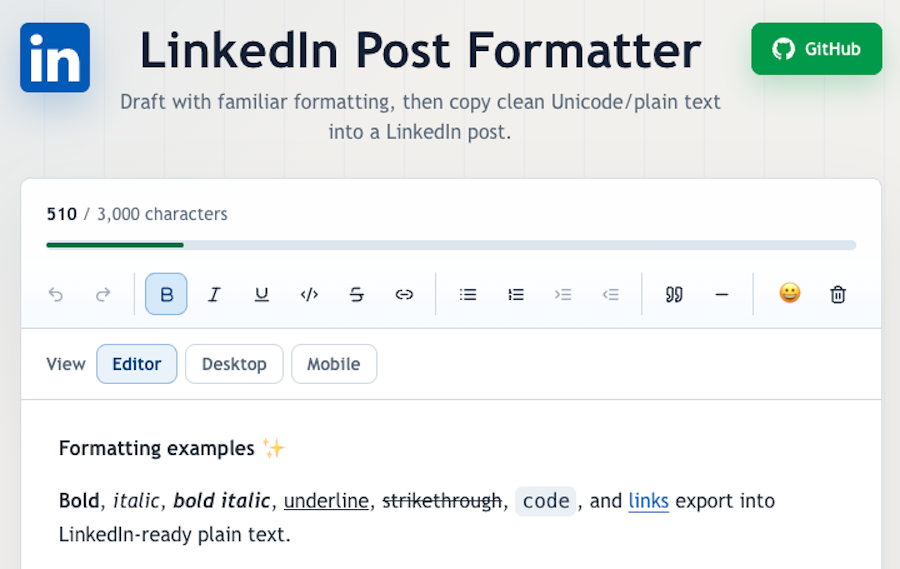
In a LinkedIn post on Sunday — complete with bold, italic, bullets, emojis and more — the longtime Microsoft Azure CTO said he vibe coded a new utility called LinkedIn Post Formatter that allows users to easily get the look they want in text on the professional networking platform.
Russinovich, who has been at Microsoft for more than 20 years, admitted that he’s “always been frustrated” by formatting tools available online, and that most of the free ones are “clunky” and don’t support smooth, in-place text formatting.
In addition to the in-place text formatting capabilities, LinkedIn Post Formatter also includes a character counter and a preview of posts for mobile and desktop.
His project is hosted directly on GitHub Pages and it’s open source for anyone who wants to check out the code or contribute features.
Microsoft acquired LinkedIn in 2016 for $26.2 billion — and some in the comments on Russinovich’s post alluded to that point in wondering why LinkedIn’s interface doesn’t just offer the same capabilities.
“No offense, but don’t you literally work at the company that owns the formatting UX?” one commenter asked.
“It would be great if we could get it adopted directly into LinkedIn’s native post editor,” another said.
In a keynote address at a Technology Alliance startup and investor event a year ago, Russinovich cautioned that “vibe coding” and AI-driven software development tools aren’t capable of replacing human programmers for more complex software projects.
But he did acknowledge the effectiveness of AI coding tools — like a LinkedIn Post Formatter, perhaps? — for simple web applications, basic database projects, and rapid prototyping, even when used by people with little or no programming experience.
A longtime technical and cloud leader at Microsoft, Russinovich said at the time that the future lies in AI-assisted coding, where AI helps developers write code but humans maintain oversight of architecture and complex decision-making.
Read the full article here