
Luke Larson used to get a charge out of working on Tasers and body-worn cameras for law enforcement at Axon. Now he’s buzzing over matcha, the ancient Japanese green tea powder that devotees say delivers calm, focused energy without the jitters of coffee.
Larson’s ambition is noteworthy in its own right as he plans to build Vale into a Seattle-born beverage empire — think Starbucks, but make it matcha — scaling from a handful of local cafes and mobile bars to a nationwide network of thousands of automated machines.
It’s a move he’s pulled off before. As president of Axon, Larson helped grow the company from roughly $100 million to $1 billion in sales before stepping down in 2022.
Larson sees Vale as sitting at the intersection of consumer products, hospitality, technology and automation — and a chance to build something from the ground up.
“While other companies are leaving Seattle, we’re investing in Seattle,” Larson told GeekWire from Vale’s Pioneer Square headquarters, where he’s especially bullish on hiring tech talent from companies including Starbucks, Amazon and Microsoft.
Body cams to matcha bars

Larson, who grew up in Forks, Wash., served two tours in Iraq as a Marine Corps infantry officer and he was awarded the Bronze star with V for valor on his first tour. He joined Axon in 2008 and was product manager for the company’s first cameras.
He rose to president at Axon in 2017 and helped build out the Scottsdale, Ariz.-based company’s significant engineering presence in Seattle. Alongside its mission to build tools and technology to help de-escalate police use of force, Axon attracted attention in Seattle for its geeky spaceship-themed office and its unique recruiting tactics.
In 2022, Larson left Axon following a health scare, taking a six-month medical leave before relocating with his wife and three daughters to Switzerland for a two-year sabbatical — time that gave him space to think about his next chapter.
It was during that period that Larson first tried matcha, at the urging of his wife and sister-in-law. His initial reaction wasn’t promising — he didn’t like it. But an introduction to chef Jeffrey Hayden, a Culinary Institute of America graduate who had worked at Michelin-starred restaurants, convinced him that high-quality, cold-served matcha was a different experience entirely.
Larson returned to Seattle with a new company idea, and last year launched Vale, opening its first cafe in South Lake Union in May 2025.
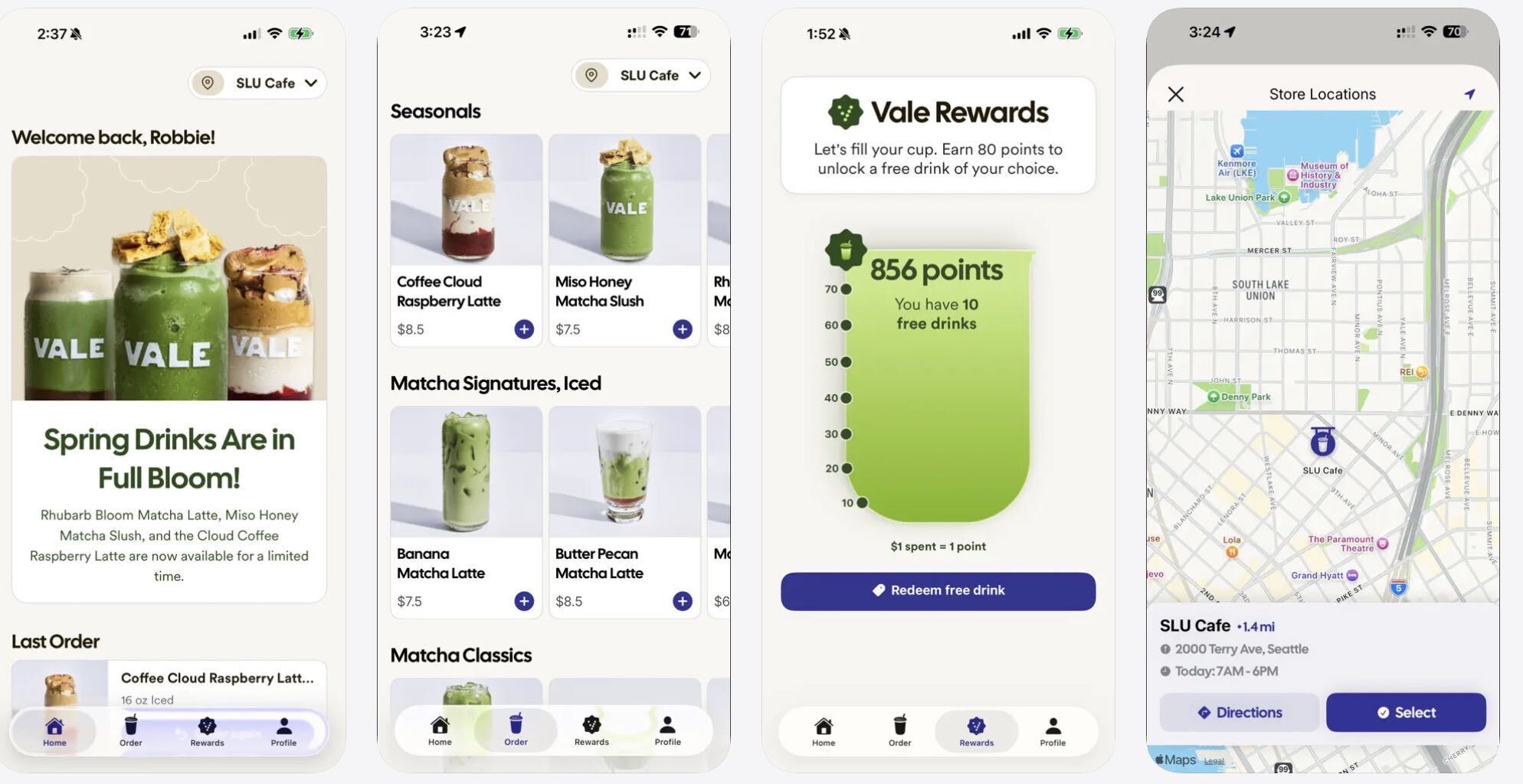
While a second cafe is in the works on First Hill, Vale’s growth target is more pronounced. The company this summer will operate 23 portable, staffed matcha bars with plans to scale to 100 by year’s end and 1,000 by next year. To support that growth, Vale recently leased 36,000 square feet of production space south of downtown Seattle — a space formerly used by Atomo Coffee as a roastery.
Hayden serves as the startup’s head of craft and Vale has 73 employees, roughly half of them frontline matcha bar workers, with the rest split among software engineers, mechanical engineers and roboticists. Former Axon leaders include CTO Jay Reitz and Sydney Siegmeth, head of people and communications.
Larson, who is the majority investor, plans to keep the company private for another two years before seeking outside capital.
His longer-term play involves robots.
Larson wants to build out a network of automated self-serve matcha machines that he envisions in office towers, apartment buildings and other spaces that wouldn’t support a traditional cafe.
Matcha from a machine
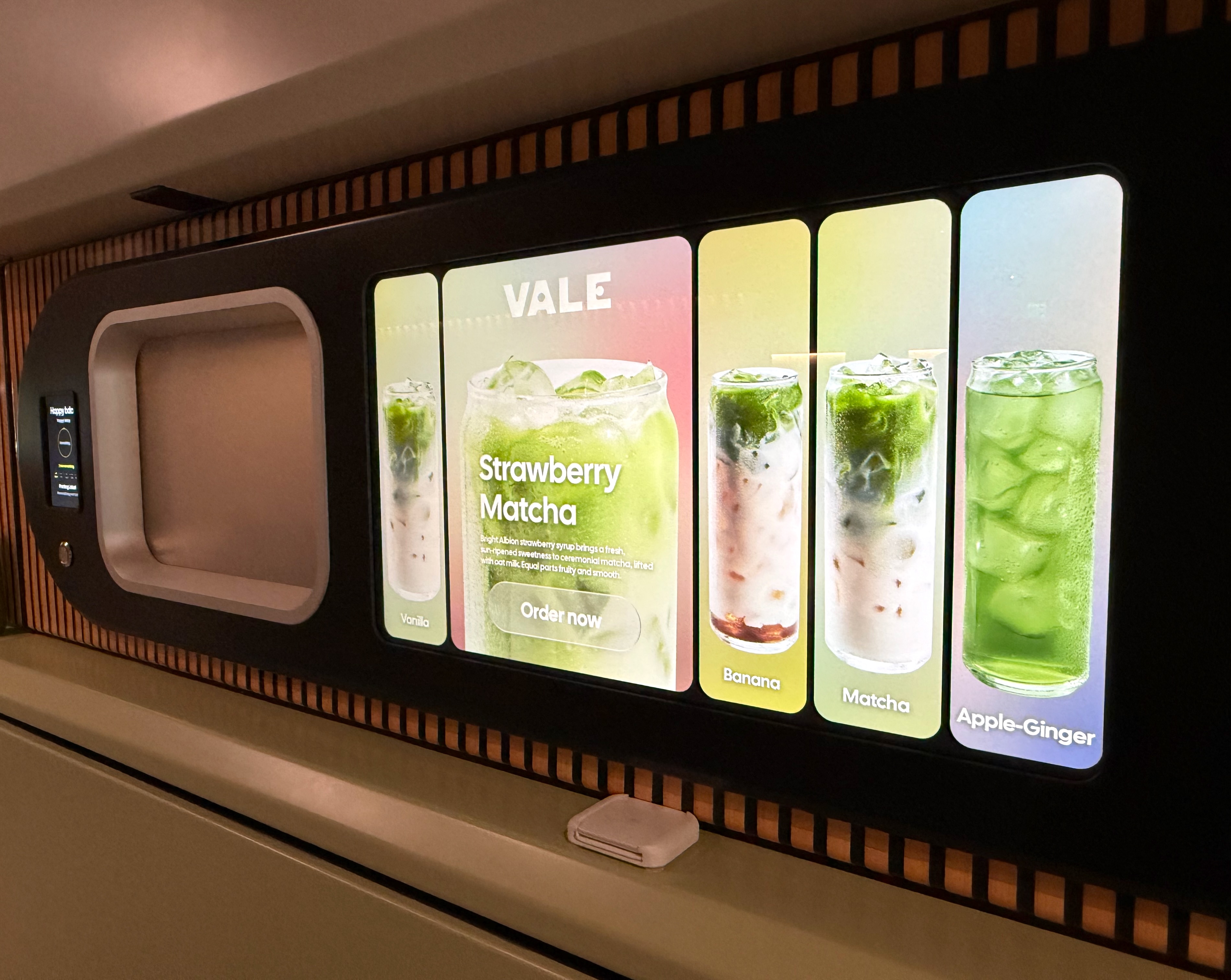
Vale sources ceremonial-grade matcha from Shizuoka, Japan, a region Larson likens to the Pacific Northwest, sitting at the base of Mount Fuji. Hayden leads a team that has developed a specialty drink menu — from classic cold matcha to lattes and seasonal creations like a tiki-themed summer drink — served across the cafe, matcha bars and machines through a single mobile app.
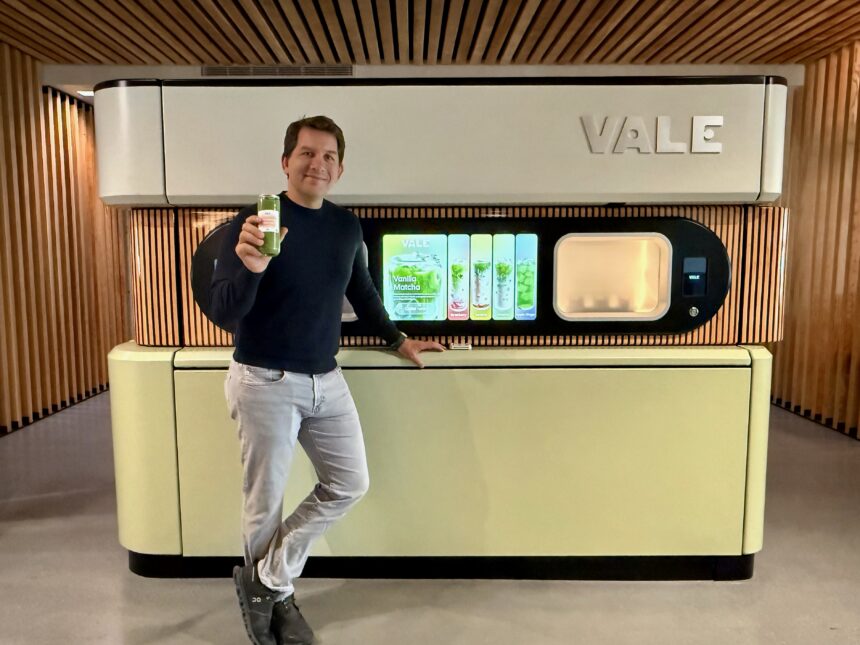
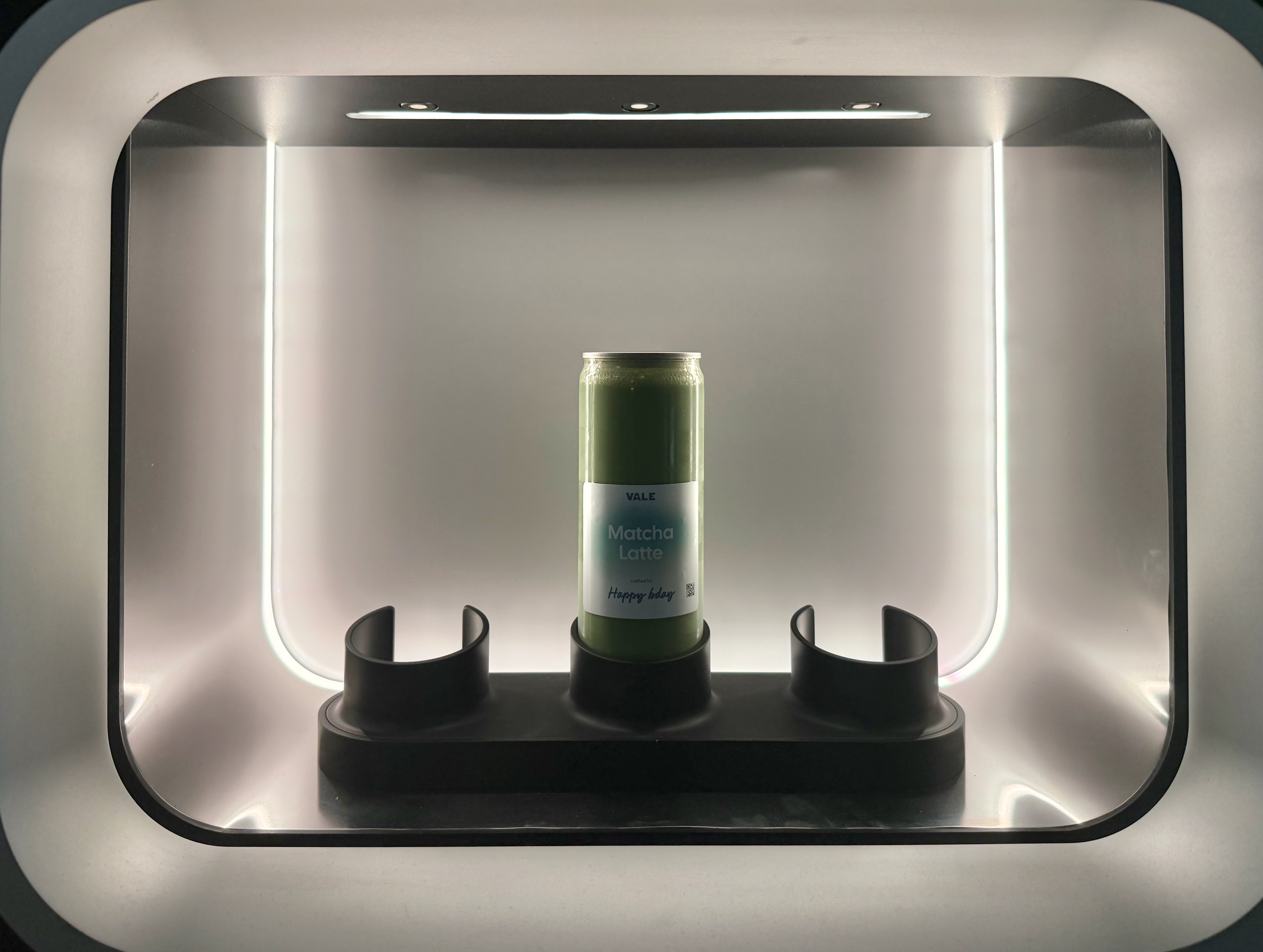
Next to Vale’s HQ in the lobby of an office building at 505 First Ave. S., just a block from Lumen Field, sits a futuristic-looking matcha-dispensing machine. With its smooth finish and rounded edges, it’s about the size of a small car, with a touchscreen centered between two frosted panels that reveal a drink-delivery portal.
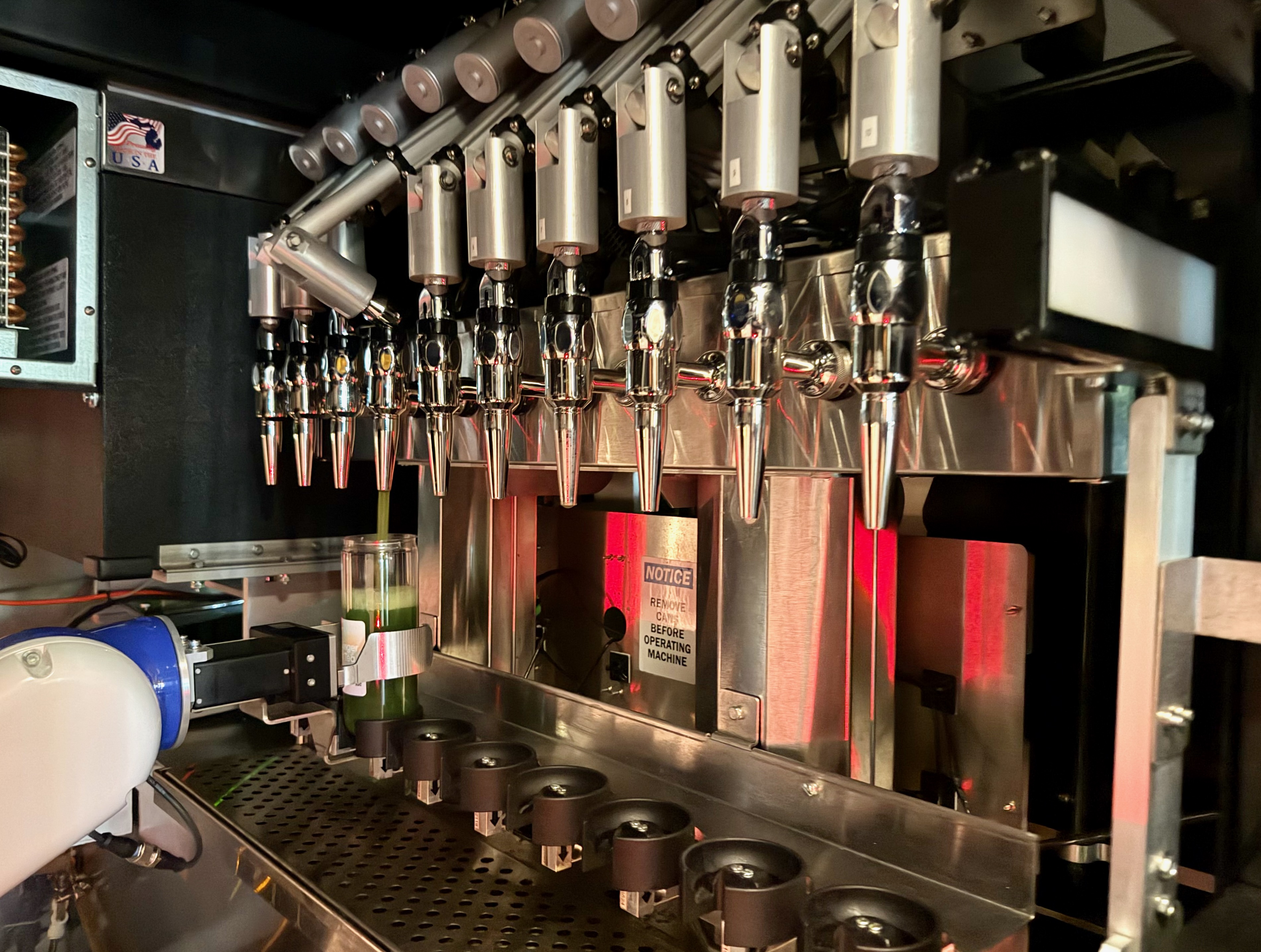
A peek inside the back of the machine reveals a robotic arm that moves from end to end. First it applies a personalized label to a plastic vessel to match what the customer typed in. Next it fills the container with the drink of choice from a selection of 10 automated taps. The container is then topped with a soda-can-style aluminum lid before it’s placed in the window for retrieval.
Larson envisions the machine as something like a “Star Trek” replicator, where the technology fades into the background and the focus stays on the customer experience.
“We want to shatter your expectation of what can come out of a machine,” he said.
A $7 strawberry matcha latte tasted by GeekWire came pretty close to doing just that. Flavored with oat milk, the iced, fruity, creamy drink was a nice surprise compared to more traditional hot and bitter matcha I’ve previously sipped from a straw.
Larson hopes the taste lands equally well with a generation of consumers increasingly drawn to matcha as an alternative to coffee — particularly younger drinkers who prefer cold beverages and are wary of the jitters that can come with a caffeine habit.
He’s betting Seattle is the right place to find them, and to build the team to serve them, as Vale plans to hire up to 100 people over the next 12 months.
“I believe that Seattle’s best years are ahead of it,” Larson said. “To build the type of company that I want to build, I don’t think there’s a better city in the world.”
Read the full article here