

Jimmy Kimmel was riffing on presidential social media habits last week when he offered a suggestion that doubled as an unscripted product endorsement.
“I wonder if they’ve considered getting him one of those Tin Can phones like the kids have that are not on the internet,” the late-night host said of President Trump during his monologue.
For Seattle startup Tin Can, it was a sign that the company’s screenless, Wi-Fi-enabled landline phone for kids has crossed over from niche parenting product to cultural reference point
“Jimmy Kimmel organically dropping Tin Can in his monologue like it’s a product that everybody is obviously familiar with,” founder and CEO Chet Kittleson wrote on LinkedIn. “What a week!”
It was the second big recent media moment for the startup, coming on the heels of a positive review from the New York Times’ Wirecutter that praised Tin Can as the leader in a growing pack of modern landlines aimed at giving kids independence without a smartphone.
We’ve been covering Tin Can since before it was a trend, so we took the opportunity to check in for an update. The company has grown to 30 employees and sold hundreds of thousands of phones since launching its flagship product in 2025. Tin Can is now on its sixth production batch, with orders shipping in June, according to the company.
Kittleson co-founded Tin Can in 2024 with Max Blumen and Graeme Davies, all veterans of Seattle real estate startup Far Homes. He dreamed up the idea in his daughter’s school pickup line, tired of playing go-between to arrange playdates.
The company raised $3.5 million from PSL Ventures, Newfund Capital, and others before landing a $12 million seed round led by Greylock Partners in December.
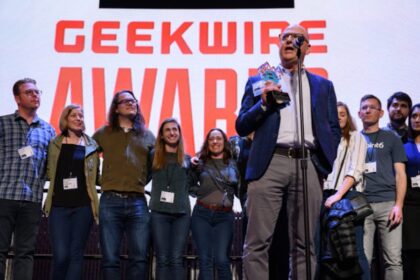
GeekWire recognized Kittleson as one of our 2025 Uncommon Thinkers, and Tin Can’s momentum has only accelerated since then, fueled by a broader backlash against screen time.
The $100 Tin Can phone connects to home Wi-Fi to let kids make and receive calls from contacts approved by parents through a companion app. Calling between Tin Can devices is free, and an optional $9.99/month plan lets kids call regular phone numbers.
The phone comes in four colors with names like “Landline Lemon” and “Later Alligator Lilac.” There are no screens, and no apps, but enough cultural cachet to land in a late-night monologue.
Read the full article here