
David Kirtley always wanted to harness the power of the sun. But first he had to fuel some rockets.
As a University of Michigan engineering student, Kirtley was captivated by fusion power — the atom-smashing reactions that fuel the sun and stars and generate most of the energy in the universe. Trouble was, the academia-related fusion technologies he studied in the early-to-mid 2000s were decades from commercial applications. His fusion dreams went on hold.
“I actually pivoted away from fusion towards space propulsion,” Kirtley said. He began working on rockets, thrusters and spacecraft — and, eventually, began producing plasma, the extremely hot, electrically charged gas that fusion requires.
That space-focused research, conducted at a Seattle-area company called MSNW, pointed toward a potentially viable commercial path to fusion using innovative new strategies. In 2013, Kirtley and three MSNW colleagues took the leap, and founded Helion Energy.
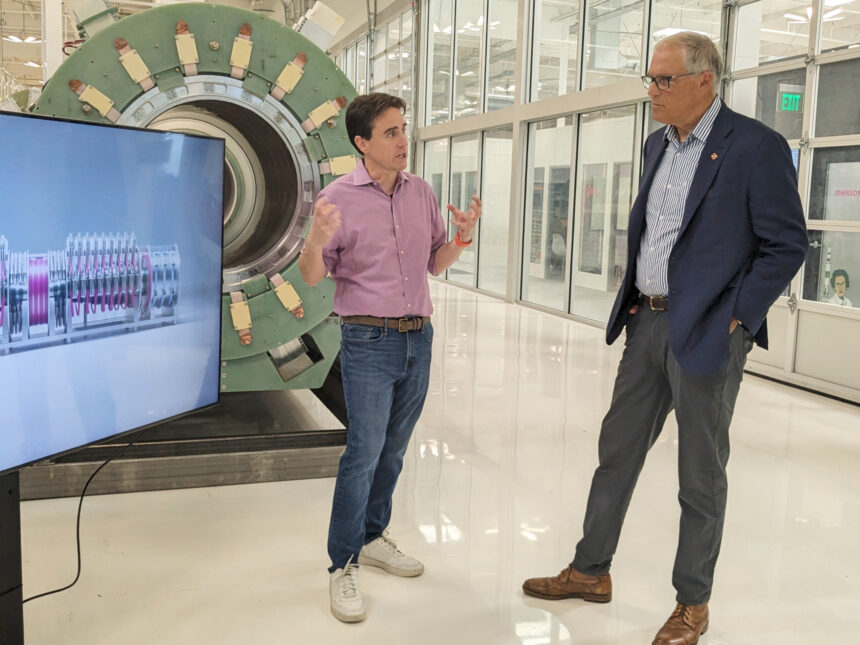
Now the Everett, Wash., company is racing to build what could become the first fusion plant to deliver electricity to the grid, with a target date of 2028. Helion’s approach uses powerful magnets to contain and compress two rings of plasma that are slammed together to produce bursts of energy captured as electricity.
“We literally took the circuits and the topologies and the technologies for space, applied it to fusion, bringing it decades into the future,” Kirtley said.
Helion has raised more than $1 billion from investors and assembled a team of more than 500 to develop its fusion system. The company is simultaneously operating Polaris, its seventh prototype device, while building the commercial facility — a 50 megawatt plant dubbed Orion.
Despite the optimism and big ambitions, significant technological challenges remain. Skeptics doubt Helion will deliver on its promise to generate electricity as planned and some worry that could undermine nascent confidence in the sector.
Keep reading to learn more about Kirtley’s journey to harness fusion energy. His quotes have been edited for clarity and length.
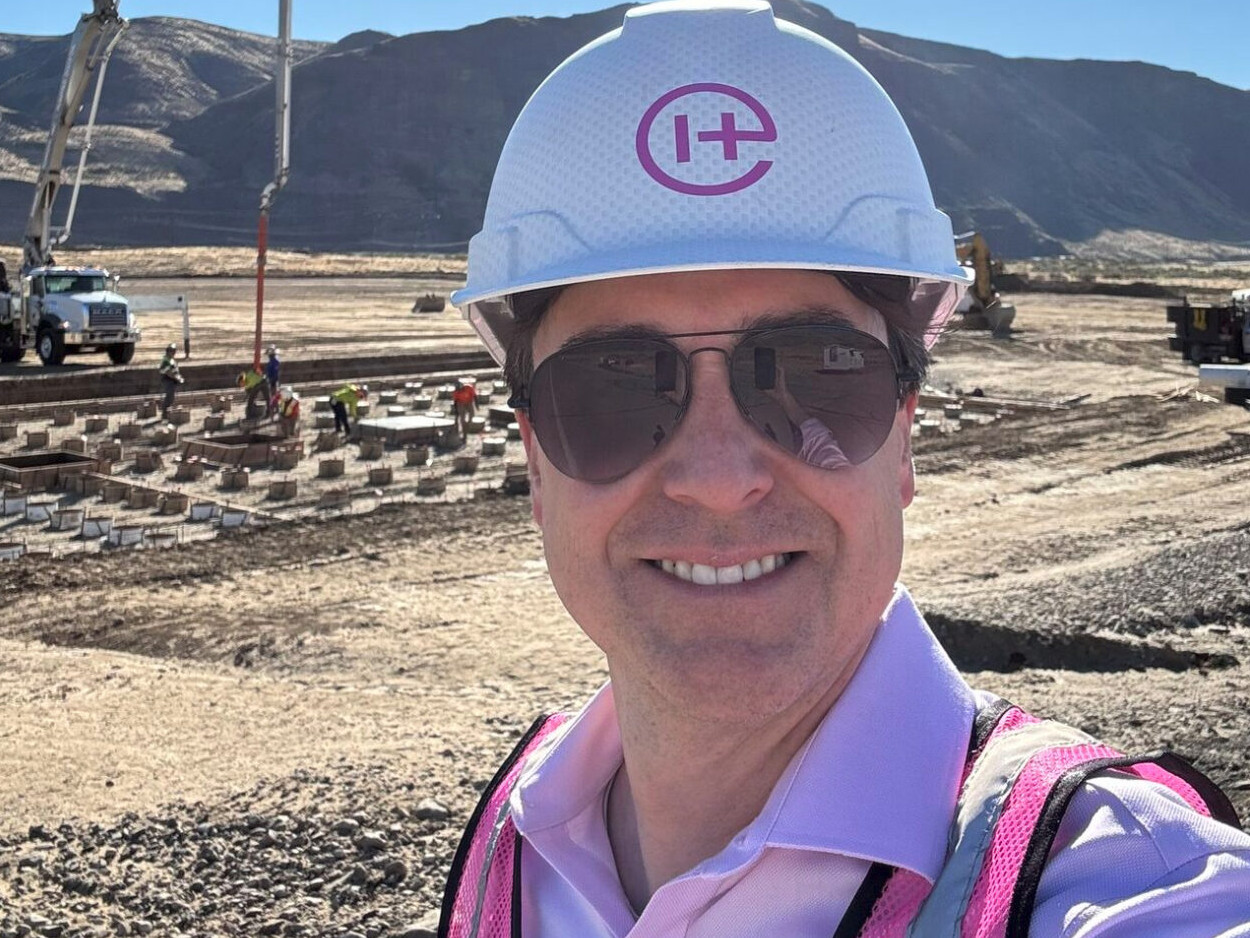
On how to lead in the face of skepticism: I get hands on, running Polaris, running our fusion machines, helping build. When we have test bays and test facilities that are struggling, I’ll get in there with the operators and start actually testing with them — understand the systems, know where the problems are, help solve those problems actively and be a really hands-on, in-the-weeds leader….
You’re going to have to keep building, and so building a team that is excited to solve problems, excited to solve the unknown, and wants to get in there together with each other, is what’s fun. That’s the passion. That has been, at Helion, the recipe for success.
Envisioning a future with fusion: You do have to keep a vision of where you’re going to end up. If we’re the first fusion company to get to 100 million degrees, and that’s all we do, it’ll be a great achievement, but it won’t be enough. If we’re the first to build the world’s first fusion power plant, and that’s all we do, the company will have failed in my mind. Our goal is deploying fusion at global scale — all over — and solving the real problem: solving climate change, solving the energy crisis.
How that influences decision making: When you’re deciding what material to use, you ask the question “What does the supply chain of that material look like in the world, and can it rise to meet the challenge?” If it’s some unique material that can never scale to a global scale, well, let’s not use that. Let’s go figure out a different material. Let’s figure out a different kind of semiconductor. Let’s figure out a different type of circuit that can actually meet that global deployment — even if it’s a little harder.
On whether fusion is an energy “silver bullet” that replaces the need for more solar, wind and other renewables: We’re still on track to burn not only the most coal we ever have, but also the most natural gas we ever have. And so the need for all-of-the-above solutions — not zero-sum thinking, but can we do more — is really the key. And that’s what I think about a lot. Those stats are pretty powerful.
On the impact of data centers supercharging energy demand and investment: It’s not just us saying, “Hey, we’ve got to solve climate change. Here’s a technology to do it.” But the market is saying, “Man, we need every source of electricity that can come online and be low cost and reliable, and fusion should be a part of that, too. Let’s go invest in that.”
It’s enabled us to ramp up our timelines, go faster than we had originally planned, invest in manufacturing so that we’re not just going to build Orion. We’re investing in the manufacturing for the power plants that come after Orion, too.
Read the full article here