
Terminally Online
This is Terminally Online: PC Gamer’s very own MMO column. Every other week, I’ll be sharing my thoughts on the genre, interviewing fellow MMO-heads like me, taking a deep-dive into mechanics we’ve all taken for granted, and, occasionally, bringing in guest writers to talk about their MMO of choice.
I recently had the pleasure of speaking with Raph Koster about his upcoming MMO, Stars Reach, which is trying to recapture the oldschool sandbox magic of some of his prior games—namely Ultima Online, which he worked on, and Star Wars Galaxies, which he was the creative director for.
Needless to say with that sort of experience behind him, we also got into a chat about the industry writ large—namely about how it kinda sucks out there. Granted, there are several very good MMOs you can enjoy, but they’re all typically over a decade old—and newer MMOs, whether recently released or still being developed, have been subject to a massacre.
The survivors have drifted towards the theme park, seasonal, encounter-based model, which Stars Reach is deliberately trying to get away from:


“I think ever since World of Warcraft, the genre kind of narrowed back into ‘Kill 10 Rats’, with classes and levels and raids, and that gameplay style is actually from 1991. It predates sandbox MMOs. It was a text MUD staple. “
“EverQuest was very much that game with graphics, and then World of Warcraft was very much EverQuest with usability, and a lot of quests—because WoW came along and spent more money than every other MMO combined in history to that point, right, and was able to build that quest-led game.”
And while the MUD staple of knocking a dozen vermin upside the head, rinsing, and repeating is old hat, Koster says that sandbox MMOs were actually responsible for more innovation—which proliferated across videogames writ large:
“Despite that dominance—they did a great job, I’m not knocking that—if we look at what sandboxes brought to the table, you craft in video games because of sandbox MMOs, you decorate houses before the Sims, thanks to Sandbox MMOs. You raise a pet in a game because of Sandbox MMOs.
“I apologize for crafting, actually,” Koster jokes, “Because now it’s everywhere, and you can’t avoid it, and it seems to be largely my fault.”
‘We hit the wall’
It’s actually through discussing the role of sandbox MMOs as the breeding ground for videogame mechanics that Koster gets into the spectre plaguing the genre writ large: Games are expensive, and MMOs are the canary in the coalmine for costs ballooning out of control.
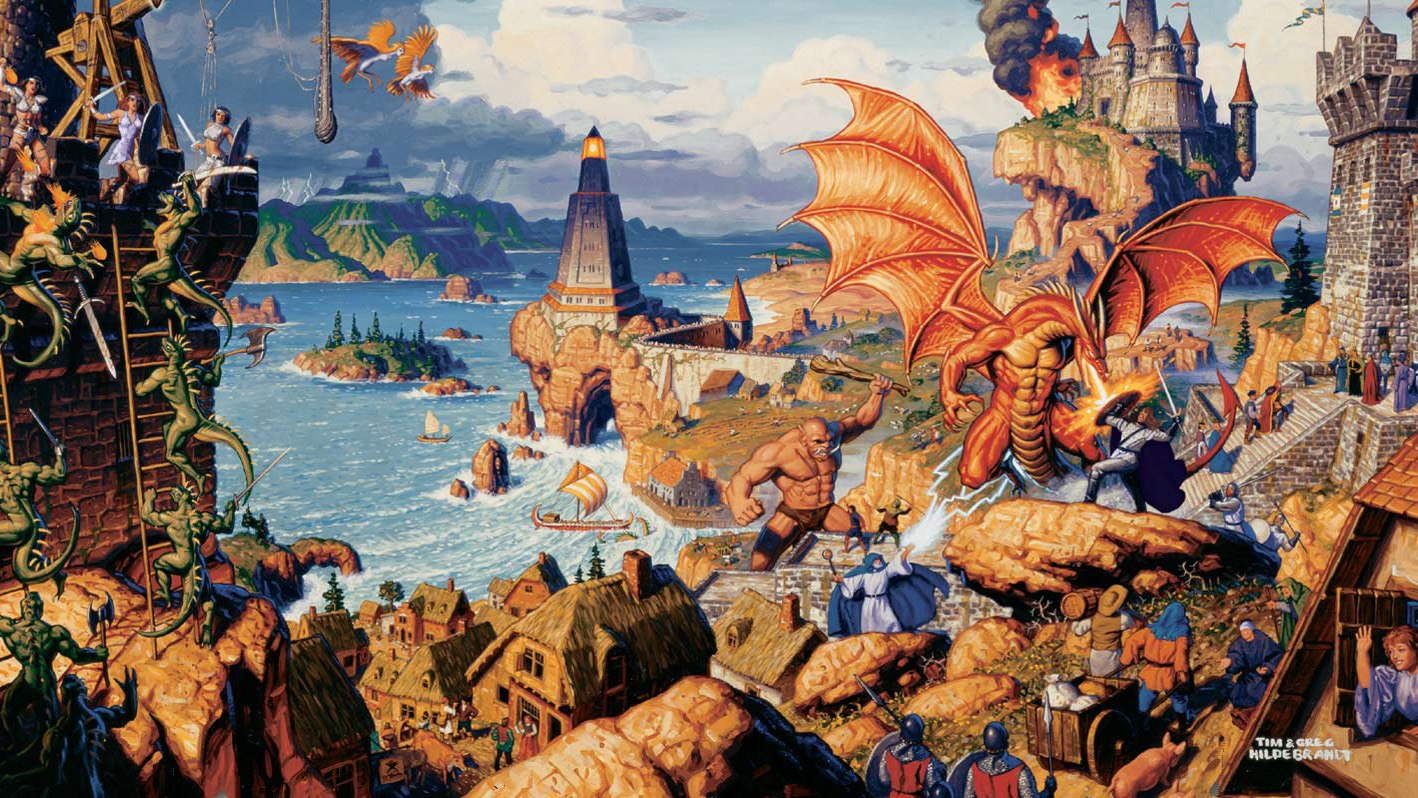
“Making static content is something that the industry has figured out how to assembly line, and they figured out how to monetize it very well, and so the business calculus there is: ‘It’ll cost us millions of dollars to go make this static zone.
“The zone will be obsolete in three months, players will consume all of it, it takes us nine months to make it, but it will be obsolete in three, but along the way we will spit out the following cosmetics, or the following things, and because we are not a sandbox, we will prevent people from trading them’.”
Koster goes on a bit of a tangent here that I’m including because I nonetheless agree with him: “Honestly, most things in these games now. They aren’t actually items, they get soulbound to you immediately—[which makes them] stat mods. They’re skinned as items, but they aren’t actually, they’re not even things. They’re character perks.”
Anyway, monetisation: “The influence of the monetization model, the development costs, all of that tends to lead companies into this, because they see it as a lower risk than trying to solve problems like ‘how do we make a dynamic world with emergence’.”
It’s a recipe for making static worlds with ballooning costs, with lower returns, which quickly become not-viable as a business.”
Raph Koster
But the math stops working in the face of ballooning videogame development costs, as Koster explains: “I think the story of the current industry troubles is the story of being wedded to that model and having costs run away. I did the math right before Covid. The cost of games goes up 10x every decade. That’s not sustainable. It was predictable, and we hit the wall.”
“1997, Ultima Online, $2 million dollars. Star Wars Galaxies, 2003, $10-$12 million dollars. World of Warcraft, 2004, $63 million. Star Wars: The Old Republic, which embraced all of the things I said more than any other MMO? Over $200 million.
“So, those models, they’re not working anymore, and that’s why we get fewer and fewer MMOs too, because MMOs are at the bleeding edge of that problem … It’s a recipe for making static worlds with ballooning costs, with lower returns, which quickly become not-viable as a business.”
Which means if you’re a big studio, you won’t “make anything fresh, and if you do make something, probably go make something else, right?” Alas, staring at the shot-out-back corpse of Project Blackbird, I feel as though Koster’s bang on the money, here.
‘They are bored’
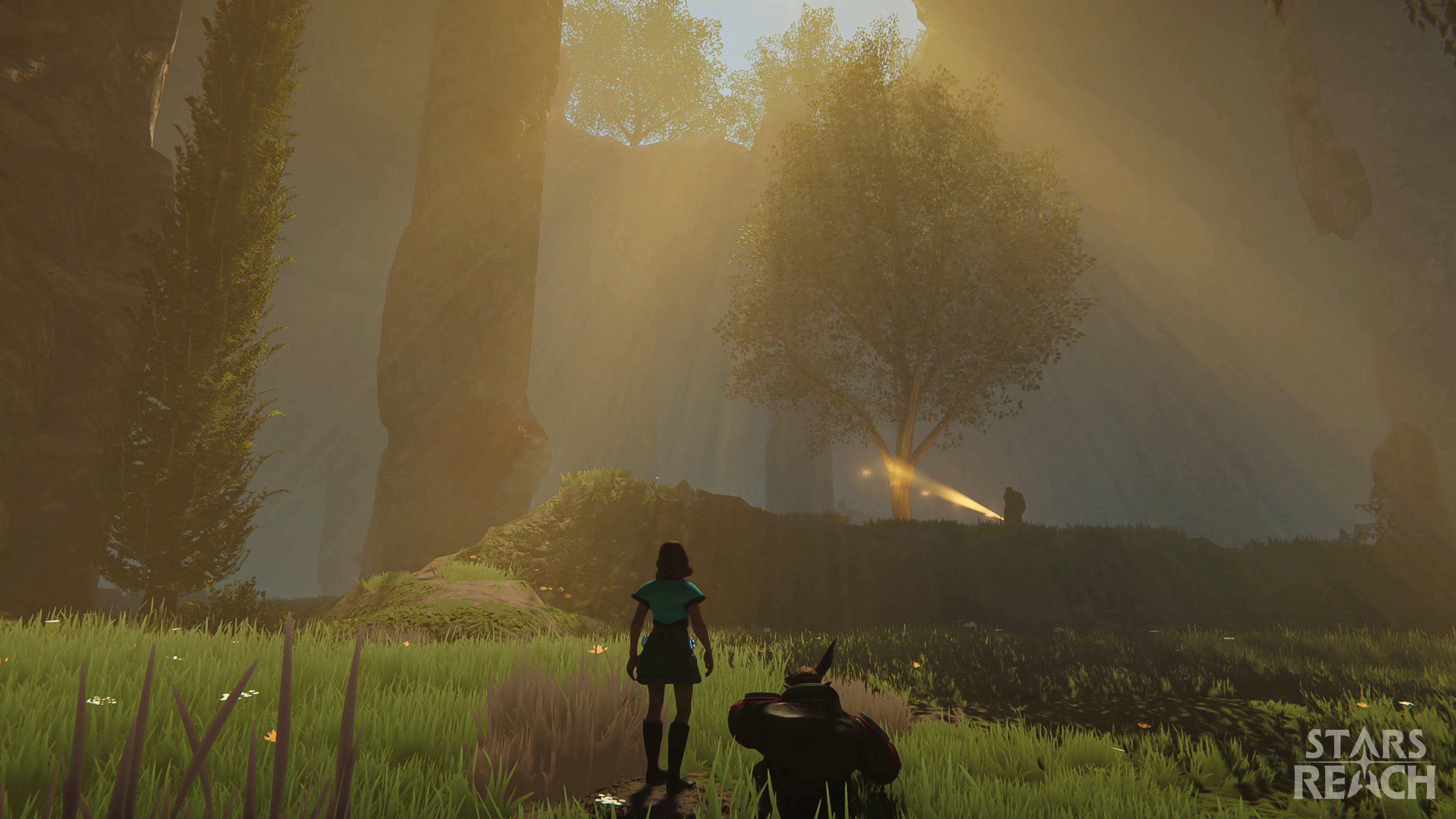
This unhappy marriage—MMOs being tied to a business model that’s becoming more unfeasible as time goes on—impacts playerbases, too, says Koster:
“There’s no question—and hopefully nobody gets mad at me for saying this—the biggest change in the MMO community is that they have grown bored. They are bored, frustrated, they feel like their hobby is no longer getting supported by the industry, and they’ve grown very jaded as a result. Right?”
Koster adds, laughing: “I don’t know if I can fix that—that’s a tall order. I hope what we’re doing is a breath of fresh air and opens new doors … People are still people, right, but they do react based on what they’re offered and what’s available, and for a very long time the scope of what’s available has narrowed down.
“The MMO audience feels underserved and over-monetized, that’s how they feel about what’s going on.”
As far as Stars Reach goes, I found myself curious, but cautious—Koster’s enthusiasm for the game is infectious, but also filled with a lot of very optimistic big-swing goals I’ll need to see before I believe. For Koster, the hope is that “what we are doing is offering them something that is fresh, as something that’s novel, that they haven’t seen before, that makes them go, ‘Oh, games can do that?'”
Star’s Reach plans to go into early access sometime this summer.
Read the full article here