
When Bill Belichick famously spiked a Microsoft Surface tablet as the New England Patriots head coach in 2016, the moment was a symbol of frustration with technology on the sidelines.
But inside the company, it actually became a point of pride. Thomas Labuzienski, a senior partnerships manager at Microsoft, shared the rest of the story with us this week: the Belichick device made it back to the company — where testing showed, amazingly, that it still worked.
That rugged (and apparently indestructible) hardware remains the tech giant’s most visible presence on NFL game days. But these days, the action is inside: Copilot, AI agents, and live data tools that are changing how coaches, players, and scouts prepare and compete.
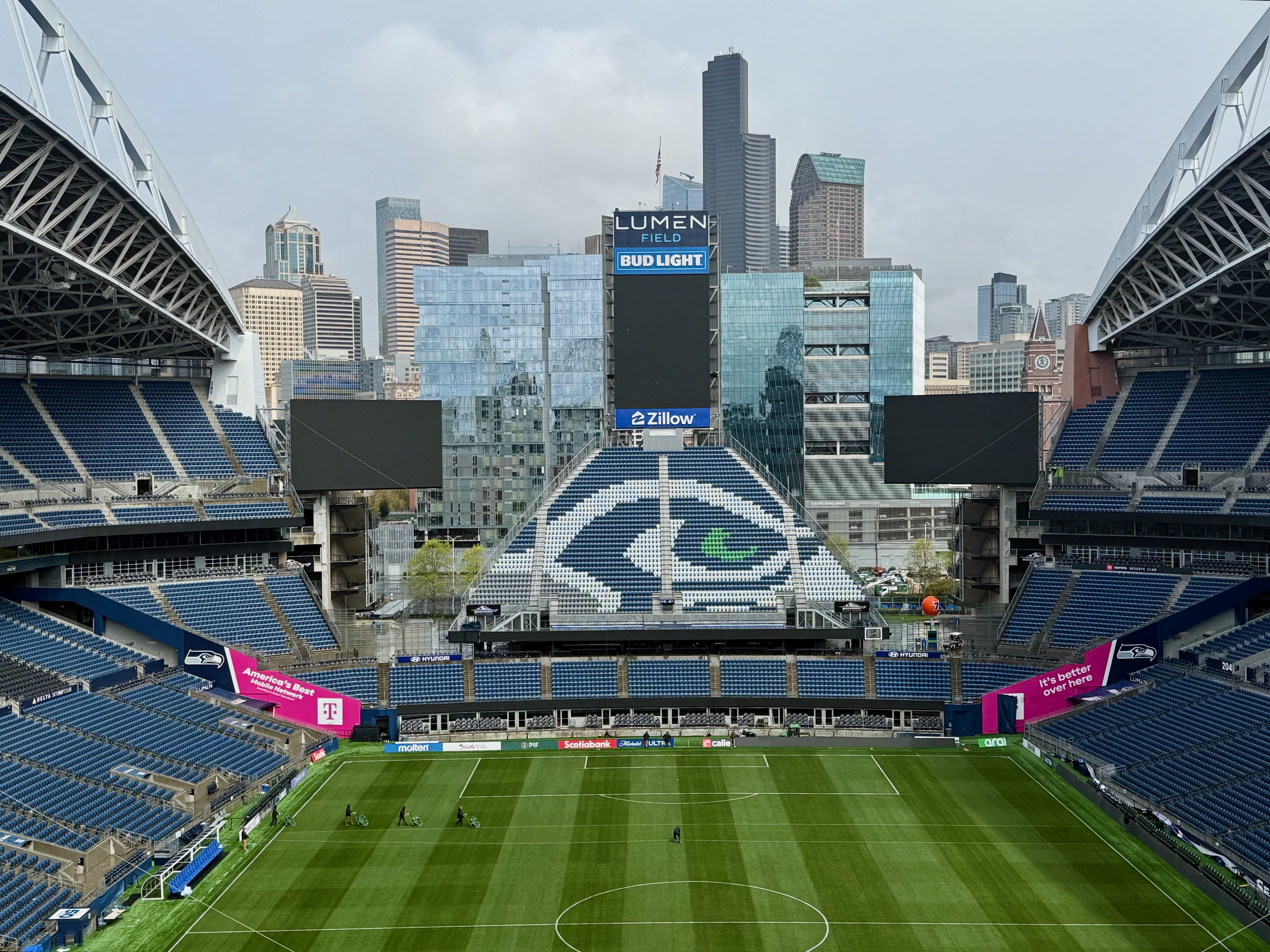
That was one of the takeaways from an event Wednesday at Seattle’s Lumen Field, where Microsoft walked content creators and this reporter through some of its latest NFL technology. High above the field, social media and YouTube influencers posed for photos and selfies with a Microsoft Surface Copilot+ PC much like NFL fans would with their favorite players.
It was an off-season glimpse into the evolution of Microsoft’s partnership with the league, which started in 2013 and was extended last summer to go deeper on AI and cloud tools.
Just as with business workflows, these tools are changing how teams operate on and off the field. One big benefit of AI, Microsoft says, is speed: getting the right information to the right person fast enough to shape the next play call or adjustment. But the coaches, players, and staff are ultimately still calling the plays, both literally and figuratively.
“We’re not using AI and technology to make decisions for them,” Labuzienski said. “They’re the experts. They know what they’re trying to do.”
Even with baseball and soccer well under way, Microsoft seems as excited as ever about football, especially with its hometown Seahawks coming off a Super Bowl championship.
Here’s what we saw and learned during the event:
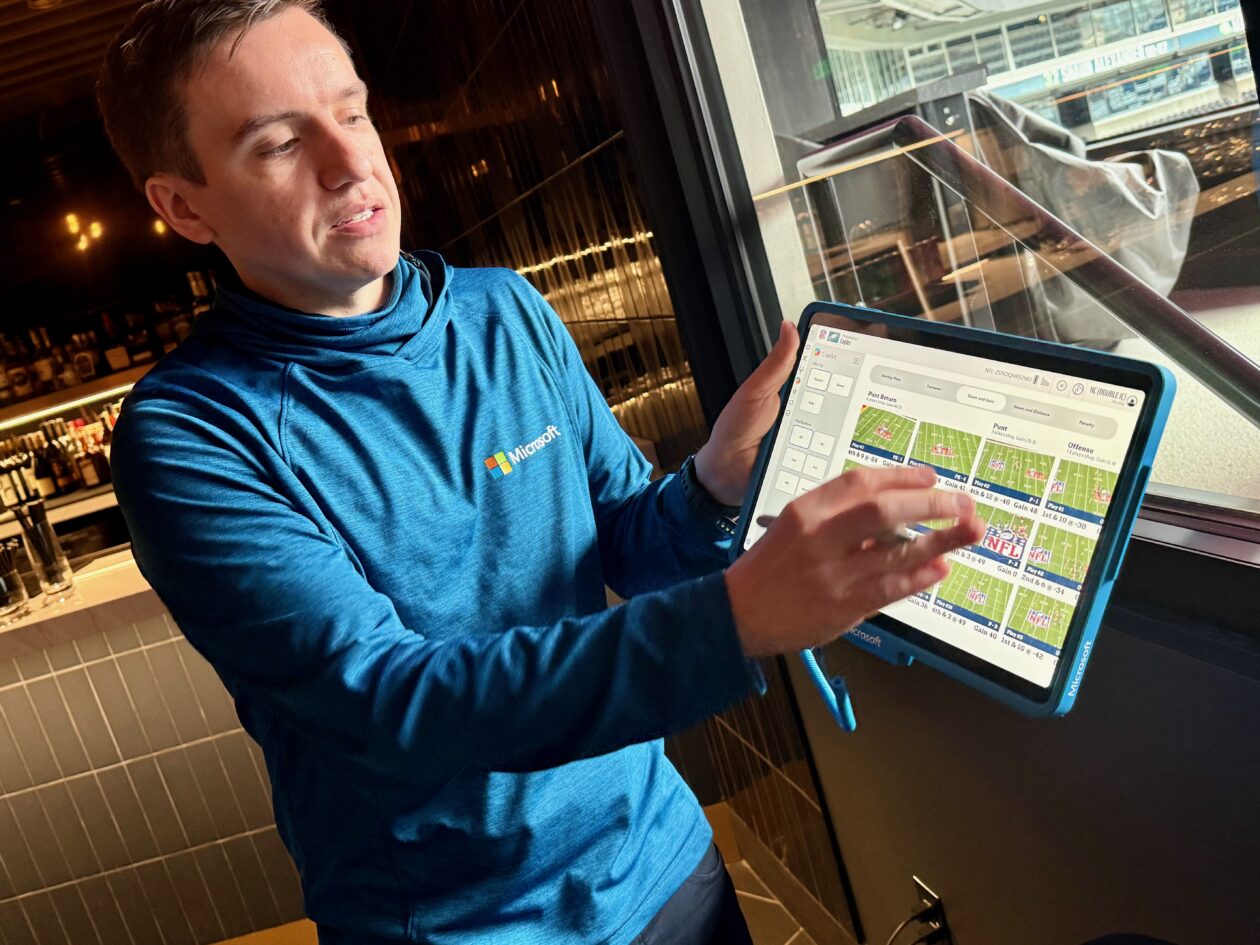
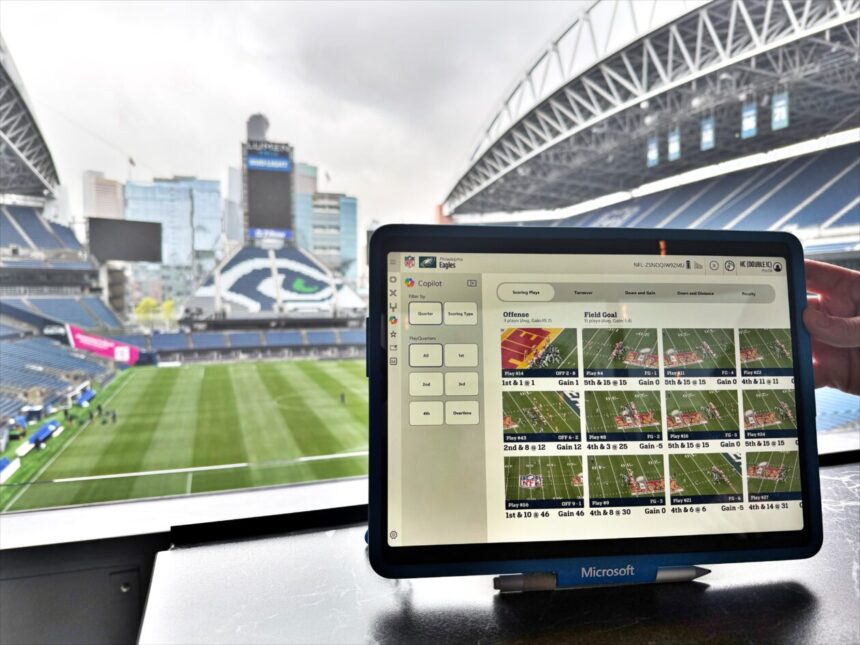
Copilot filtering: The NFL’s Sideline Viewing System now features Copilot-powered filters that let coaches and players instantly sort plays by down, distance, quarter, and gain type.
Labuzienski demonstrated how a play that took a minute to find manually could be located in seconds using the filters. “That five seconds can mean giving my coach the right information so they can make the right adjustment or the right play call,” he said.
Excel on the sidelines: One analyst per team has access to a real-time Excel dashboard in the coaches booth that pulls live play-by-play and player usage data from the NFL.
Coaches can load custom templates before the game and use Copilot to run analyses on the fly — tracking formation tendencies, snap counts, and player load without having to manually write formulas mid-game.
NFL Combine: Microsoft built a custom AI agent trained on 10 years of NFL Combine data, allowing scouts to query prospects using natural language. This helps teams assess players faster than ever during one of the most time-sensitive periods of the NFL calendar.
For example, Labuzienski said, “If I really love this defensive lineman, I can pull his data compared to other prospects over the last 10 years.”
Tablets on game days: Hardware is still a key part of the equation, of course. Labuzienski said there are 2,500 Copilot Plus PCs throughout the league on game day, with 20 on each sideline, and 10 in each coach’s booth.

Tech as a coaching advantage: Back when Belichick got his start, NFL sidelines relied on thermal printers hardwired to stadium cameras. It was a process that took minutes, with runners ferrying photos into binders for coaches and players on the sidelines.
Technology has transformed all of that, and a new generation of coaches has grown up never knowing anything different.
Seattle Seahawks head coach Mike Macdonald, who has openly embraced his reputation as a “football nerd,” is a prime example. Labuzienski said he represents exactly the kind of coach Microsoft has built its NFL partnership around. Macdonald views technology as a differentiator across the league and has said it’s an advantage for the Seahawks to embrace it.
Even coaches less enthusiastic about AI are coming around, Labuzienski said, if only to avoid falling behind. “They do, sometimes begrudgingly, study up and make sure they get the most out of the technology,” he said.
Digital-first players: Labuzienski said he’s seen players become some of the most engaged users of sideline technology — sometimes more so than the staff around them.
“I was at the preseason game with the Bills against the Bears, and after every single drive, Josh Allen picked up this device,” Labuzienski said of the Bills QB. “He was talking with the other quarterbacks, and they were using it to go through the plays from that previous series.”
The system is designed to make that kind of real-time collaboration easy. The 20 devices on each sideline are all connected, with coaches in the booth able to write notes directly to individual player profiles — so a quarterback picking up a tablet can instantly see what his position coach upstairs is flagging, without having to radio up or wait for a break in the action.
That dynamic is likely to only deepen as younger players enter the league.
Microsoft was at last year’s Rookie Premier — an event where roughly 40 top draft picks gather for brand activations ahead of their first NFL season — and showed the incoming class the Sideline Viewing System for the first time. The reaction was telling.
“A lot of them really quickly picked it up and were able to click around,” Labuzienski said. “They’re very digital-first — very savvy.”
Read the full article here