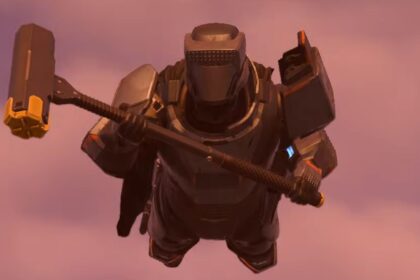

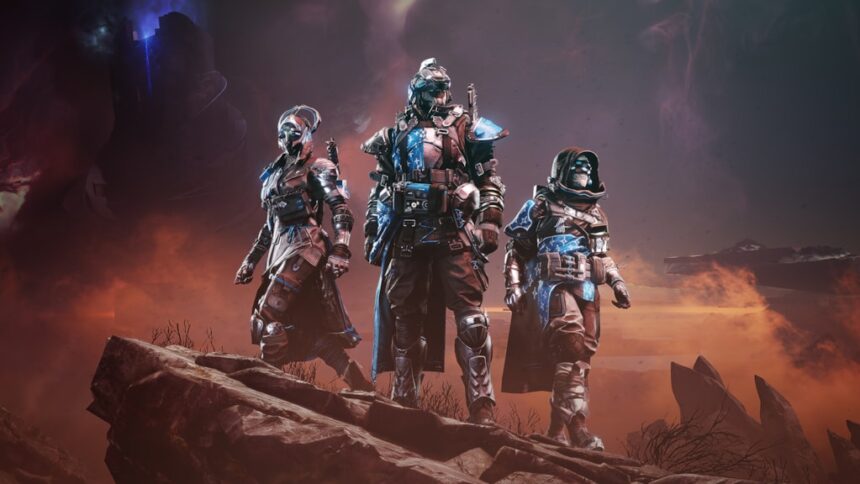
Thursday abruptly became a big news day for fans of Bellevue, Wash.-based video game developer Bungie, which announced that it plans to cease development on its popular online shooter Destiny 2.
Eight hours after Bungie’s announcement, Bloomberg’s Jason Schreier released a piece that alleges Bungie plans “a significant number of layoffs” once Destiny 2 is brought to a close.
Bungie posted on its official blog Thursday morning that it will release its final content update for Destiny 2 on June 9, with plans by Bungie to “ensure that Destiny 2 remains playable” afterward.
In the blog post, Bungie said it had become clear that the Destiny franchise needs to move beyond Destiny 2, particularly after the 2024 expansion The Final Shape. It further noted that Bungie plans to turn towards “a new beginning.”
According to Schreier’s piece, however, Bungie allegedly has no firm plans in place to move on to its next major project, besides shifting more resources to support its recent release Marathon. While Marathon received a warmer reception than anticipated upon its release in March, Schreier’s piece states that Marathon still has not met sales expectations at Sony.
All this has happened in the wake of recent cost-cutting measures by Bungie’s parent company Sony, such as shutting down its subsidiary Bluepoint Games in March. As a result, there’s heavy speculation online that Bungie itself may be at risk of closure, or at least significant reorganization.
Bungie, founded in 1991, was originally known as the creator of the Halo franchise, which it developed for Microsoft before splitting off in 2007 to go independent. The studio launched the original Destiny in 2014.
Destiny 2, first released in 2017, is a massively-multiplayer online shooter set in the 28th century. Players take on the role of Guardians, empowered fighters who seek to defend what’s left of humanity from the hostile alien forces that have moved into Earth’s solar system. Further, the Guardians make up one side, and the aliens the other, of a cosmic proxy war between the forces of Light and Darkness. (Note: I am dramatically simplifying the storyline of a decade-long sci-fi epic.)
At its height, millions of people played Destiny 2 on a daily basis. The elevator pitch for Destiny as a series has traditionally been its unique blend of MMO mechanics with a team-based first-person shooter. Players could team up or go solo to fight computer-controlled aliens or compete with one another, all in search of improved weapons and armor so they could take on greater challenges.
It was one part Diablo, one part Halo, in a genre model that gaming fans often refer to as a “looter shooter.” Destiny didn’t invent the format, but it’s often credited with popularizing it, alongside other high-profile games like Borderlands.
When Destiny 2 was originally released, it was published by Activision Blizzard. Bungie subsequently broke ties with Activision Blizzard in early 2019 and opted to publish Destiny 2 by itself under a free-to-play model, which was an unprecedented move for a game the size of D2.
Off the back of Destiny 2’s subsequent success, Bungie remained independent until 2022, when it was purchased by Sony for $3.6 billion. This was the first of several moves made by Sony to adjust its creative output from award-winning single-player games (i.e. The Last of Us, God of War) to constantly-updated “games as a service,” a business plan that also saw the acquisition of Bellevue, Wash.-based Firewalk Studio and subsequent abrupt cancellation of its game Concord.
In 2024, Bungie released The Final Shape, the eighth full expansion for Destiny 2 and the ending of the series’s overall story arc. However, The Final Shape also seems to have inadvertently served as Destiny 2’s swan song.
While Bungie tried to continue D2’s story with further expansions such as 2025’s The Edge of Fate, independent population trackers such as SteamDB suggest that D2’s overall player numbers have dwindled since Final Shape’s launch.
D2 is still comfortably one of the top 20 online games in the current market, at least as far as can be determined from outside Bungie itself, but fans have complained since Final Shape about glitches, an emphasis on repetitive “grinding,” and newly aggressive monetization policies.
Read the full article here