
Amazon Web Services is announcing a new set of AI agents for businesses, developers, and individual users, capable of everything from fixing security vulnerabilities to triaging email.
The agents, unveiled at the AWS Summit in New York, reflect an attempt to maximize autonomy while ultimately keeping humans in control of how much the AI does on its own. It’s part of a broader effort by Amazon and others to make AI more powerful without letting it run amok.
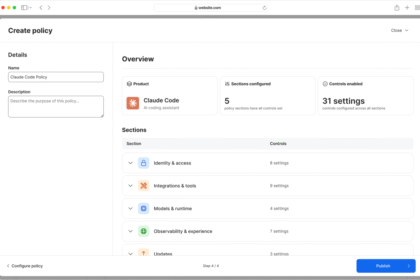
A new security agent, dubbed AWS Continuum, starts in a supervised “learn mode” and earns the right to act alone only as customers grant it permission, category by category.
The Amazon Quick AI assistant will now let users build their own background agents in plain language to handle tasks like following up on stalled business deals or flagging regulatory changes.
Amazon gave Quick a redesigned activity feed that triages email, messages, and calendar items into one prioritized view; new links to services including Adobe, Figma, Snowflake, and WhatsApp; and the ability to tap multiple connected services to answer a single question.
On the developer side, AWS is also pushing its coding agents to take on more of the grunt work, checking and testing new code before it ships and cleaning up old code, while leaving the final decision to merge or deploy in the hands of humans. A new iPhone app for Kiro, the company’s AI coding assistant, will let developers start and monitor that work from their phones.
Deepak Singh, the AWS VP who leads the Kiro team, said the overarching idea is to take the background work AI has piled onto people — reviewing code, triaging security findings, keeping software current — and let agents handle it with minimal human intervention.
The faster AI writes code and surfaces problems, he said, the more there is for humans to review, test, and maintain: “Those are all good problems to have, but they are real problems.”
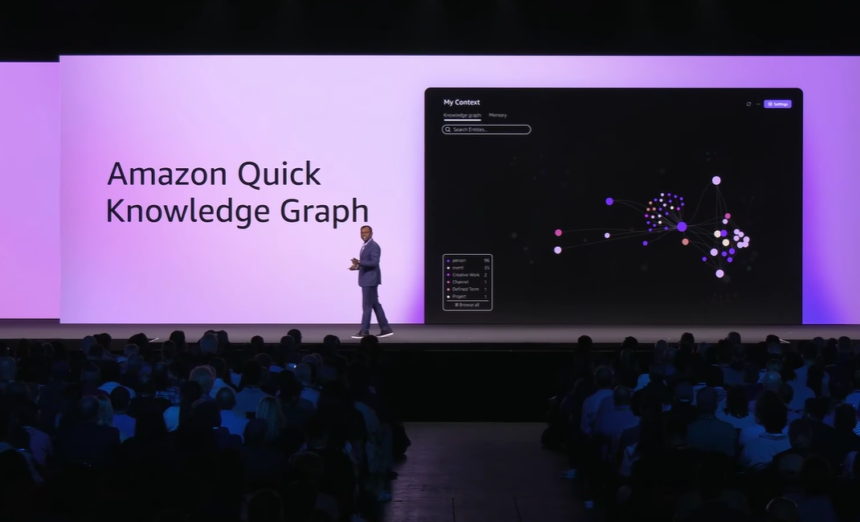
AWS also expanded AgentCore, its platform for building agents, and introduced AWS Context, a service that organizes a company’s data so agents can reason over it.
Announcing the new Continuum security agent, AWS cited the rise of powerful AI models — most notably Anthropic’s Claude Mythos — that can now find software flaws and chain them into serious attacks faster than any human team can respond.
Amazon made headlines for raising concerns about those same models, reportedly warning Trump administration officials about security risks in Anthropic’s most advanced AI, before a government order forced the lab to take its two newest models offline.
Continuum is starting with code vulnerabilities, and AWS says it will expand to other aspects of security in the future. It works through issues the way a human team would, if given the time: triaging the findings, testing whether a vulnerability is exploitable, and then proposing a fix, with an estimate of what else the change might break.
In categories where the customer has granted the agent autonomy, Continuum can apply the fix itself, feeding the change into an existing deployment pipeline.
Neha Rungta, AWS director of applied science, said in an interview that this kind of speed is necessary given the acceleration of the threats. AI can now chain minor flaws together, she said, combining two medium-severity findings and a low one into something critical.
“That was something that would have taken a lot of effort, expertise, and determination for an attacker to get through — so the floor has been lowered,” said Rungta, who led the work on Continuum. “The goal is to raise that floor up again.”
Read the full article here