
Wikipedia’s volunteer editors have recently banned the use of large language models to generate or rewrite articles. Gartner reported that 53% of U.S. consumers distrust AI-powered search results, and 61% want to turn the summaries off. Add the “Made by Humans” badges sprouting on Substack, and a consensus seems to be forming: people are rejecting AI content.
I get it.
In 2024, I founded TrueMedia.org to fight political deepfakes; as a professor, I think hard about the potential downsides of AI-generated content and cognitive surrender (the habit of letting the model do your thinking for you). However, my concern is with output and downstream impact, not with the input process. A deepfake harms because it deceives; a polished paragraph isn’t tainted because a model tightened it.
So, the anti-AI-content movement, like the spent anti-GMO movement, is missing the boat.
Back in 2017, researchers warned that AI risked a “GM-style backlash.” They had the analogy half right. They just bet on the wrong half. I foresee the anti-AI-content movement going where the anti-GMO movement went: a loud opening act, a long taper, and a quiet ending in which the product is everywhere.
The lessons of ‘Frankenfood’
In 1992, an English professor named Paul Lewis coined the term “Frankenfood” in a letter to The New York Times. By the late 1990s, Greenpeace had built an entire campaign around the metaphor, Prince Charles was lobbying Tony Blair, and the European Union had imposed a de facto moratorium on new GMO approvals that lasted from 1998 to 2004. American shoppers were told they were eating monstrosities. State-level labeling fights consumed a decade.
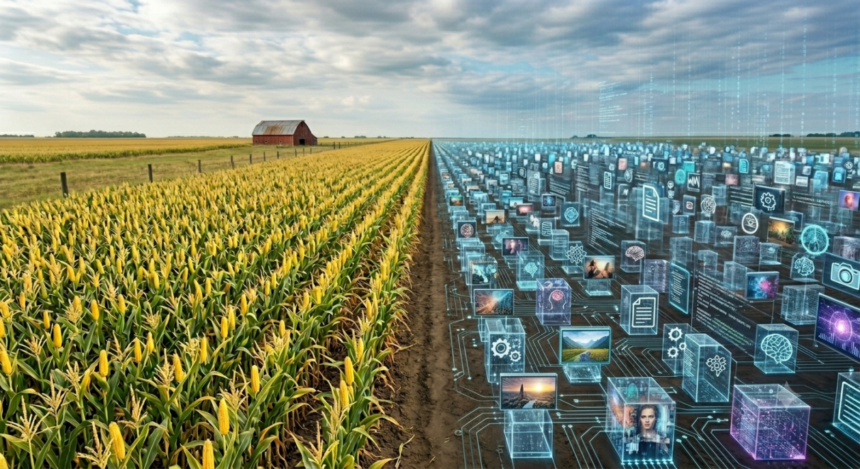
Look where we landed. By 2025, herbicide-tolerant soybeans accounted for 96% of U.S. soybean acres, up from 17% in 1997. Herbicide-tolerant corn is at 92%. Cotton is at 93%. The National Bioengineered Food Disclosure Standard finally took effect in January 2022, and Cornell researchers, analyzing Nielsen scanner data, found it produced essentially no behavioral change. A collective shrug. Mandatory labeling, the central demand of the activist movement for two decades, turned out to be irrelevant by the time it arrived.
European attitudes followed the same arc, though more slowly. Eurobarometer concern about GMOs in food dropped from 63% in 2005 to 27% in 2019. The fight didn’t end with a victory for either side. It ended with people losing interest. Today, most people have never heard of Frankenfood.
Why did GMOs win the long game? Three reasons that map almost exactly onto AI-generated content.
First, the product is indistinguishable. Nobody can tell whether the corn syrup in their soda came from a bioengineered cob, and after a while they stop wondering. AI-written prose is already past the Turing threshold for casual reading. Many readers cannot tell a competent LLM draft from a competent human one.
Second, the economics are decisive. GMO seeds offered higher yields and lower input costs, so farmers adopted them and grocery chains stocked the resulting products. AI-generated content is almost free to produce. The supply curve has shifted so far that purist abstention is no longer a market option; it’s a hobby.
Third, the worried minority gets served by voluntary labeling. The Non-GMO Project verifies more than 50,000 products for consumers who care. The mandatory federal label was redundant by the time it arrived. The AI equivalent is already emerging: C2PA provenance, “human-written” attestations, Substack verification marks. The committed minority will have their channels. Everyone else will not bother to check.
Market solutions for real harms
GMO crops cross-pollinated into neighboring fields whether the neighbor wanted them or not. AI text could do the same to the next model’s training data: today’s output becomes tomorrow’s input, with no one’s consent and no clear way to opt out. This is the model collapse scenario: the worry that the supply will get worse over time rather than better, as synthetic text crowds out the human-written corpus.
The market is already solving for this problem. Every major lab is now paying for human-authored content precisely because they recognize the risk.
The GMO panic also produced its share of catastrophist scenarios: a runaway gene escaping into the wild, a novel pathogen engineered by accident, a collapse of the food supply. None of them happened. Markets adjusted, regulators learned, refuges were planted, contamination was managed.
Not every concern was overblown. Seed-market consolidation became real, Roundup litigation continues, and herbicide overuse is a live agronomic problem. None of it is what the Frankenfood campaign warned about.
The equivalent AI fear is that synthetic text will overwhelm the human corpus and that we will drown in an ocean of AI slop. It belongs in the same category: vivid, mechanistically plausible at first glance, and ultimately defeated by the same boring forces. Readers value curated text. Publishers gate their archives. Provenance standards emerge. The civilizational scenario is the part that doesn’t survive contact with the actual market.
Not every AI concern is overblown either. NewsGuard has identified more than 3,000 AI content farm sites pumping out fake local news and propaganda for ad revenue, across 16 languages. Deepfakes deceive voters in real elections. The output harm is real. So is the remedy: verification and gatekeeping. The same tools we already use against bad content of any provenance.
Wikipedia’s ban, in this light, is a Greenpeace moment rather than a market verdict. It is the strongest available signal from the constituency that cares most, and it is also the constituency least representative of how the other 99% of readers behave. The encyclopedia has already carved out exceptions, the way every absolute internet policy eventually does. Translation from other-language Wikipedias and basic copyediting of an editor’s own prose are permitted by the policy on day one. The carve-outs will widen from there: accessibility rewrites, citation formatting, draft scaffolding for new editors in underserved languages.
The concerns are legitimate but also typical of early concerns about many a powerful technology. Five years from now, the Gartner question will likely read differently because the product will be better and the novelty will have worn off. Watermarking will matter most where the stakes are high (elections, courtrooms, financial disclosures), and matter less in everyday reading. The slop will get filtered, the good AI writing will blend in, and many of the people who said they would never read it will read it without thinking much about it.
Frankenfood became corn syrup. The villagers will put down their torches when the lights stay on.
Read the full article here