

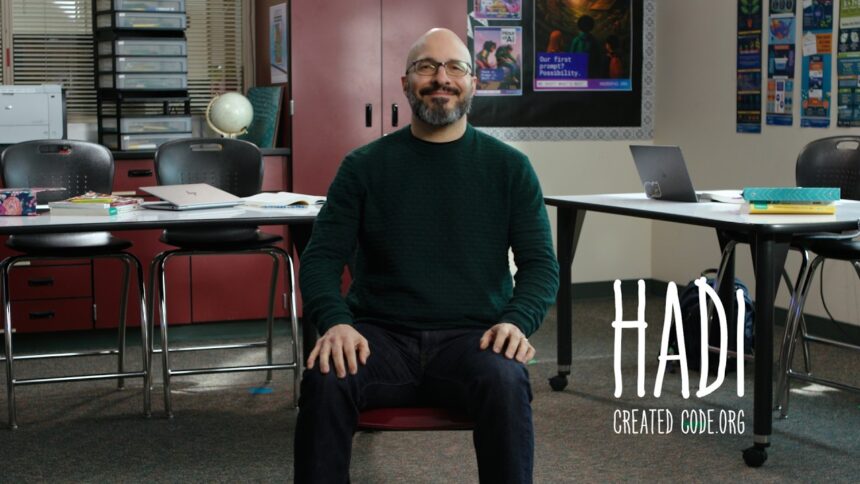
The rise of AI has been changing the focus of Code.org for the past two years. On Tuesday, the Seattle-based computer science education platform acknowledged the shift and rebranded as CodeAI.
“In the past, the focus of computer science was coding,” co-founder Hadi Partovi said in a video message. “Today, the focus is AI — learning how AI works, learning how to create technology, learning how to problem solve using AI, and most importantly, learning to be a responsible citizen in the age of AI.”
Founded in 2013 by twin brothers Hadi and Ali Partovi, Code.org’s mission has always been to expand computer science education to K-12 students. Backed by nearly $60 million in funding from Microsoft, Amazon, Google and The Ballmer Group, the platform today counts 150 million students and 3 million teachers, with 232 million projects created by students around the world.
Karim Meghji, who took over as president and CEO in February, is leading CodeAI’s new mission.
“AI has made the doing easy. Protecting critical thinking, and giving kids the knowledge to question this technology and decide what it’s for, is the work of education now,” Meghji said in a news release. “This is the generation that will set the terms for how AI is used. Some are being taught to understand it, direct it, question it, and create with it. Most are not. That’s the gap CodeAI exists to close.”
Meghji joined Code.org in 2022 to serve as chief product officer, leading the shift toward an AI-centered strategy at the organization. The tech vet previously spent 10 years at RealNetworks and is a former CTO at Seattle digital remittance company Remitly.
The CodeAI rebrand has already been in the works, with a change from Hour of Code to Hour of AI — an online learning event that has reached 33 million students. More than 75,000 students have taken the newly released AI Foundations, a free high school course covering how AI works, computational thinking, data literacy, and the ethical impacts of AI.
CodeAI has also led the development of an updated framework to guide state-level implementation of digital science policy, resulting in policies passed in all 50 states and application across the globe.
According to new survey data released Tuesday by CodeAI, 75% of high school students believe AI fluency will be more important than other subjects in their future, and 63% say it’s directly tied to their readiness for life beyond school.
Furthermore, while 84% of students are already using AI, only 16% of high school leaders say all of their students are actually learning about it in school, CodeAI said.
Meghji previously spoke with GeekWire about wanting to move students beyond simply using AI as a tool.
“AI is this black box for most people today in the world. You put a prompt in, you get something back out,” he said earlier this year. “Our perspective is it needs to be a glass box, and we need to give them a screwdriver and a hammer and let them kind of get in there and unpack this thing.”
Partovi has been serving as chairman of the board the past two years. A former Microsoft manager who was an early investor in companies including Facebook, DropBox, Airbnb and Uber, he argued the stakes go beyond future software engineers.
“Nobody knows the jobs of the future, but a sure bet is that every job will involve AI,” he said. “We have a responsibility to prepare the next generation for the biggest change in society since the invention of public education.”
Read the full article here