
After more than a decade building cricket fields, sponsoring youth teams, and developing local talent in the Pacific Northwest, a group of Seattle-area tech veterans has taken their investment in the sport to a somewhat unexpected place: Boston.
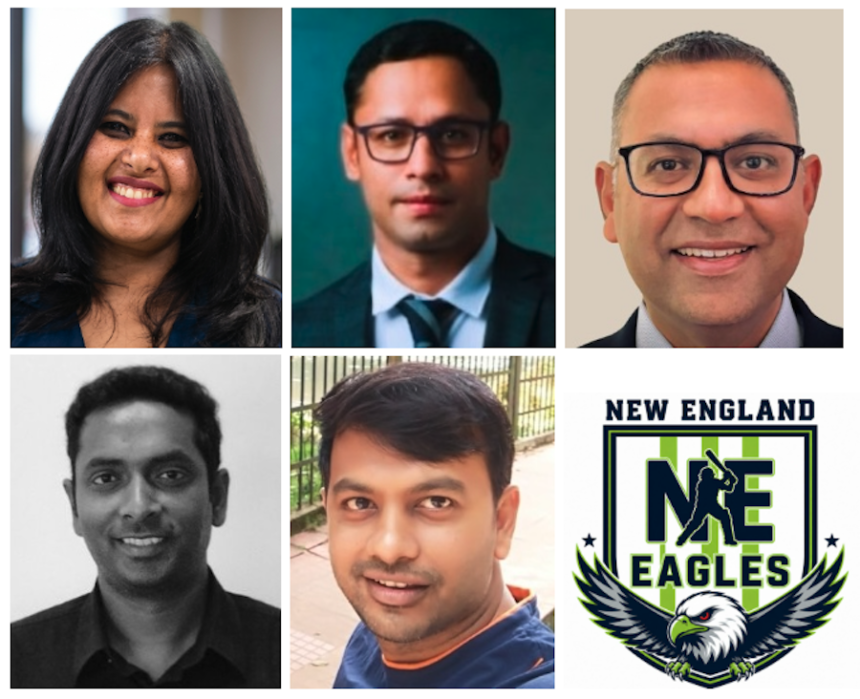
The five co-owners of the newly acquired New England Eagles, a Minor League Cricket franchise, are all based in the Pacific Northwest and have combined leadership experience at Microsoft, Zuper, T-Mobile, Capital One, and Bee Talent Solutions.
Their hearts, they say, are here, too. But when no local MiLC franchise slot was available and the group was ready to scale, they bought a team they could get.
“We prioritize the pathway over the geography,” said Anand Subbaraj, co-owner and CEO of Seattle startup Zuper. “If we have to operate a team 3,000 miles away to ensure our local players have a door to Team USA, we’ll open that door every time.”
The other four co-owners are Vandana Thomas, a senior product leader at Microsoft and one of only two women co-owners across the entire Minor League Cricket system; Gaurav Seth, a partner director at Microsoft with 23 years at the tech giant; Manoj Naidu, co-founder and COO of Bee Talent Solutions; and Satheesh Santhamurthi, a technology executive at Capital One and president of the Seattle-area USA Cricket Youth Hub.
Terms of the deal were not disclosed.
The group has been heavily invested in Pacific Northwest cricket for years as coaches, sponsors, and youth program organizers. Seattle already has a Major League Cricket team in the Orcas, and the owners argue the region should have a deeper pipeline feeding into it. Minor League Cricket is the developmental tier that bridges local talent to MLC and ultimately Team USA.
They are hardly the first tech veterans in the Seattle area to see cricket as worth backing. The Orcas’ investor group includes Microsoft CEO Satya Nadella, Madrona Venture Group Managing Director Soma Somasegar, and Icertis co-founder and CEO Samir Bodas, among others. The Seattle Thunderbolts, the area’s Minor League Cricket team, were founded with backing from tech industry veterans as well.
The Eagles’ new owners plan to run the franchise like a sports-tech startup, using data for player health and performance, treating fan growth like a user acquisition funnel, and building business plans the way they’d build a product roadmap — an approach that fits squarely within that tradition.
“Our group brings best in class product thinking, engineering efficiency, and an AI-forward mindset to a traditional franchise model,” Seth said. “When you apply a disciplined tech stack to the passion of sports, the ceiling is genuinely high.”
The acquisition comes at a pivotal moment for cricket in the U.S. Major League Cricket launched in 2023 with six franchises, including the Orcas, and the sport is set to make its Olympic return at the 2028 Los Angeles Games — a deadline that has accelerated investment across the ecosystem.
For Thomas, the stakes are personal. Her son recently became the first fully homegrown male Seattle youth player to represent Team USA at the ICC Under-19 World Cup.
“Cricket in the U.S. is at an inflection point, and the people who get involved now will shape what it looks like for the next generation,” Thomas said. “I want my sons and every other kid playing in this country to see that the pathway from a local pitch to Team USA is real — and that women, families, and underrepresented communities are part of building it.”
While the Eagles will play out the upcoming season in New England, the ownership group has signaled longer-term ambitions to expand cricket programming in the Pacific Northwest. They also want to help seed a broader culture of private investment in a sport that, despite its massive global following, is still building the financial foundations that more established American sports take for granted.”
“Cricket in this country doesn’t just need more money — it needs more believers,” Naidu said. “Player pathways, ground maintenance, youth tournaments, coaching infrastructure: none of that gets built without people willing to put real capital and real time behind it. We’ve been doing that at the grassroots for years, and now we’re doing it at the franchise level.”
Read the full article here