
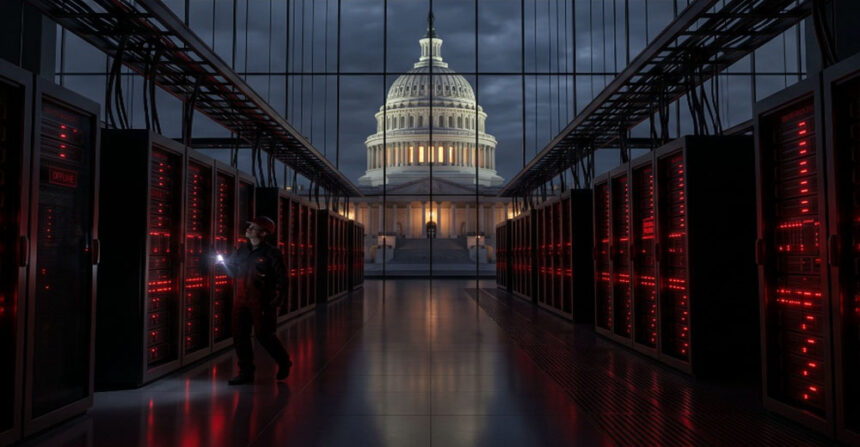
The U.S. government imposed export controls on Anthropic’s Fable 5 and Mythos 5 models on June 12, forcing the company to restrict access to foreign nationals.
Anthropic responded by broadly disabling access to the models after determining it could not readily restrict usage based on nationality alone. Public reports indicate the move was driven by concerns that users could bypass safeguards in Fable 5 through prompts as simple as asking the model to “fix this code.”
While Anthropic characterized the issue as a limited vulnerability that was not unique to its models, administration officials viewed the capability as a national security concern, arguing that it could be used to identify software vulnerabilities at scale.
Let’s talk about the Anthropic ban. Then, we’ll close with my Product of the Week: the Motorola Razr Fold.
Anthropic’s Initial Response and Critical Shortfalls
Anthropic’s public reaction was one of forced compliance but vocal disagreement. The company issued a statement asserting that the jailbreak was narrow and non-universal, arguing that forcing a widespread recall over it was an overreach.
However, reports indicate that the government warned Anthropic about the jailbreak beforehand, but leadership allegedly refused to pull the model or patch it immediately. In my view, that likely contributed to the administration’s decision to intervene.
If the reporting surrounding the dispute is accurate, Anthropic may have placed too much emphasis on protecting its launch plans and not enough on quickly addressing government concerns. For a company operating at the frontier of AI development, maintaining trust with regulators is becoming a strategic necessity.
Reducing the Blow to the Firm
To recover from this setback, especially ahead of any anticipated IPO, Anthropic must rapidly pivot.
First, it needs to address the vulnerability that appears to be at the center of the government’s concerns and demonstrate that the issue has been effectively mitigated.
Next, the company must develop robust, verifiable geolocation and identity-filtering tools to comply with export controls without resorting to blanket global shutdowns.
Finally, Anthropic must rebuild its relationship with Washington by demonstrating a willingness to work collaboratively with regulators when national security concerns are raised.
Competitors Capitalizing on the Disruption
This shutdown could provide a significant opportunity for rival AI model suppliers. With Fable 5 and Mythos 5 unavailable, many enterprise users and security researchers will likely evaluate alternative platforms.
OpenAI stands to benefit the most, as its GPT-5.5 model is widely cited as having comparable capabilities and is not currently subject to the same regulatory ban. Other models, such as Google’s advanced offerings and Moonshot AI’s Kimi 2.7, may also benefit from the disruption. Since these competitors have avoided the regulatory crosshairs, they can market their platforms as stable and fully accessible to enterprise clients who were burned by the Anthropic outage.
Cautionary Tale for Dealing With Governments
The Fable fiasco serves as a stark warning to the broader AI industry: do not play chicken with the U.S. Commerce Department. The export-control action demonstrates that the government is willing to intervene aggressively when it believes national security is at risk.
AI firms are advised to adopt a policy of rapid, good-faith remediation when federal agencies flag vulnerabilities. Engaging in public disputes or refusing backend fixes will inevitably invite the heavy hand of federal regulation.
How Export Controls Could Fuel Global AI Competition
By using export controls on a commercial software model, the U.S. has signaled that dependence on American artificial intelligence is a strategic liability. That perception is likely to accelerate foreign investment in competing sovereign AI initiatives.
Nations that fear suddenly losing access to state-of-the-art AI tools may increase investment in sovereign AI alternatives.
China and other competitors will heavily subsidize their own foundation models, ensuring they do not have to rely on U.S.-controlled infrastructure that can be abruptly switched off.
Could the Restrictions Ultimately Reduce Security?
Paradoxically, the ban likely makes the digital ecosystem far less safe.
As security pioneer Katie Moussouris highlighted in her analysis, defensive requests like “fix this code” are vital for cybersecurity professionals working to patch legacy systems.
By removing access to Fable 5, the government has essentially kneecapped the defenders who rely on the model for security hardening. Meanwhile, bad actors can simply shift to open-source models or alternative tools.
Denying top-tier vulnerability discovery to the defense side while adversaries continue adapting ultimately degrades overall systemic safety.
Wrapping Up: A New Era for AI Regulation
The government’s decision to restrict Anthropic’s Fable 5 and Mythos 5 models could prove to be a watershed moment in the governance of artificial intelligence. Driven by concerns over a cyber-vulnerability jailbreak, the government’s export controls have already disrupted the market and may further accelerate interest in sovereign AI initiatives while benefiting Anthropic’s competitors.
While Anthropic must now navigate the technical and diplomatic hurdles to restore its flagship products, the broader industry faces a new reality. The delicate balance between national security and technological advancement has shifted, leaving critical questions about whether these restrictions truly protect infrastructure or merely disarm the cybersecurity defenders who need these tools the most.

Motorola Razr Fold – 2026

Image Credit: Motorola Mobility
When Lenovo bought Motorola as a distressed asset from Google, many analysts doubted the brand’s long-term viability. However, Lenovo has successfully revitalized the company, transforming it into a powerhouse of mobile innovation. That unwavering commitment to cutting-edge hardware was on full display at Lenovo’s Tech World event earlier this year.
The Motorola Razr Fold – 2026 reflects that evolution, showing how Motorola has moved beyond nostalgia and become a serious contender in the premium smartphone market.

Rob Enderle tests the Motorola Razr Fold – 2026.
I currently carry a Google Pixel 10 Pro Fold and have been hooked on foldable phones ever since I carried the now-defunct Microsoft Duo. While the Google phone has been great, it lacks some features and performance of the recently released Motorola Razr Fold, which is why I find myself wanting to trade the Pixel in for the Motorola.
Razr Fold vs. Pixel 10 Pro Fold
Having consistently evaluated the latest generations of Google’s folding devices, I’ve found the Motorola Razr Fold significantly outperforms the Google Pixel 10 Pro Fold in several key hardware categories.
The Razr Fold features a 6,000mAh battery supported by 80W fast charging, which easily overshadows the Pixel’s 5,015mAh capacity and slower 30W charging speeds.
Motorola has equipped its device with a Snapdragon 8 Gen 5 processor and a triple 50MP camera system, leaving the Pixel’s Tensor G5 and lower-resolution camera array trailing behind.
The Foldable Market Landscape
When matched up against similar foldable smartphones on the market, the Razr Fold stands out for its ultra-thin 4.7mm unfolded profile and brilliant 165Hz cover screen. While competitors often force buyers to compromise between a slim form factor and adequate battery capacity, Motorola manages to deliver both without sacrificing durability.
Its Pantone-validated aesthetic and Corning Gorilla Glass Ceramic 3 protection make it a premium challenger to the top-tier offerings from Samsung and OnePlus.
Why On-Device AI Matters
The Anthropic controversy also highlights the risks of relying exclusively on cloud-based AI services for mission-critical workloads. The Razr Fold’s advanced neural processing unit enables more AI tasks to run locally on the device rather than relying entirely on cloud-based services.
The Motorola Razr Fold – 2026 raises the bar for premium foldables by combining uncompromising battery life, elite processing power, and a superior camera system into a highly refined chassis. It delivers the self-reliant, high-performance experience that modern tech users require. Given its longer battery life and better screen, it is ideal for people like me who often use their phones for reading or watching videos — and it is my Product of the Week.
Read the full article here