
If you so much as flicked through a PC gaming magazine in the mid ’90s, you’ll probably recognise the name Ecstatica. Created by Londoner Andrew Spencer and published by Psygnosis, the series spawned two instalments: the first released in 1994 and is a medieval-themed survival horror. The second arrived in 1997, and while it’s very distinctly an Ecstatica game by dint of its art style, it dialed back the horror elements quite a bit.
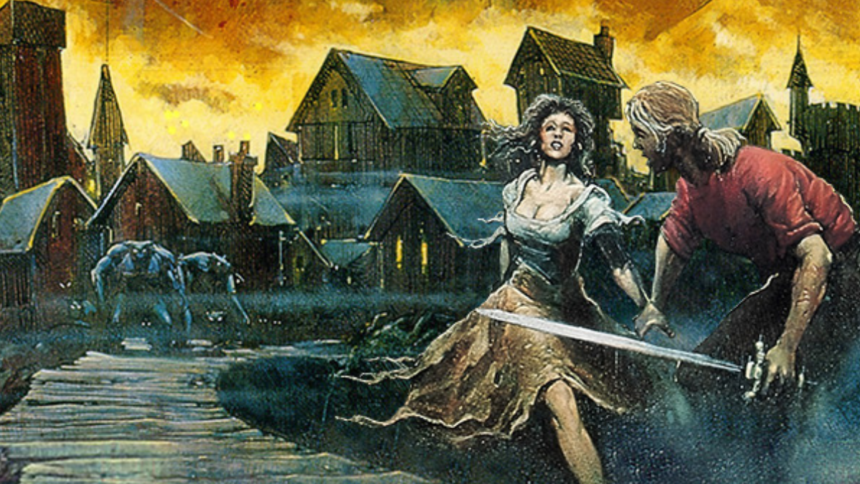
That art style is pretty crucial: instead of polygonal character models, Ecstatica’s engine used ellipsoids, which are, well, roundish. Bulbous even. Rather than paraphrase the formula-ridden Wikipedia page for ellipsoids, it’s probably easier just to show you this:
It’s a pretty distinctive art style, and famously, Andrew Spencer wrote the engine himself from scratch. The ellipsoids are real as well: other games that have a similar art style, like Little Big Adventure for instance, implement Gouraud shading to create the effect of softness where there’s actually a hard angle.


As Spencer told Next Generation in 1996: “The main advantage is the organic-looking characters. Triangles tend to make hard, robotic-looking figures, whereas ellipsoids can be used to create more rounded, human alternatives. Ellipsoids can also be more efficient because you can make a much better looking character out of fewer shapes.”
I doubt many people would describe Ecstatica’s characters as “organic-looking” from the vantage point of 2026, but I do remember being blown away by the look of these games in static magazine screenshots. Compared to, say, Alone in the Dark, it looked decidedly like a step up, even if in reality it was a step sideways.
I’m sure it’s easy to find Ecstatica and its sequel online, but they’ve not been commercially available for decades. That’s about to change: they’re among a new round of SNEG reissues, which also includes the 2001 Dungeons & Dragons RPG Pool of Radiance: Ruins of Myth Drannor, 1997 3D action game Dark Earth, 2001 turn-based strategy Warlords 4, and 1998 military tactics sim Soldiers at War.
Obviously, as with the vast majority of early ’90s PC horror, Ecstatica will probably feel stiff and unmanageable to most modern players. Like Resident Evil and Alone in the Dark, both instalments use tank controls, and their 3D worlds are viewed from fixed camera perspectives. Both also lean on puzzle solving and amusing instant death scenarios. Still, I reckon the occasional torment is worth it just to see the still-gorgeous ellipsoid art in motion.
Ecstatica and Ecstatica 2 will come to Steam and GOG later this year. For more, check out Richard Cobbett on the original Ecstatica.
Read the full article here