
For years, innovation in workplace collaboration followed a familiar pattern. Better cameras promised clearer video. Smarter microphones claimed to eliminate background noise. Software updates added more features, more buttons, and more possibilities. Progress was tangible, measurable, and largely device‑centric.
As organizations move deeper into hybrid work, that model is starting to show its limits. The most meaningful change in collaboration today is not driven by hardware specifications or platform features. It is driven by a shift in mindset: about meeting rooms, about data, and about the evolving role of IT in shaping how people actually work together.
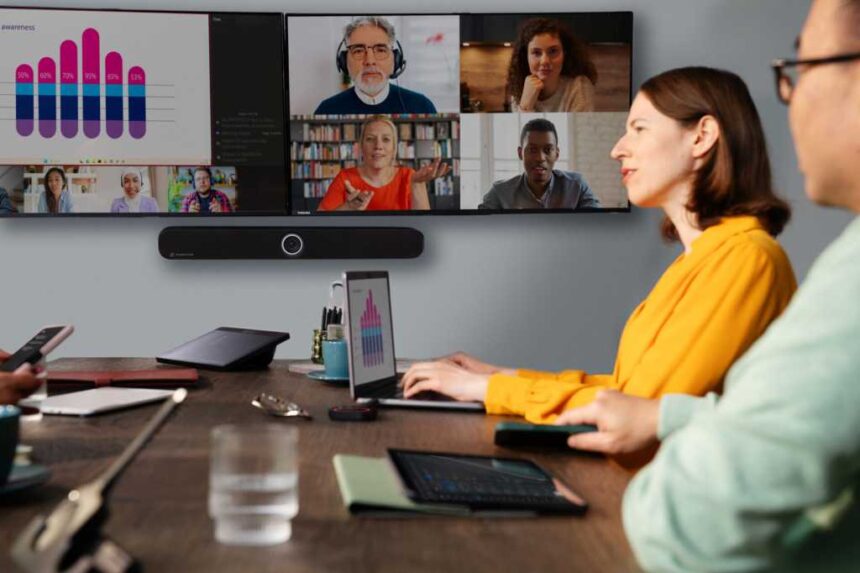
Meeting rooms are undergoing a quiet but profound transformation. They are no longer passive spaces that simply host meetings. Increasingly, they are becoming active, data‑driven IT endpoints that sit at the crossroads of productivity, workplace culture, sustainability, and employee experience.
From furniture to IT infrastructure
Historically, meeting rooms lived in an awkward grey zone. They were physical spaces, often treated as facilities or AV concerns, yet they relied heavily on IT systems to function. When something broke, IT was expected to fix it, usually reactively and with limited visibility into what actually went wrong.
That approach no longer scales. Today’s collaboration environments are modular, software‑defined, and deeply integrated into enterprise networks. Cameras, microphones, displays, and room systems behave much more like endpoints than furniture. They require monitoring, updates, security policies, and lifecycle management – just like laptops or mobile devices.
For IT leaders, this represents a fundamental shift. Managing collaboration spaces is no longer about responding to tickets. It is about designing reliable, measurable infrastructure that people can trust. When meeting rooms work consistently, they disappear into the background. When they do not, they erode confidence, waste time, and undermine collaboration at its core.
AI moves from promise to practice
Artificial intelligence has been part of collaboration conversations for years, often framed as an exciting add‑on. In practice, many organizations are now discovering that AI only delivers value when it solves real, operational problems.
In meeting environments, that means using AI to reduce friction rather than impress. Intelligent framing, noise reduction, automated room diagnostics, and meeting insights are most effective when they quietly improve the experience without asking users to change their behavior. AI becomes meaningful when it helps meetings start on time, keeps participants engaged, and reduces the cognitive load on employees who are already juggling multiple tools and priorities.
This also places new responsibility on IT. AI‑enabled collaboration systems need governance, transparency, and clear success criteria. The question is no longer whether AI is present, but whether it measurably improves how people collaborate.
Measuring what really matters
One of the most challenging shifts for IT organizations is redefining what success looks like. Traditional metrics such as uptime or ticket volume only tell part of the story. A meeting room can be technically available and still fail its users.
Leading organizations are starting to look beyond device health and toward outcomes. Are rooms used as intended? Do employees trust technology enough to use it spontaneously? Are collaboration spaces supporting focus, inclusivity, and effective decision‑making?
Answering these questions requires data, but also interpretation. Room analytics, usage patterns, and performance insights only become valuable when IT teams connect them to broader business goals such as productivity, employee satisfaction, and sustainability.
A broader role for IT leaders
Taken together, these trends point to a broader evolution in the role of IT. Collaboration is no longer a support function that sits on the sidelines of organizational strategy. It actively shapes how people connect, how culture is experienced, and how work gets done.
For IT leaders, this means developing new skills, new partnerships with the workplace and HR teams, and new ways of thinking about technology’s impact on human interaction. The future of collaboration will not be defined by the next device release, but by how intentionally organizations design and manage the spaces where collaboration truly happens.
Discover hybrid collaboration with ClickShare
Read the full article here