
Commentary: The last couple of weeks have served as a capstone to what’s become a bad few years for the international video game industry. Now it appears the larger sector is headed directly into a significant crash, as several unsustainable practices all seem to be approaching a crisis point at once.
The first and most obvious issue is the ongoing component shortage. Due to the rush to build AI data centers, both RAM and solid-state drives have risen dramatically in price in 2026, with analysts forecasting that costs might not settle back down until at least 2028.
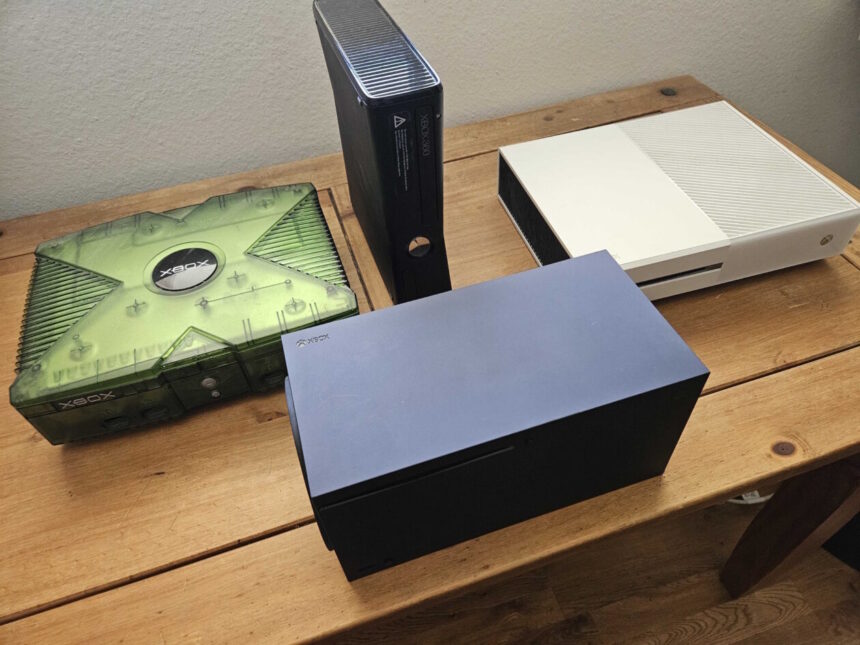
Both the PlayStation 5 and Xbox Series X|S are at the point in their life cycle when they’d ordinarily be declining in per-unit costs as the technology matured. Instead, both Sony and Microsoft have raised console prices multiple times this year due to the high demand for parts.
This would ordinarily be a great time to get into video games, as we’re almost six years into the current console generation. Instead, it’s one of the worst. The base PS5 and Series X are about as expensive as they were at launch in November 2020, and building a new gaming PC right now can be costly.
The component crunch also harmed the debut of Valve’s new Steam Machine, which officially launched late last month with a starting MSRP of $1,049. Valve, based in Bellevue, Wash., was forced to offer the new hardware at a significantly higher price than planned due to the difficulty in getting components.
That’s been reflected in its early reviews, with many outlets noting that the Steam Machine’s current price doesn’t match its power. At $700, the Machine would be a great gateway product for PC gaming, the way the Steam Deck was, and a genuine competitor in the console field, but a $1,049 price tag makes it an expensive curiosity for financially secure gadget-heads.
Another bad sign came from Sony’s recent announcement that it would sunset physical media for the PlayStation platform by 2028. This decision, which allegedly took many of Sony’s publishing partners by surprise, has serious knock-on effects for collectors, historians, developers, and most prominently consumers.
Sony has already caught one lawsuit over alleged market exploitation on the PlayStation Store, and that was a few days before it announced it wants to kill discs. An all-digital PlayStation library means that Sony would get to exercise full monopolistic control over pricing and access for every game it sells; licensing agreements mean that anything purchased on a digital storefront like the PlayStation Store is subject to deletion at any time without notice; and players wouldn’t be able to resort to any of the usual cost-cutting measures such as bargain bins, buying used copies, or even trading games with a friend.
That suggests that Sony has decided its best path forward is to continue to extract money from its established audience, rather than to have more options in place for gaming on a budget. There are free-to-play games on the PS5, of course, but most if not all are cross-platform and/or designed as money sinks. Ask any parent whose kids accidentally ran up a big tab in Fortnite.
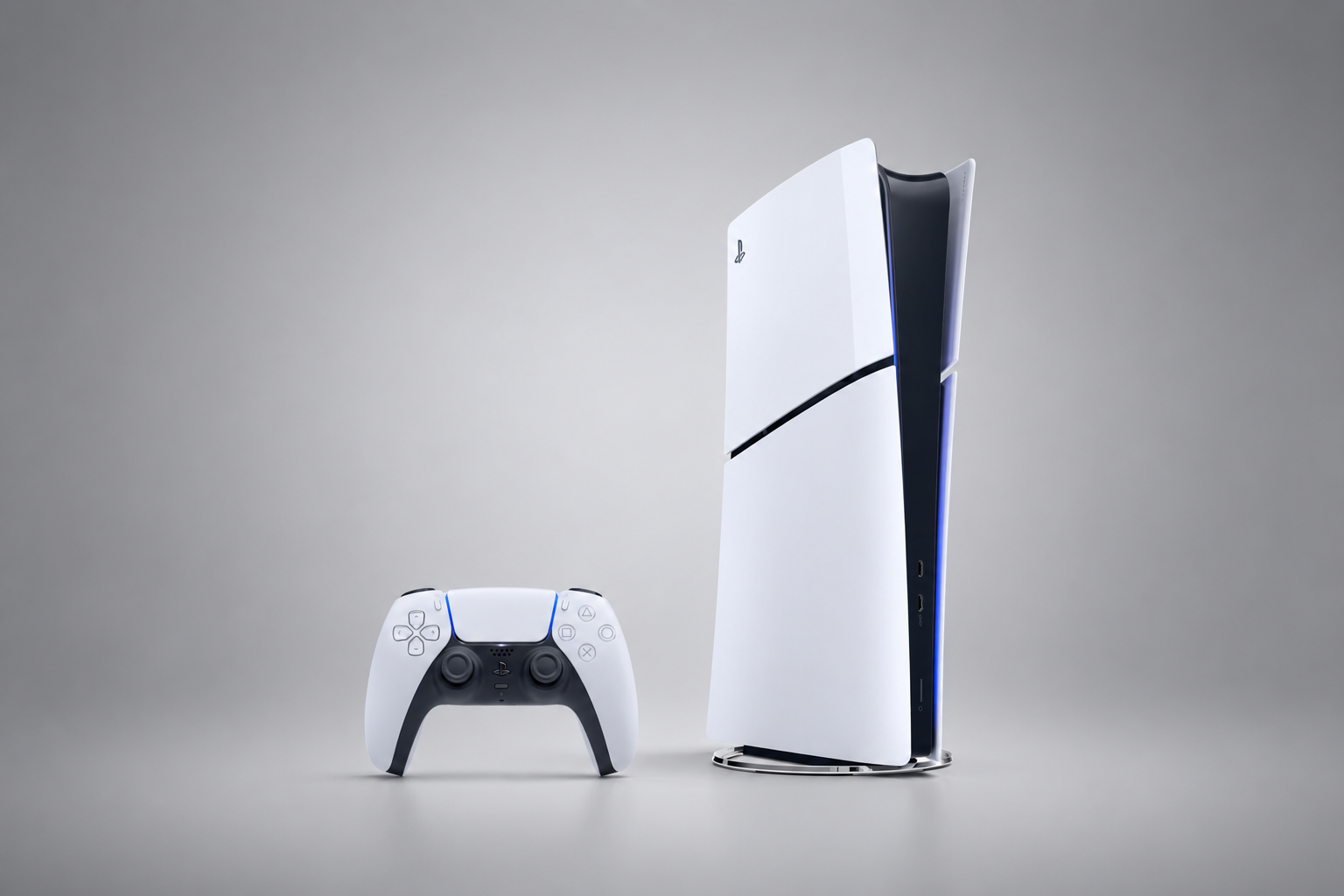
If Sony has decided to end physical media, then it’s likely Microsoft will follow suit. While Xbox hasn’t mentioned its next-generation console, codenamed Project Helix, for a hot minute, it has been eager to get rid of discs since at least 2013. Some sources, such as Windows Central, allege that Xbox is already planning to do so.
(Meanwhile, Nintendo is likely to do its own thing. While Nintendo has been forced to raise the price of the Switch 2 alongside its competitors, it has offered no sign that it plans to stop selling game cards or Switch cartridges. In an uncertain world, Nintendo can be relied upon to only ever follow its own peculiar instincts.)
This sets up an early look at the environment that surrounds the 10th generation of console hardware. If both Sony and Microsoft stick to traditional timelines, we’re likely to start hearing more about the PlayStation 6 and Project Helix over the course of 2027, with launch in holiday 2027 or 2028.
If they do launch along that timeline, then it’s difficult to see how either system will retail for less than $1,000, since the storage and RAM supplies will still be constrained by that point. That automatically prices most of the potential audience out of the market. Once the starting costs hit the four-digit range, a console stops being a hobby or a toy for children and becomes an expensive extravagance. (As a general rule, you probably don’t want your console to cost significantly more than the TV you’re attaching it to.)
Further, it’s arguable that neither the PlayStation 5 nor the Xbox Series X|S have really hit their potential. Sony has famously squandered much of this generation on a largely abortive pivot to games-as-a-service, while Xbox has often seemed more interested in laying off developers than actually making or marketing games. The 9th generation of consoles has had a few big hits, but it’s mostly despite itself.
Not only is there likely to be limited demand for the 10th-generation PlayStation or Xbox, but neither of them actually seem necessary. The only reason to make them is for a brand refresh, and that’s got nothing to do with consumers.
Microsoft, following its acquisition of Activision Blizzard in 2023, is currently the second largest game developer in the world, while Sony dominates today’s console market. These two companies influence much of what happens in the modern video game industry, and as of right now, both are apparently determined to do the most short-sighted thing possible at any given time.
Sony has decided that only part of its audience actually matters, while Microsoft seems to be saddling Xbox with unrealistic expectations, possibly to justify its eventual sale or shutdown, and is ignoring at least one organized boycott.
Whenever the video game industry undergoes any kind of significant disruption, someone somewhere always asks if it’s the start of another “Crash of ‘83.” This is usually hyperbole, but it’s hard not to see the parallels between then and now: the video game market is flooded, there are few true exclusives left outside of Nintendo, many members of the gaming audience buy as few as 2 games a year, and the end of physical media will end both retail support and much of the casual audience.
This is unfolding as a slow, years-long plummet rather than the comparatively sudden shock of ‘83, but a crash is a crash. It’s avoidable, but it would require a massive, simultaneous course correction from several of the largest entertainment companies in the world.
That being said, it’s unlikely that video games as a medium are facing any kind of existential threat. Nintendo, as noted above, is well-positioned to ride out any potential problems with the larger market, PC gaming is hanging on, and the mobile sector is actually having a sort of quiet renaissance right now. There will still be video games to play in 2030, barring some larger disaster.
If there’s one big opportunity here, it’s that many of the major players in the games industry have either voluntarily abandoned the market for budget gaming or have been forced out by component costs. Some of the biggest hits of the 2020s to date, such as Vampire Survivors, Among Us, Lethal Company, and Balatro, are cheap, retro-styled games designed to run on almost any hardware, from a PlayStation 5 to your 4-year-old tablet.
The best step forward for mainstream gaming, then, might actually be to take a step back, in a similar way to projects such as Panic’s Playdate retro handheld (still going strong 5 years later) or Seattle’s Tin Can, seeing success with its land-line phones for kids and families. Chasing bigger games, higher frame-rates, and more realistic graphics for 30 years has gotten us here, up to the edge of a second major crash, while thousands of people log on every day to play games that could be run on a particularly big potato.
Instead of rushing into the 10th generation, the solution now might be to think simpler and cheaper, making smaller, more focused projects rather than the 5-year moonshot of a typical AAA game. Otherwise, mainstream video games may end up like Western comics: increasingly expensive options presented to a shrinking handful of fervent fans.
Read the full article here