

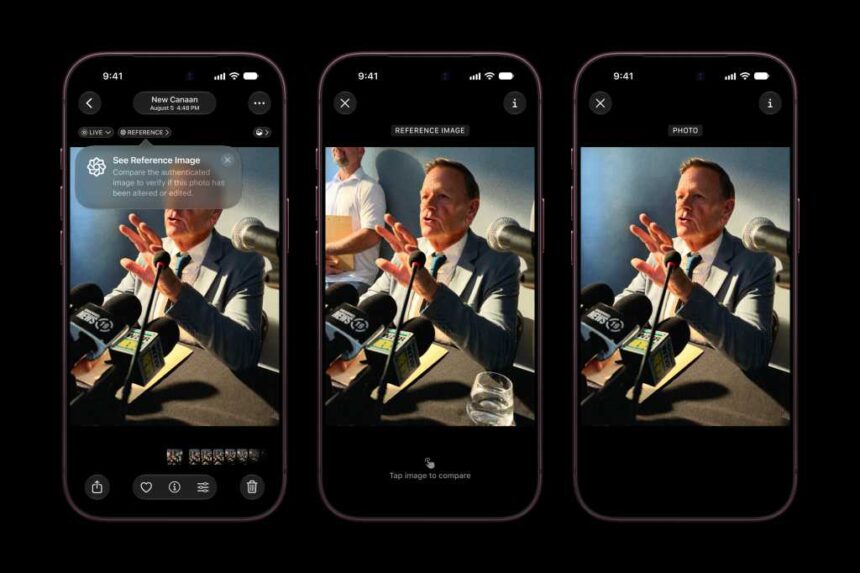
Why Apple built this protection
Apple’s newly published white paper explains how it works and how the system is built to endure against interference, particularly as AI images are becoming increasingly convincing. After all, as digital enters most camera workflows at the sensor, proof of algorithmic activity isn’t necessarily enough to show an image has been altered out of its photorealistic beginning. It must be said that at this point we only have Apple’s word for the effectiveness of the solution, but I’m inclined to think it will be borne out.
Enter Apple Reference Image, which acts as a “chain of trust,” one the Apple team says is stronger and more enduring than existing approaches based on the Coalition for Content Provenance and Authenticity (C2PA) standard. Apple believes the C2PA approach remains too vulnerable because it is deployed after image capture and also creates a privacy risk by attaching images to public identity. You don’t have to look too far for instances in which photojournalists have been targeted by hostile forces once their identity has been realized, and the C2PA system arguably adds to that risk.
“Other industry solutions require a photographer or institution to vouch for an image using their own credentials,” the white paper explains. “We are concerned this puts some photographers, such as those operating in conflict zones, in a difficult position; it should not be necessary to forgo anonymity in order to prove image authenticity.”
Read the full article here