
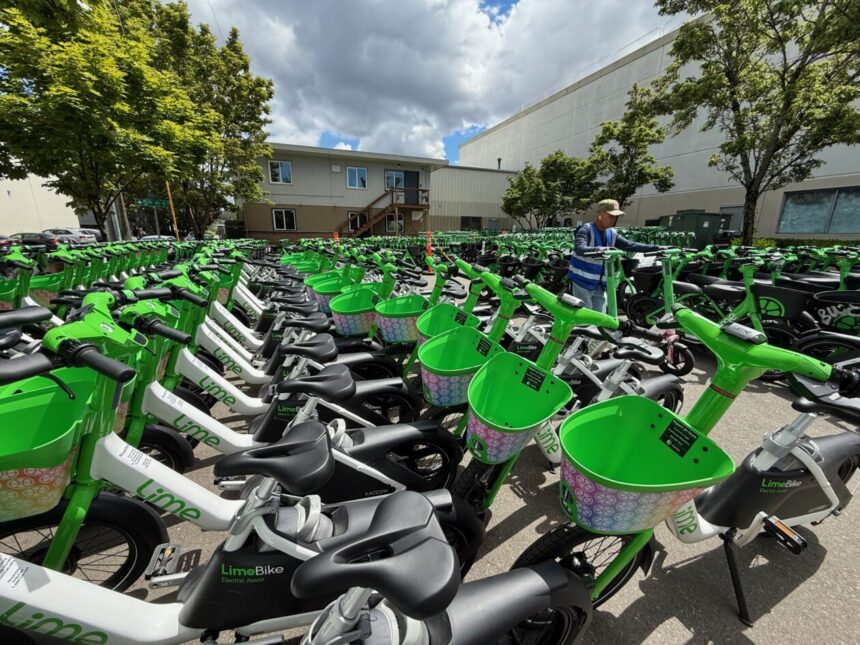
As Seattle is set to welcome the world this month for FIFA World Cup matches, the city’s sole micromobility operator is getting ready, too — and GeekWire got an inside look at how.
In a sprawling warehouse south of downtown in Georgetown — a space that serves as the base of operations for the company’s presence in the Seattle region — Lime is rolling out new devices, doing regular maintenance on its existing fleet, and preparing a suite of services designed to handle a surge in ridership.
Lime is the only operator in the City of Seattle’s bike- and scooter-share program, a position it assumed earlier this year following the exit of competitors including Bird. The company operates a fleet of 15,000 devices in the city — 7,000 scooters, 4,000 LimeGliders, 3,300 Gen 4 e-bikes and 700 of its newest LimeBikes — and recorded 2.3 million rides in Seattle in the first quarter of this year, up roughly 50% from the same period last year.
World Cup matches and associated activities around Lumen Field and other parts of Seattle could meet or exceed what Lime saw on its biggest ridership day ever in the city — the February Super Bowl championship parade that generated more than 60,000 trips.
“We’re excited to support Seattle during such a major moment for the city, and to help residents and visitors get where they need to go throughout the summer,” said Parker Dawson, senior regional lead of government relations at Lime.
What’s in store
To handle the expected influx of riders, Lime is rolling out several new services and operational upgrades for the duration of the World Cup and other major summer events, including:
- Valet parking: For the first time in Seattle, Lime will station staff at designated parking locations near the stadium district to end rides on behalf of riders who can’t connect to cell service in crowded areas. “If you go down to the stadium area and there’s potentially hundreds of thousands of fans taking up all of the cell service, this allows our team to actually end the ride for you,” said Brent Vigneault, general manager of Lime’s Pacific Northwest operations.
- Fan Pass: A new discounted ride pass offers up to 90 minutes of riding for $12.99 — more than 70% lower than standard pricing — available now through July 19.
- Geofencing: Event-specific virtual boundaries will direct riders to designated parking zones and help manage pedestrian-heavy areas on game days.
- Fleet rebalancing: Using GPS data from past events, Lime will shift vehicles across the city to meet demand spikes around the stadium district and downtown corridors.
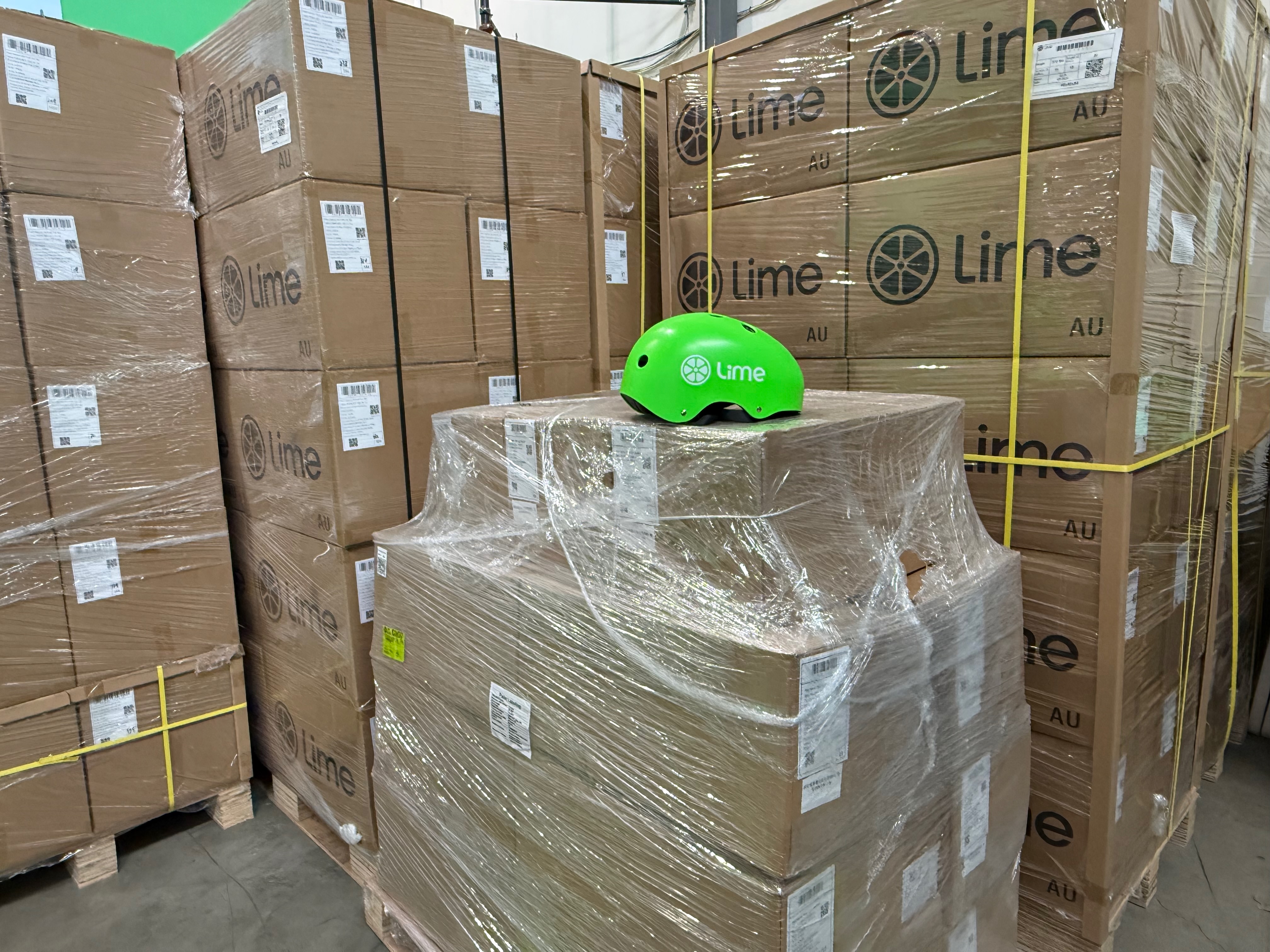
- Helmet giveaways: Lime has already distributed 2,500 free helmets this year and plans to give out an additional 3,000 during major events this summer. Helmets will be available at all valet parking locations after matches.
New tech put to the test
Thousands of bike and scooter riders — many of whom might be new to Seattle — could pose significant challenges when it comes to where to ride and where to park.
Lime’s new Lime Vision technology is designed to address part of that equation by alerting sidewalk scooter riders to find a safer path. Cameras mounted on the front of scooters, in tandem with artificial intelligence, will detect where a rider is traveling. When bad behavior is detected, the scooter emits an audible alert and sends a real-time notification to the Lime app, warning the rider to move to a safer location.
GeekWire tested Lime Vision on Wednesday by riding a scooter from the street to a sidewalk near Lime’s warehouse. After a few seconds, the scooter realized where we were and said, “Avoid sidewalks.”
Lime has deployed 3,500 new Gen 4.1 scooters in Seattle over the past four weeks, all equipped with Lime Vision. Vigneault said the system is already having an impact, with riders audibly called out and observed moving off sidewalks in response.
“Our model will continuously learn through experience,” he said. “The more miles ridden on these vehicles throughout the city, the better the model will get at detecting sidewalks and hopefully pushing people into bike lanes.”
For now, Lime is focused on getting people off sidewalks rather than penalizing them for it. Asked whether repeat sidewalk riders could eventually face account suspensions or other disciplinary action, Vigneault said the company is still assessing.
“Right now we’re trying to move with the carrot instead of the stick,” he said.
Lime Vision isn’t the only technology Lime is using to encourage better behavior. The company’s parking system, called Capture, now uses AI to analyze photos taken by riders at the end of a trip, providing real-time feedback if a vehicle is parked in a problematic location — blocking a pathway or an ADA access route, for example — and preventing the rider from ending the ride until the vehicle is moved.
The Seattle Department of Transportation, meanwhile, has painted more than 230 physical parking corrals downtown to give riders clearly marked places to land.
Keeping the fleet rolling
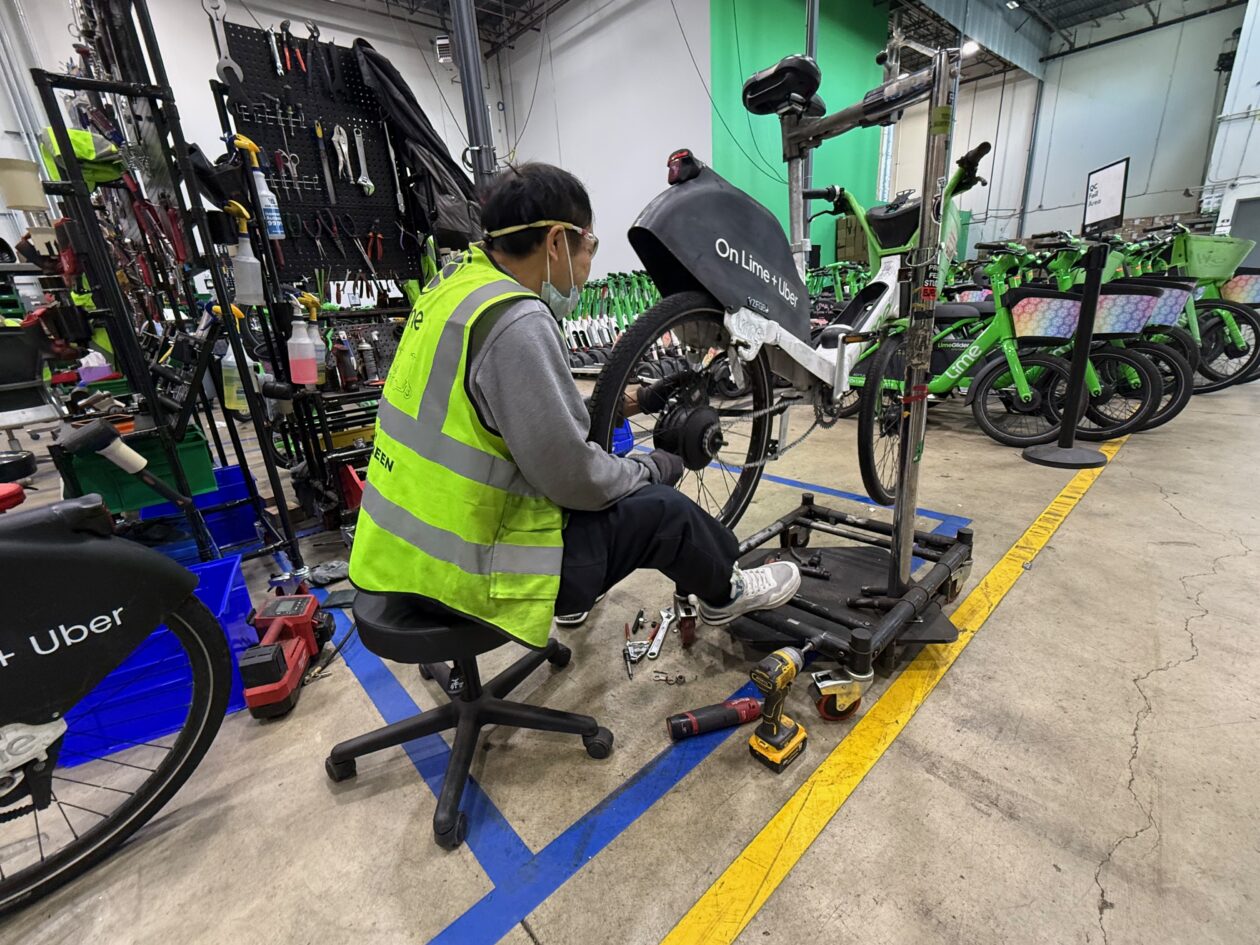
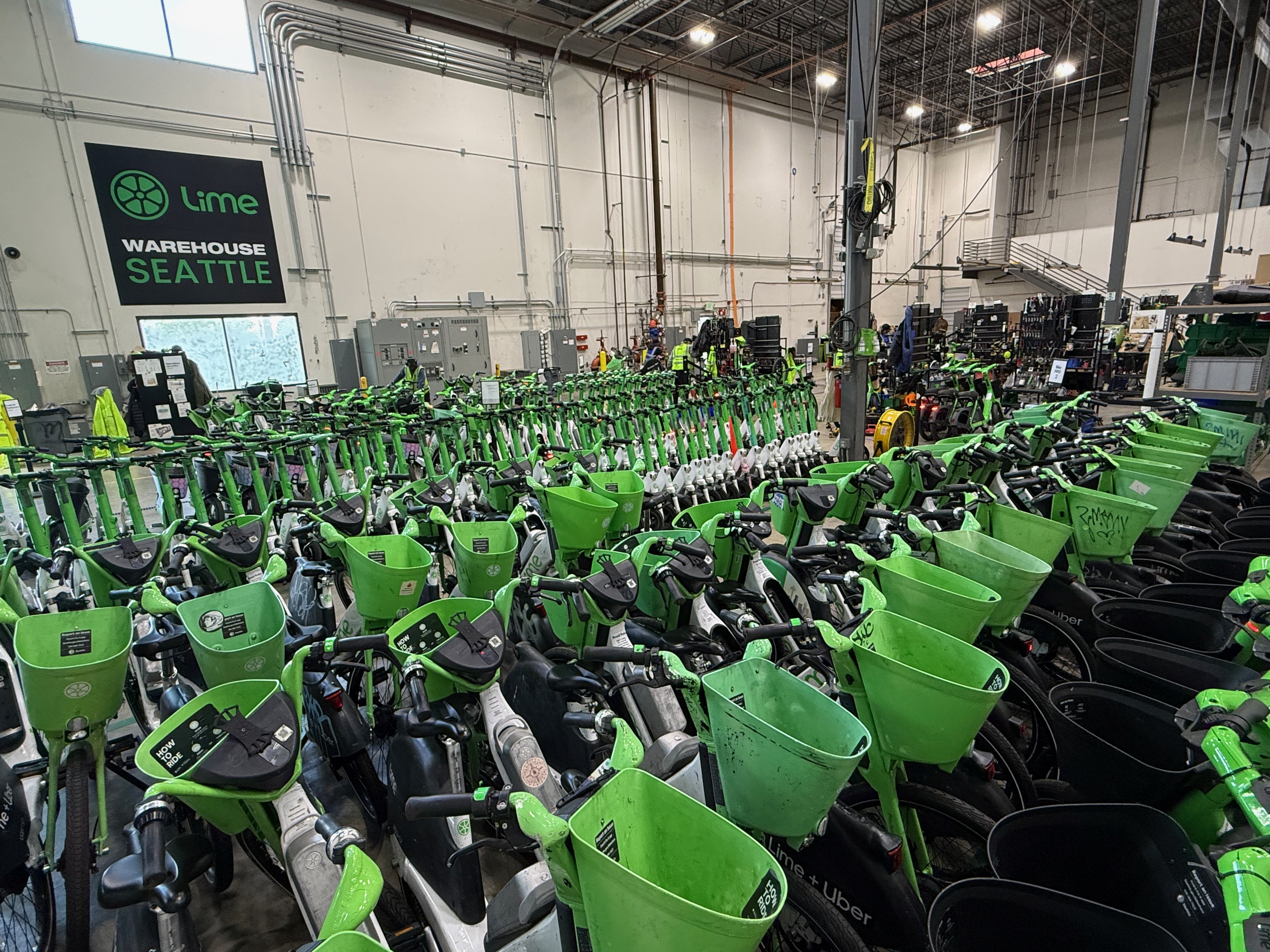
The Georgetown facility — and its small army of technicians — handles maintenance for Lime’s entire Seattle-region fleet, which spans not just the city but Bothell, Redmond, Woodinville, Everett and Shoreline.
Vehicles are pulled from the field when GPS data, tire pressure monitors or poor rider ratings flag a problem, then brought in for diagnosis, repair and a quality check by a second set of eyes before heading back out.
Every part on every Lime vehicle is modular and swappable — seats, handlebars, motors, tires, phone holders — meaning a single worn component doesn’t take an entire device out of commission. When a vehicle does reach end of life, Lime strips it for reusable parts before recycling what remains.
“We try to keep our vehicles out as long as possible and make sure that we’re not wasting materials,” Vigneault said.
Batteries are swapped in the field to minimize downtime, but any other maintenance comes through the warehouse, where mechanics are cross-trained on every vehicle type. Lime tracks the full history of every device — every ride, every repair, every mile — meaning some vehicles have been rolling through Seattle streets for years, swapping out parts along the way.
Even graffiti — an occupational hazard for any fleet of public-use vehicles — gets scrubbed off as part of the standard quality-control process before a device goes back out.
“We want our vehicles looking clean,” Vigneault said. “No one wants to sit on a vehicle that’s covered in graffiti.”
Read the full article here