
AI data centers face mounting community backlash and local moratoriums, while surging power demands knock tech giants off course from their climate ambitions. Could fusion be the solution to both problems, and could two Seattle-area companies provide the fix?
Helion Energy is betting on it. The company signed an unprecedented agreement to sell fusion energy to Microsoft for a Central Washington data center. Armed with a $1.5 billion war chest, Helion is sprinting to reach its 2028 deadline to flip the switch on that power plant, which it hopes will be the world’s first to commercially produce electricity from fusion.
The soaring demand for clean energy is driving interest and investment, said David Kirtley, Helion’s CEO and co-founder. “It’s enabled us to ramp up our timelines and go faster than we had originally planned.”
Nearby, competitor Zap Energy has raised $330 million and secured Department of Energy backing. While ambitious, the startup is taking a more cautious approach. Zap recently announced it will jointly pursue fusion’s conventional cousin — nuclear fission — as a near-term revenue source and a hedge on its fusion bet.
“This isn’t a pivot,” said Benj Conway, Zap’s president and co-founder. “By integrating them into a single platform, we can move faster, reduce risk and build a more enduring company.”
Helion and Zap belong to a global cohort of entrepreneurs trying to harness the power of the sun. Their goal is to create a “star in a jar” here on Earth to produce nearly limitless clean energy. For decades, researchers have chased this milestone — and some believe the industry is finally getting close.
Inside Helion’s sprint to 2028
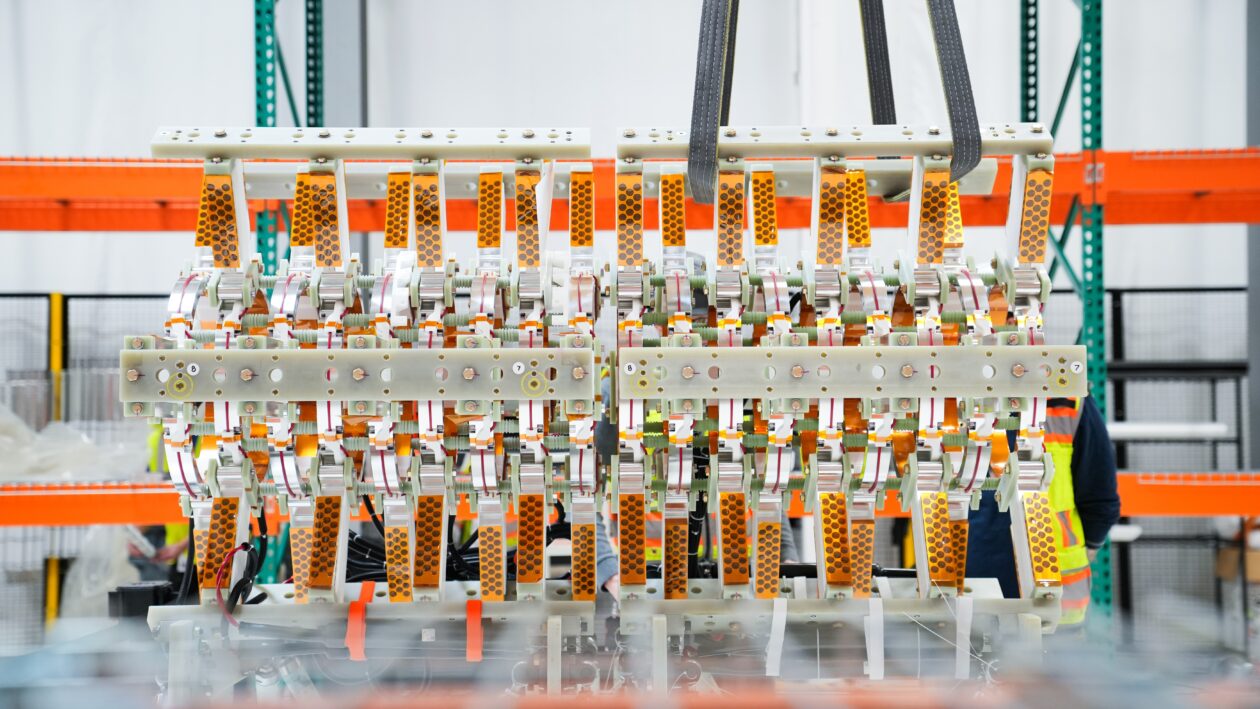
A visit to Helion starts with a gauntlet of security hurdles: getting past an outdoor guard in a booth, ID checks and stowing phones in locked cubbies. Inside its R&D space in Everett, Wash., Helion operates Polaris, a 60-foot-long, seventh-generation prototype that uses magnets to compress plasma, the super-hot state of matter required for fusion. Here is how it works:
- The Collision: The machine creates magnetic fields at both ends that launch and squeeze tiny blobs of plasma containing light atoms toward the center, where they collide at 1 million miles per hour.
- The Capture: As the ions fuse and release energy, the plasma expands against the magnetic field. This movement creates an electric current captured directly as electricity, similar to regenerative braking in electric vehicles.
The commercial device will ultimately run on isotopes of hydrogen and helium, and aims to reach temperatures of 200 million degrees Celsius — more than 10-times hotter than the center of the sun.
But significant technical hurdles remain. In July 2025, Helion broke ground on its 50-megawatt plant, Orion, in Malaga, Wash. The facility must be operational in two years to meet its contract with Microsoft.
Helion’s approach has been to build larger and larger prototypes as it advances its technology, but the company took a detour this spring to build a fusion device about one-eighth the size of Polaris.
“This is where we’re building the next smaller machine, Tiny Merge,” said Manav Singh, Helion’s director of electrical engineering, on a recent tour. “Step in, right here.”
Behind a massive Wizard of Oz-worthy curtain was the downsized, tubular fusion device. It bristled with metal protuberances that will connect it to power sources to send surges of electricity into the machine.
Tiny Merge could be viewed as a worrisome sign of backtracking to resolve technical issues. However, the company maintains its strategy always left room for smaller devices to allow for faster testing and iterations.
“There’s a few much more deep investigations we want to do,” Singh said. Meanwhile, the clock is ticking.
Zap’s dual core bet
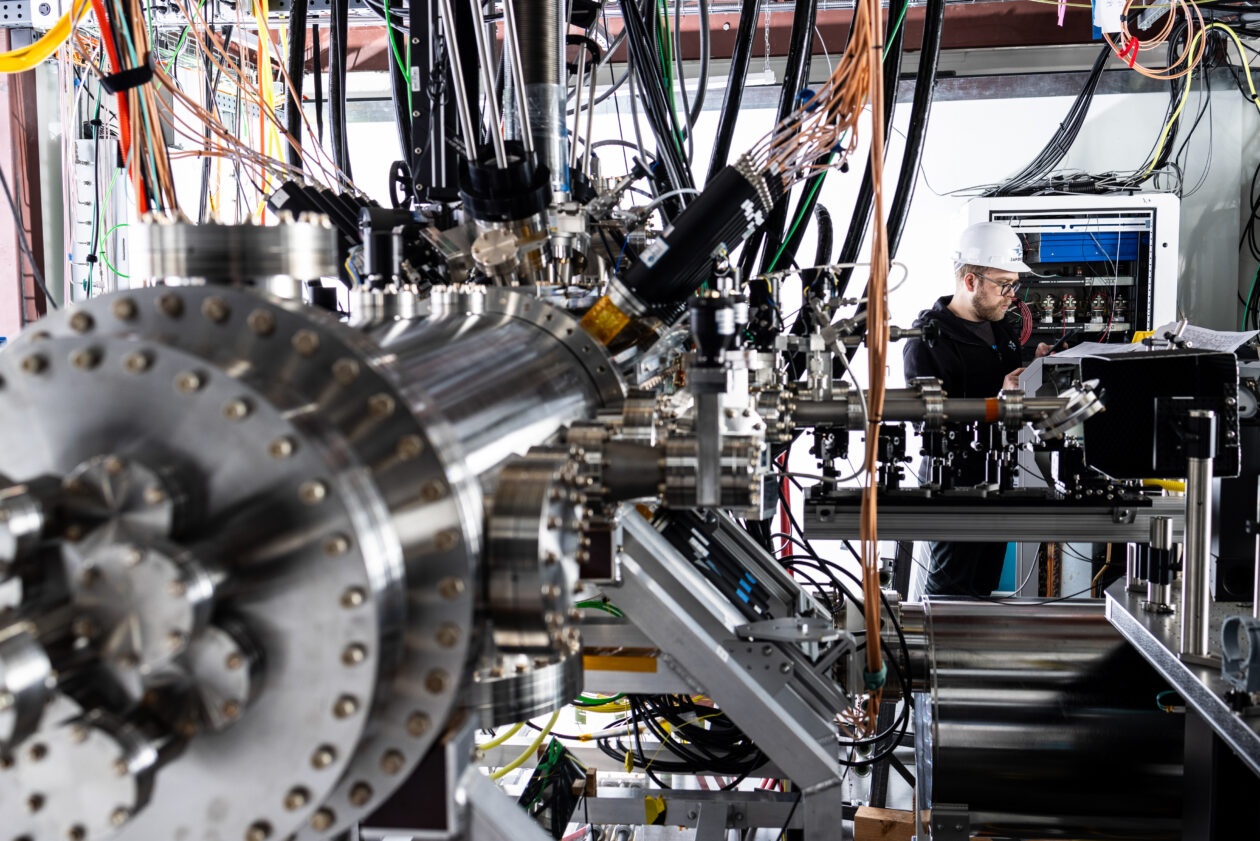
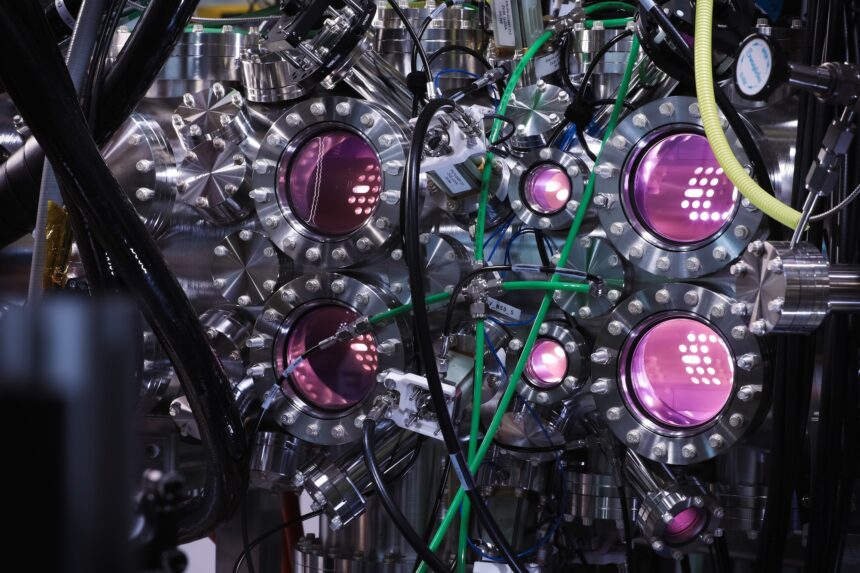
A four-minute drive from Helion sits rival Zap Energy. The startup is building its technology on a physics phenomenon known as the Z-pinch, which uses a powerful electrical current to generate its own magnetic field to confine plasma.
Zap’s system operates through a distinct process:
- Plasma Generation: Hydrogen gas is injected into the device and blasted with energy, creating a 2-foot-long strand of plasma resembling a tame lightning bolt.
- Heat Absorption: When the Z-pinch triggers fusion, released neutrons are captured by a surrounding liquid metal blanket (bismuth in testing, lithium for commercial use).
- Power Generation: The neutrons carry intense heat, which is then converted into usable energy.
Zap is running three fusion devices that measure about 12 feet long, each focused on fine-tuning a specific challenge in its system.
Despite hitting key milestones, concerns about the timeline for reaching commercially-ready fusion triggered Zap’s move to add fission to its plans, making it the first fusion company to do so.
Zap is now working to deploy a 10-megawatt fission microreactor based on legacy Toshiba designs, giving it a more certain path to an operational power plant than fusion currently offers.
The company says the two strategies share technologies that could accelerate the development of both. A key technical overlap is the use of liquid metals; the fission device is cooled by liquid sodium, which behaves similarly to the liquid bismuth and lithium used in its fusion design.
“Fission gives us a path to deploy. Fusion gives us a path to transform,” Zap CEO Zabrina Johal, said in April. “Bringing them together is how we do both.”
A global clean energy race

More than 50 companies globally are pursuing fusion power, including two additional Pacific Northwest ventures: Seattle-based Avalanche Energy and British Columbia’s General Fusion.
Among the heavily funded contenders is Massachusetts-based Commonwealth Fusion Systems. Armed with nearly $3 billion, the company plans to build a plant in Virginia, home to the nation’s largest data center hub. China remains another major wildcard, investing billions of undisclosed dollars into its own domestic fusion ventures.
As work continues, enthusiasm grows alongside persistent skepticism. Some experts doubt cost-competitive fusion can ever be achieved, while others believe commercial viability is still decades away — too late to solve the immediate energy needs of the AI boom.
Laura Berzak Hopkins, deputy chief research officer at the Princeton Plasma Physics Laboratory, remains cautiously optimistic about the sector’s trajectory.
“We’ve made incredible progress, and we are reaching ever closer, but there still remain these major scientific and technological hurdles,” Berzak Hopkins said. However, she added, “new capabilities and new knowledge really bring us to this exciting cusp.”
Whether Helion and its peers will prove the skeptics wrong remains to be seen, but the data center energy crisis ensures the world will be watching.
Sources and references
Podcast interviews:
- David Kirtley, Helion Energy, CEO and co-founder
- Manav Singh, Helion Energy, director of electrical engineering
- Matthew Thompson, Zap Energy, senior vice president of fission technology and former vice president of systems engineering and pulsed power
- Laura Berzak Hopkins, Princeton Plasma Physics Laboratory, associate laboratory director for Strategy and Partnerships, and deputy chief research officer
GeekWire’s related coverage:
Read the full article here