

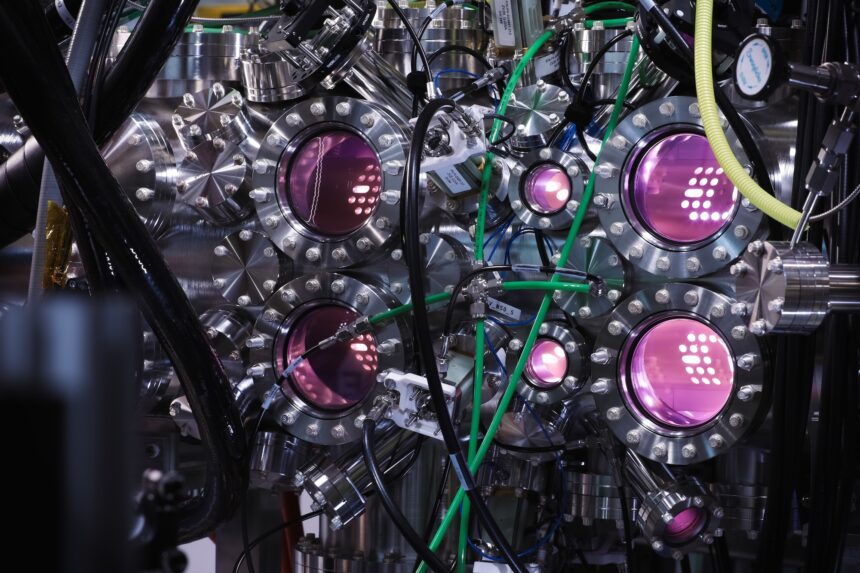
Zap Energy announced plans Wednesday to become the first company to simultaneously pursue two tracks for nuclear power: fusion, an unproven but promising technology that smashes light atoms together to produce energy, and fission, the better-known nuclear pathway that already powers reactors around the globe by splitting heavy atoms.
To support these dual objectives, Zap has named Zabrina Johal as CEO, succeeding company co-founder Benj Conway, who is transitioning to president.

Fusion innovators have typically drawn a bright line between their nuclear solution and conventional fission, given public concerns about past reactor meltdowns and radioactive waste.
But Zap’s leaders say that distinction creates a “false wall” the Everett, Wash., company is ready to knock down.
“Fission and fusion are two expressions of the same underlying physics,” Conway said in a statement. “This isn’t a pivot — by integrating them into a single platform, we can move faster, reduce risk, and build a more enduring company.”
The planet is desperate for new energy sources and many customers and governments are eager for solutions that don’t release carbon and further stoke climate change. Demand is spiking as tech companies rush to erect data centers that support AI even as transportation, housing and industrial sectors electrify their operations.
Zap has been developing its commercial fusion technology since launching nine years ago, building fusion machines and the systems needed to deliver that power to the grid. It has raised more than $330 million from investors and was selected to participate in the Department of Energy’s fusion development program.
But mastering fusion’s physics — essentially recreating the reactions that fuel the sun in an earthbound device — is uncertain and costly. While dozens of companies worldwide are chasing commercially viable fusion energy, none have succeeded so far.
Building next-generation fission technology is more predictable and would provide revenue sooner, the startup said, while simultaneously supporting research that advances its fusion work. The company’s goal is to have a fission solution for sale by the early 2030s, according to the New York Times, which first reported the news.
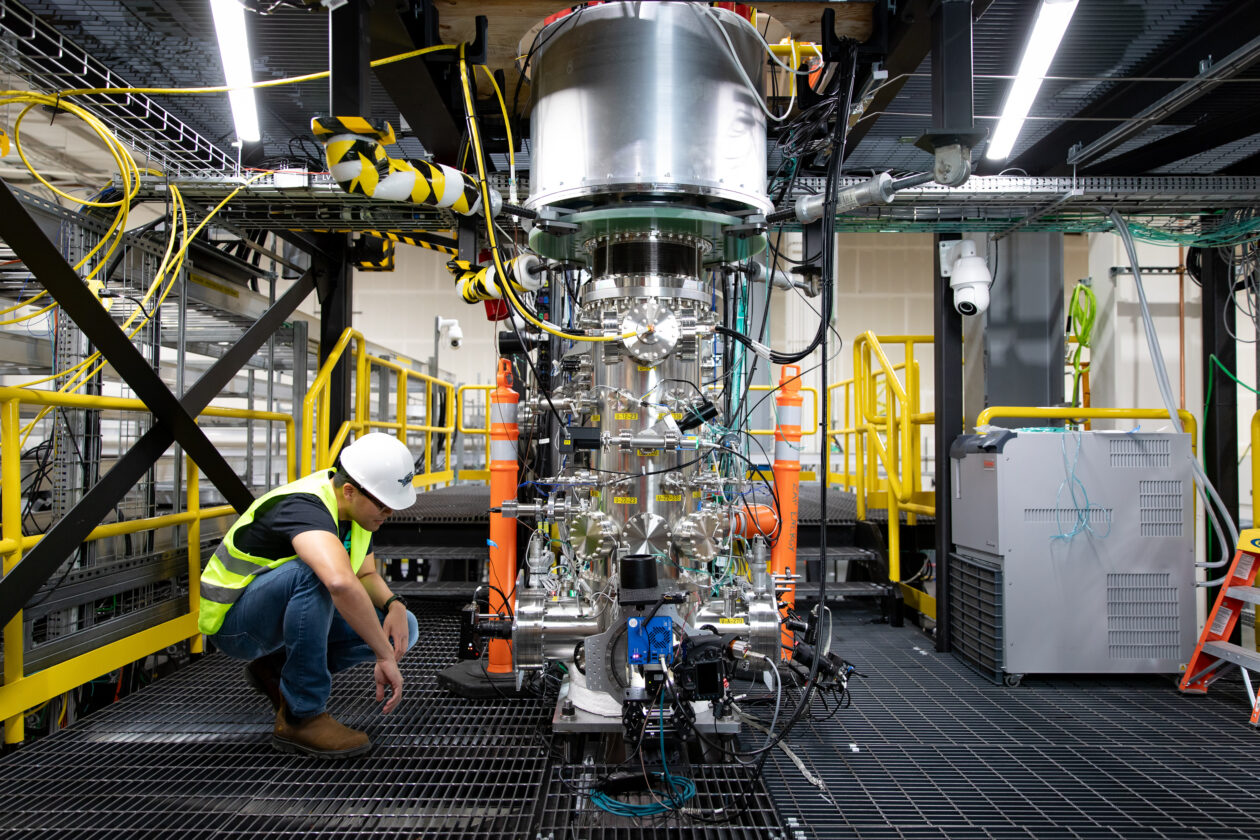
Johal began her career as an officer and engineer in nuclear propulsion in the U.S. Navy and previously spent 18 years with General Atomics leading strategic development for its nuclear and defense portfolios. Most recently, she was with AtkinsRéalis, a Montreal engineering firm with a nuclear power focus.
The company also named Daniel Walter, a former director at TerraPower — the nearby nuclear company backed by Bill Gates — as director of nuclear engineering. Zap vice president Matthew Thompson is now SVP of fission technology and will work on both tech platforms.
Other fusion companies have similarly pursued additional revenue streams. Seattle’s Avalanche Energy, for example, has multiple initiatives, including work on compact nuclear batteries, fusion propulsion in space applications, and advanced materials for extreme environments.
Zap is the first, however, to add the development of fission reactors to the mix. Traditional nuclear has seen a renaissance driven by the spiking power demand. The U.S. government is investing in fission innovation and expedited permitting for the sector, and tech companies are paying to keep existing reactors online while backing startups pursuing smaller, cheaper and faster-to-deploy designs that use factory fabricated parts.
Zap has been developing its nuclear plan over the past year and is looking to develop microreactors that roughly share the physical dimensions of its planned fusion device.
The company’s approach builds on technology from the Experimental Breeder Reactor-II (EBR-II), developed and tested over decades at U.S. national laboratories. The strategy was later adopted by Toshiba for its 4S (Super-Safe, Small and Simple) reactor, though that project fizzled in the post-Fukushima climate that turned hostile to nuclear power — despite the fact the 4S design itself was unrelated to the Fukushima reactor technology.
Zap said it is now revitalizing the Toshiba design, which includes a 10 megawatt microreactor cooled by liquid sodium that can run for decades without refueling. The approach is attractive in part because Zap’s fusion device uses liquid lithium, which behaves similarly to sodium.
“Zap’s approach is to build common technical foundations — materials, liquid metal systems, high power density design, and neutron environments — once and apply them across both fission and fusion,” the company said.
The startup is confident that customers are hungry for both varieties of nuclear energy.
“Meeting that demand requires simpler, more adaptable systems and a faster path to deployment,” Johal said. “Fission gives us a path to deploy. Fusion gives us a path to transform. Bringing them together is how we do both.”
Read the full article here