
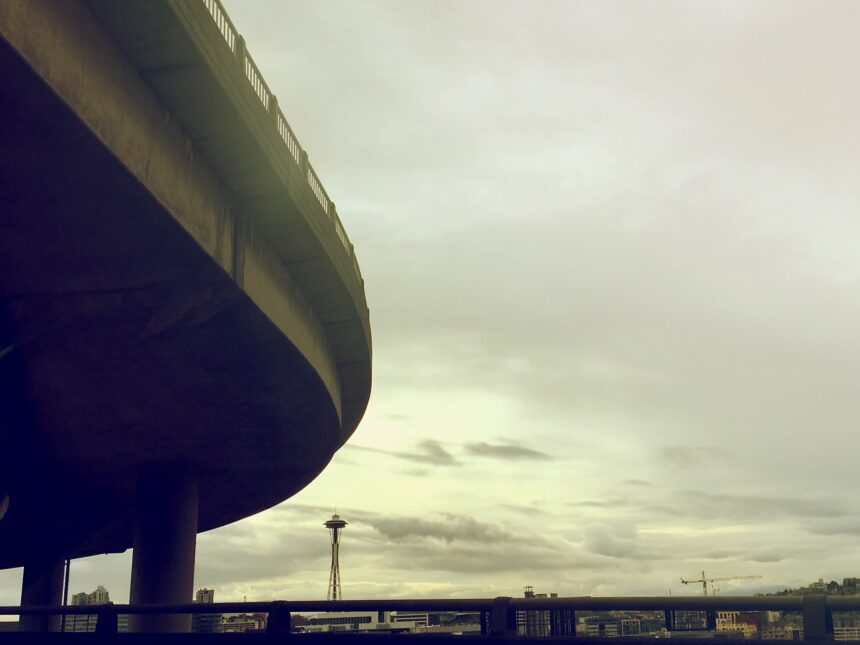
I can’t get “Road to Nowhere” out of my head.
The 1985 Talking Heads anthem is built on contradiction — upbeat and anxious at the same time. Songwriter David Byrne once described it as “a resigned, even joyful look at doom.”
That paradox felt especially relevant this week as two headlines collided.
Gene Balk reported in The Seattle Times that Seattle ranked fourth among large U.S. cities for population growth. At nearly the same moment, KUOW’s Monica Nickelsburg reported that Washington ranked second nationally in tech layoffs.
So, what is it? Are we growing, or dying?
Are cracks beginning to form beneath one of the country’s most successful innovation economies?
Maybe a little of both.
For three decades, Seattle’s tech industry has been an extraordinary economic engine, transforming the region into a global center for cloud computing, e-commerce and artificial intelligence. The construction cranes that once dominated the skyline became symbols of seemingly unstoppable momentum.
But momentum and durability are not the same thing.
And the Seattle psyche — especially in the innovation community we closely follow — is ruptured.
The office towers are still here. So are Amazon, Microsoft and a deep pool of engineering talent. But something less tangible — confidence — has shifted.
In nearly 30 years covering the tech industry, I’ve never sensed this level of uncertainty among founders, investors and business executives about Seattle’s long-term trajectory. Former business leaders, once proud to call Seattle home, now write op-ed pieces in The Wall Street Journal about how the city lost its way.
It’s a bad look.
At the GeekWire Awards last week, a longtime entrepreneur-turned-venture capitalist told me Washington state is “squandering its edge.” Over the past year, we’ve heard versions of that concern repeatedly from startup founders, investors, and technology leaders questioning whether Seattle still wants to compete as aggressively as other innovation hubs.
That doesn’t mean Seattle is collapsing. Far from it.
The region still possesses enormous advantages: world-class research institutions, elite technical talent, major AI leadership and one of the strongest concentrations of cloud and AI expertise anywhere in the world.
But successful cities often make the same mistake successful companies do: They assume the conditions that created prosperity will naturally continue.
History suggests otherwise.
And in this period of change, our political leaders wave goodbye to entrepreneurs and job creators — smugly taking for granted our past success and essentially fumbling the ball on the 1-yard line.
And speaking of fumbles on the 1-yard line — sorry, Browns fans, too soon? — that brings me to Cleveland.
Earlier this year on the GeekWire Podcast, Cleveland Mayor Justin Bibb reflected on what happened when one of America’s great industrial cities of the 1950s and 1960s failed to adapt as the economy changed.
“We didn’t pivot fast enough, and the world left us behind,” Bibb told GeekWire. “Now we’re a comeback story built on reinvention and resilience.”
Seattle is not Cleveland. The economic dynamics are different, the industries are different, and the scale of innovation here remains immense.
But the warning isn’t about collapse. It’s about complacency.
Artificial intelligence is already reshaping the industry that built modern Seattle. Venture capitalists are funding leaner startups with fewer employees. Large tech companies are reassessing hiring needs and organizational structures. Entire categories of work are being reevaluated in real time.
At the same time, Seattle faces growing questions around affordability, public safety, regulation, permitting, and whether political leaders fully appreciate how fragile innovation leadership can become once momentum shifts.
Other cities are competing aggressively for talent and investment.
San Francisco Mayor Daniel Lurie has been relentlessly promoting a simple message: “We are a city on the rise.” Miami, Austin, New York and emerging startup hubs across the country and planet are doing the same.
No one talks like that in Seattle.
We feel oddly uncertain about the industry that helped build Seattle’s modern identity.
That uncertainty matters.
Because the danger facing Seattle is not sudden decline. It’s the slower erosion that happens when a region begins to take its advantages for granted while competitors grow hungrier.
Population growth alone is not proof of long-term economic strength. Neither are cranes, soaring valuations or the presence of a few corporate giants.
The real question is whether Seattle still has the ambition — and civic alignment — to remain one of the world’s leading innovation capitals as the AI era reshapes everything around it.
Cities rarely see the inflection point in the windshield.
Usually, they only recognize the road has changed once the exit is in the rearview mirror.
“Well, we know where we’re going
But we don’t know where we’ve been
And we know what we’re knowing
But we can’t say what we’ve seen“
[Editor’s note: Tech veteran and angel investor Charles Fitzgerald — who wrote the guest commentary earlier this year, “A warning to Seattle: Don’t become the next Cleveland” — and GeekWire co-founder John Cook will spend time next month in Cleveland examining what happened there and what lessons Seattle might draw from it. Contact [email protected]to share perspectives or lessons from the Rust Belt that may apply to Seattle’s future.]
Read the full article here